7 Benefits for Canadian Seniors to Check in October 2026
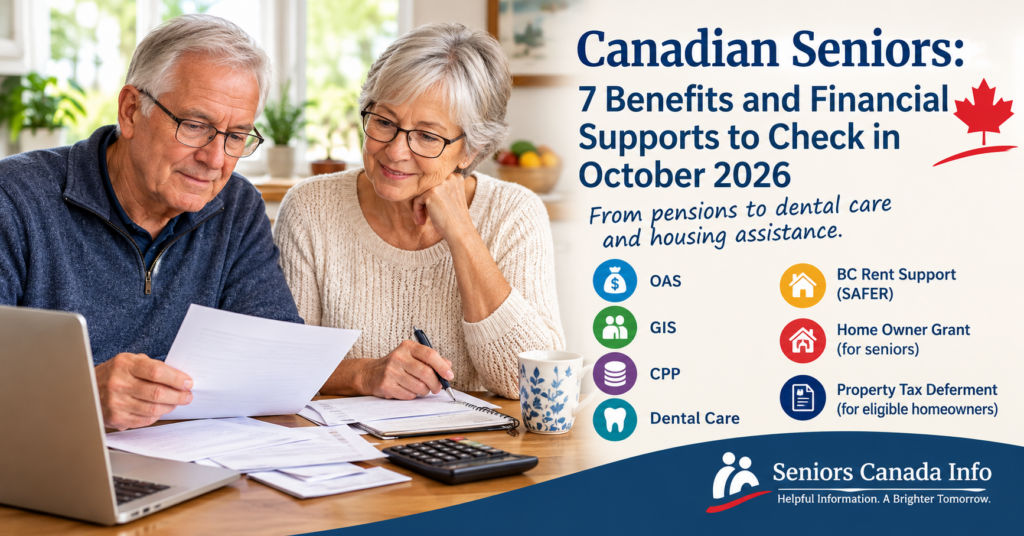
October is always a special time of the year for Seniors in Canada. The season is getting cooler and the utility bills are rising. Discover 7 benefits and financial supports Canadian seniors should check in October 2026, including OAS, GIS, CPP, dental care, tax relief and housing assistance. Growing older in Canada should bring some peace of mind, but many seniors are finding it harder to make ends meet. Groceries, housing, utilities, prescription medications and other everyday expenses can take a big bite out of a retirement income.
The good news is that there are several government benefits for Canadian seniors that may help make life a little easier. Some provide monthly income, while others help with dental bills, rent or property taxes.
October is also an important month to check your pension amounts. Federal Old Age Security and Guaranteed Income Supplement rates increased by 1.4% for the October-to-December 2026 period.
If you are living on a limited income, it is worth taking a little time to see whether you are receiving everything you qualify for.
Here are seven benefits and financial supports worth checking this month.
1. Old Age Security (OAS)
Old Age Security (OAS) is a monthly pension available to eligible Canadians aged 65 and older. Unlike the Canada Pension Plan, OAS is generally based on your age, residency history and eligibility rules rather than how much you earned during your working years.
For October through December 2026, the maximum monthly OAS payments are:
- Ages 65 to 74: Up to $762.50 per month.
- Ages 75 and older: Up to $838.75 per month.
These are maximum amounts. Your actual payment may be lower depending on your circumstances, including how long you have lived in Canada after age 18. Higher-income recipients may also have to repay some OAS through the tax system.
If you are already receiving OAS, check your bank deposit or pension statement to see whether your payment reflects the current rate.
If you are 65 or older and have never applied, do not assume you are automatically receiving it. Some people need to apply.
Where to check: Visit the official Government of Canada OAS website:
https://www.canada.ca/en/services/benefits/publicpensions/old-age-security.html
2. Guaranteed Income Supplement (GIS)
The Guaranteed Income Supplement (GIS) is one of the most important benefits for Canadian seniors who have a low income.
GIS provides additional monthly money to eligible people who receive OAS. It is generally tax-free, and the amount depends on your income and, where applicable, your spouse’s or common-law partner’s income.
For October through December 2026, a single, widowed or divorced senior who qualifies may receive up to $1,138.90 per month in GIS.
That is in addition to their OAS pension.
Not everyone receives the maximum amount. Eligibility and payment amounts depend on income and other circumstances.
Why checking GIS matters
Some seniors live on very little money but do not realize they may qualify for this additional assistance. Others have changes in their circumstances that may affect their eligibility.
If your income is modest, it is worth checking whether you receive GIS and whether your information is up to date.
You may need to apply if you have never received it. Filing your income tax return every year is also important because your income information is generally used to determine ongoing eligibility.
Where to check:
https://www.canada.ca/en/services/benefits/publicpensions/old-age-security/guaranteed-income-supplement.html
You can also contact Service Canada at 1-800-277-9914 for information about OAS and GIS.
3. Canada Pension Plan (CPP)
The Canada Pension Plan (CPP) provides retirement income to people who contributed to the plan during their working years.
Unlike OAS, your CPP retirement pension is based largely on your contributions, earnings and the age at which you began collecting it.
Some seniors receive both CPP and OAS. Others receive one but not the other, depending on their circumstances.
If you worked in Canada and paid into CPP, check your pension statement to make sure you understand what you are receiving.
If you have not yet applied for CPP retirement benefits, you can review the eligibility rules and application process through the federal government.
It is also worth remembering that CPP is different from the Guaranteed Income Supplement. Receiving CPP does not automatically mean you qualify for GIS, but some CPP recipients with low overall incomes may qualify for GIS as well.
Where to check:
https://www.canada.ca/en/services/benefits/publicpensions/cpp.html
4. Canadian Dental Care Plan
Dental treatment can be expensive, especially for seniors living on a fixed income. A broken tooth, dentures, gum treatment or a routine dental visit can put pressure on an already tight budget.
The Canadian Dental Care Plan (CDCP) helps make dental care more affordable for eligible Canadian residents who meet the program’s requirements.
Depending on your eligibility and the services required, the plan may help with certain dental services, including examinations, cleanings, X-rays, fillings and some denture services.
However, coverage is not necessarily free in every situation. Some patients may have to pay a portion of the cost, and certain services require preauthorization. The amount covered also depends on the plan’s rules and the provider’s fees.
What should seniors do?
If you have been putting off dental care because of the cost, check whether you qualify.
Before arranging treatment, confirm that your coverage is active and ask the dental office what portion, if any, you may have to pay.
Applications for the 2026–2027 benefit period are open, according to the federal government’s current program information.
Where to check:
https://www.canada.ca/en/services/benefits/dental/dental-care-plan.html
5. Help with Rent Through BC Housing’s SAFER Program
For seniors who rent their homes in British Columbia, housing costs can be one of the biggest monthly expenses.
The Shelter Aid for Elderly Renters (SAFER) program provides a rent supplement to eligible lower-income seniors who rent in the private market.
To qualify, applicants generally must:
- Be at least 60 years old.
- Have lived in British Columbia for at least 12 months.
- Meet the program’s income and residency requirements.
- File an annual income tax return.
- Pay more than 30% of their gross household income toward rent.
BC Housing’s published eligibility information lists a gross household income limit of less than $40,000 annually. Other conditions apply, and people living in certain subsidized housing arrangements or receiving specified forms of assistance may not qualify.
The amount of help depends on your circumstances. Not every applicant will receive the same supplement.
A reminder for seniors who rent
If you are struggling with rent, do not assume that your income is too low or too high without checking the rules. A small amount of monthly assistance can make a meaningful difference to a household budget.
Where to check:
https://www.bchousing.org/housing-assistance/rental-assistance-programs/SAFER
You can also call BC Housing at 604-433-2218 or toll-free at 1-800-257-7756.
6. BC Home Owner Grant for Seniors
If you own and live in your home in British Columbia, you may qualify for the BC Home Owner Grant, which reduces the property taxes you pay on your principal residence.
Eligible homeowners aged 65 and older may qualify for an additional grant.
For eligible seniors in Metro Vancouver, the Capital Regional District and the Fraser Valley, the total grant can be up to $845. In other areas of British Columbia, the total can be up to $1,045.
These amounts are subject to the program’s requirements. The property assessment threshold, ownership rules and other eligibility conditions matter.
This grant can be particularly helpful to seniors who own a home but have limited monthly income.
Do not forget to apply
The grant is not something you should assume has been automatically applied. Check your property tax notice and follow the instructions for claiming the grant if you qualify.
If you missed a grant in a previous year, the provincial government says retroactive claims may be possible in certain circumstances.
Where to check:
https://www2.gov.bc.ca/gov/content/taxes/property-taxes/annual-property-tax/home-owner-grant/senior
7. BC Property Tax Deferment for Eligible Homeowners
Another program worth knowing about is the BC Property Tax Deferment Program.
Eligible homeowners aged 55 or older may be able to defer their current-year property taxes on their principal residence. This is a loan program, not a grant, and it is subject to eligibility requirements.
For the regular program, applicants generally need to maintain at least 25% equity in the property based on the program’s rules and the property’s assessed value. Other requirements apply, including conditions concerning ownership and outstanding property taxes.
Is property tax deferment right for you?
Deferring property taxes may help some homeowners manage their monthly expenses, but it is important to understand what you are agreeing to.
Deferred taxes become a debt secured against the property, and interest and program charges may apply. The amount owing can affect the equity you retain when you eventually sell your home.
Before applying, read the current terms carefully and consider how the loan could affect your longer-term housing plans.
Where to check:
https://www2.gov.bc.ca/gov/content/taxes/property-taxes/annual-property-tax/property-tax-deferment-program
You can contact the provincial program at 1-888-355-2700 if you need assistance understanding the requirements.
A Simple Checklist for Canadian Seniors
You do not have to investigate every program in one day. Start with the benefits most relevant to your situation.
- Check your OAS payment and make sure your information is current.
- Find out whether you qualify for GIS.
- Review your CPP pension information.
- Check eligibility for the Canadian Dental Care Plan.
- If you rent in BC, investigate the SAFER program.
- If you own your home in BC, check the Home Owner Grant.
- If property taxes are difficult to manage, read about property tax deferment before deciding whether to apply.
Keep your tax returns and government benefit letters in a safe place. These documents can help when you apply for programs or need to confirm your income.
One More Important Tip: File Your Income Tax Return Every Year
Even if you have little or no income tax to pay, filing your annual income tax return can be important.
Your tax information may be used to determine eligibility for income-tested benefits and credits. Not filing can interrupt or delay certain payments.
If preparing your return is difficult, look into the Canada Revenue Agency’s free tax clinic program. Eligible seniors with modest incomes and simple tax situations may be able to get help from a volunteer.
You can find information about free tax clinics here:
Final Thoughts: Make Sure You Are Receiving the Help You Deserve
Retirement can be challenging when everyday costs keep rising and your income does not stretch as far as it once did.
The important thing to remember is that you do not have to figure everything out at once. Start with OAS and GIS, then look at the other programs that apply to your circumstances.
Some benefits provide monthly income. Others can reduce housing or dental expenses. Even a relatively small amount of assistance can make a difference when you are managing a tight budget.
Use the official government links in this article to check the current rules and determine whether you qualify. Benefit amounts and eligibility requirements can change, so always confirm the details before making financial decisions.
If you know another senior who might benefit from this information, please share this article with them.
At Seniors Canada Info, our goal is to make helpful information easier to find, understand and use. Every senior deserves the opportunity to learn about the support that may be available to them.