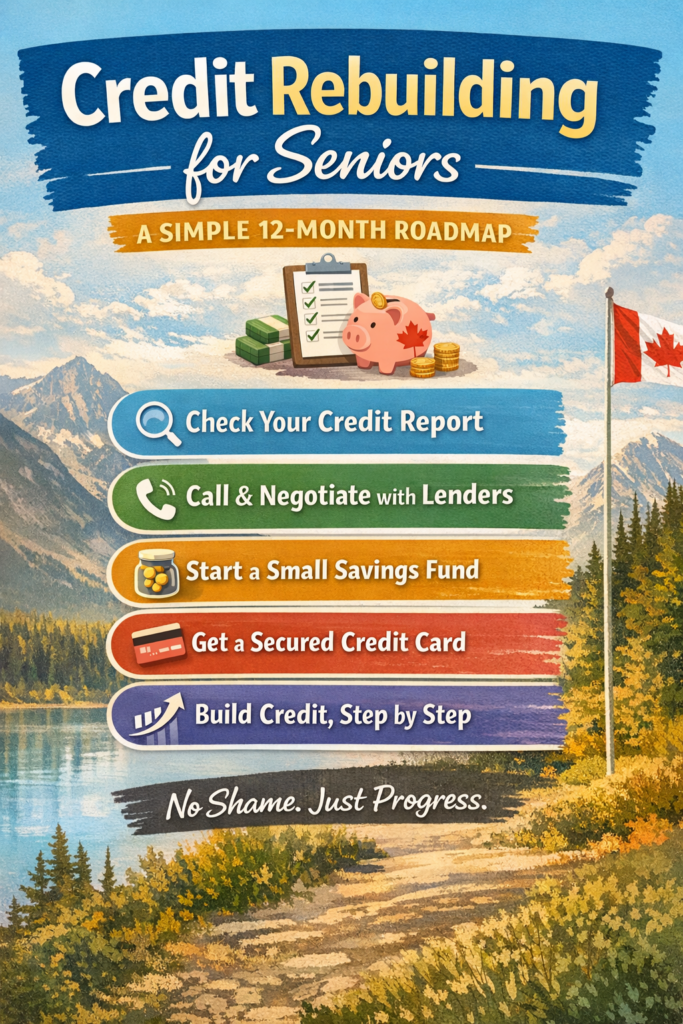
Credit Rebuilding for Seniors A Simple 12‑Month Roadmap (Canada 2026)
Being a senior in Canada in 2026 can be challenging. Prices for everything are sky rocketing and you could find yourself in financial stress. In the blink of an eye you can fall behind on your credit card and car payments. Let’s look at credit rebuilding for seniors if by fault not of your own you find yourself in financial stress.
One thing seniors should understand is that your bank account is protected. Even if you get sued or taken to court your debtors cannot garnish your pensions. They are protected. And if you are unlucky enough to get a judgement against you there are ways now to deny the claim at the courts online.
A gentle, realistic plan for seniors who’ve fallen behind on credit cards, car payments, or bills.
Many Canadian seniors are struggling right now. Rising costs, fixed incomes, and unexpected expenses mean even responsible people fall behind. If you’re late on a credit card, car loan, or line of credit, you’re not alone — and you’re not out of options.
This 12‑month roadmap is designed specifically for seniors. It’s simple, shame‑free, and focused on stability first, then rebuilding.
🍁 Before You Start: The Golden Rule
Protect your essentials first:
- Food
- Housing
- Utilities
- Medication
- Transportation
Credit rebuilding comes after survival. You can’t rebuild anything if you’re hungry, cold, or stressed.
🗓️ Month-by-Month Roadmap
Month 1: Get the Real Picture (Without Panic)
- Pull your free credit reports from Equifax and TransUnion.
- Make a simple list: balances, interest rates, minimum payments, and which ones are behind.
- Identify which debts are urgent (car loan, secured loans) and which are flexible (credit cards).
Goal: Know where you stand so you can take control.
Month 2: Stop the Bleeding
If you’re behind on payments, call the lender and say:
“I’m a senior on a fixed income. I want to pay, but I need a temporary hardship plan.”
Most lenders offer:
- Reduced minimum payments
- Lower interest
- Payment deferrals
- Re-ageing the account (bringing it current)
Goal: Stabilize the account so it stops damaging your credit every month.
Month 3: Build a Bare‑Bones Budget
This isn’t about deprivation — it’s about clarity.
- Track one month of spending
- Identify 2–3 small cuts (subscriptions, unused services, impulse buys)
- Redirect that money to debt stabilization
Goal: Free up even $50–$100/month.
Month 4: Start a “Credit Rebuild” Savings Jar
Even $10–$20/week matters. This becomes your emergency buffer so you don’t rely on credit again.
Goal: Build the habit, not the amount.
Month 5: Deal With Collections (Calmly)
If a debt has gone to collections:
- You can negotiate
- You can request everything in writing
- You can offer a payment plan that you choose
- You can ask them to stop calling and communicate by mail
Goal: Reduce stress and regain control of communication.
Month 6: Add One Positive Credit Line
If your credit is damaged, you need one small, safe account reporting positive payments.
Options for seniors:
- A $300–$500 secured credit card
- A low-limit retail card (only if you can pay in full monthly)
- A credit builder loan (small, predictable)
Goal: Start adding positive history.
Month 7: Automate One Bill
Choose a bill you can always cover — even $10/month. Automation prevents late payments, which are the #1 credit killer.
Goal: Zero late payments going forward.
Month 8: Snowflake Payments
Whenever you get:
- GST credit
- Climate Action Incentive
- Small refunds
- Extra income
Put 10–20% toward your smallest debt.
Goal: Build momentum without strain.
Month 9: Re‑Negotiate Again
Lenders often approve new hardship plans after 6 months of good behaviour. Ask for:
- Lower interest
- Waived fees
- A fixed payment plan
Goal: Reduce interest so your payments actually make progress.
Month 10: Check Your Credit Score Again
By now, you should see:
- Fewer late payments
- Lower balances
- A new positive account
- Reduced collection activity
Even a 30–60 point increase is a win.
Goal: Track progress, not perfection.
Month 11: Build a 1‑Month Emergency Cushion
Aim for:
- $300–$500 in a separate account
- This prevents future credit use
- It also reduces stress dramatically
Goal: Replace credit with cash for small emergencies.
Month 12: Review, Celebrate, Adjust
You made it through a full year of rebuilding. Now:
- Re-check your reports
- Close any predatory accounts
- Keep your secured card active
- Set new goals for the next 12 months
Goal: Maintain the progress you’ve built.
What Seniors Can Expect After 12 Months
Most seniors see:
- 50–120 point credit score improvement
- Fewer collection calls
- Lower stress
- Better access to fair credit
- More confidence and control
Credit rebuilding is slow, but it’s steady — and it works.
A Final Word of Encouragement
Falling behind doesn’t mean you’ve failed. It means life got expensive, and you’re doing your best. This roadmap gives you a way forward that’s realistic, respectful, and doable on a fixed income.
Gov Information Site
Visit Seniors Canada Benefit Hub