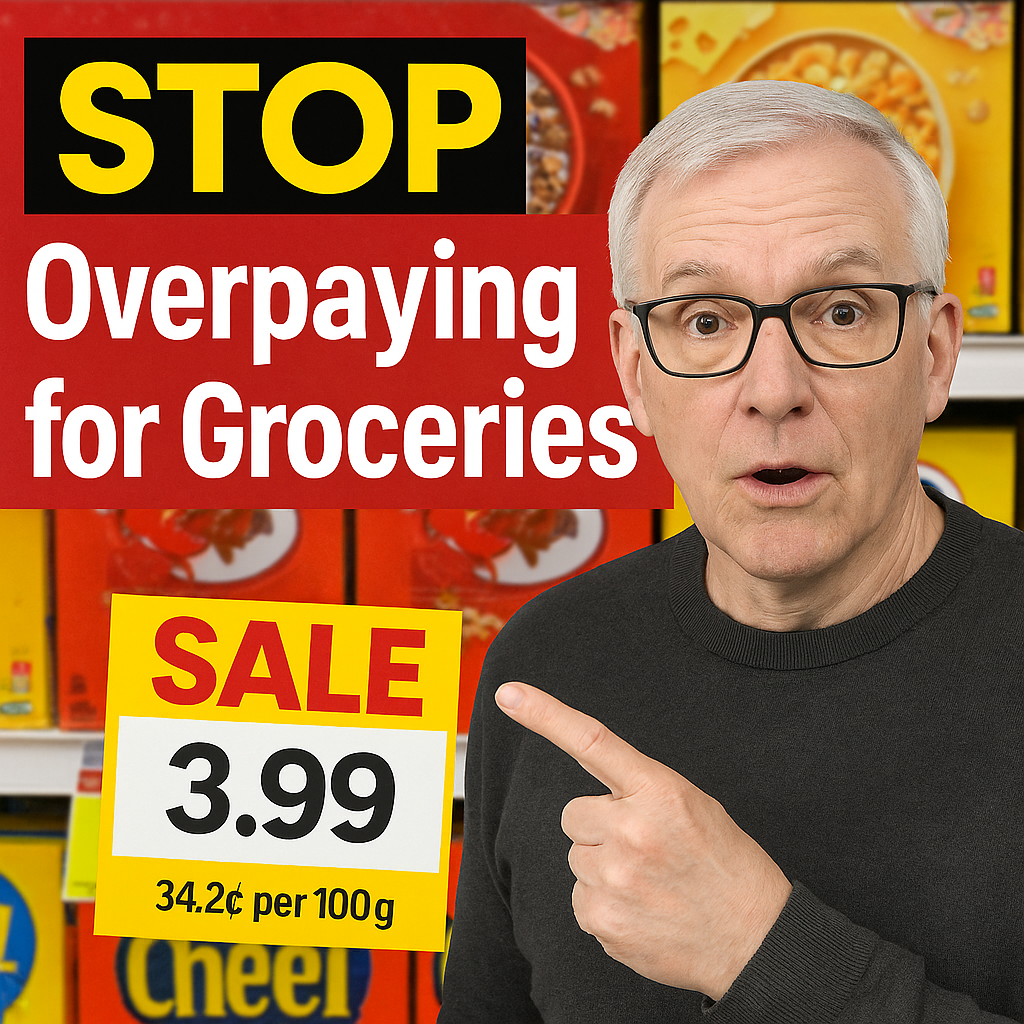
How To Save Money on Groceries Using Unit Pricing
A Guide of how to save money on groceries using unit pricing for seniors. Tips and advice on how to save you money at the grocery store by simply shopping smarter. A Seniors Guide to stretch out the dwindling pension by buy smarter.
SAVE BIG IN THE SUPERMARKET MEAT DEPARTMENT
A Shopper’s Savings Guide to Beef, Pork, Chicken, Seafood & Deli Meats
If rising grocery prices are eating up your budget, you’re not alone. Meat is the most expensive item in the supermarket—and the area where shoppers overspend the most. But with the right knowledge, you can cut your meat costs by 20–50% without sacrificing quality, freshness, or flavor.
This practical, easy-to-follow guide
shows you exactly how to shop smarter in the meat department, so you keep more money in your pocket and bring home better food for your family.
What You Will Learn Inside
How to choose the best cuts of beef, pork, chicken, and seafood—and avoid the overpriced ones
Insider secrets from a retired supermarket butcher on when to shop, what to look for, and how to spot deals
Money-saving tips that most shoppers never use
How to read meat labels, packaging, and shelf-life indicators
How to buy ground beef at 50% off. Stop overpaying
How to safely buy markdown meat—and when to skip it
Cost-cutting tips for deli meats, cold cuts, and hams
Smart bulk buying, freezing, and meal-planning strategies to reduce waste
Seafood buying guidance to ensure freshness, safety, and value
Perfect For
- Everyday shoppers who want to cut grocery bills fast
- Families on a budget
- Anyone confused by meat labels, reduced stickers, or pricing
- Home cooks wanting quality ingredients without the high cost
- Readers who love grocery hacks, frugal living, or food-shopping guides
Whether you’re navigating rising food prices or just want to become a more informed shopper, this book gives you the confidence, skills, and insider knowledge to shop the meat department like a pro.
Stop guessing. Start saving. Bring home beef, chicken, pork, seafood, and deli meats for less—every time you shop.
Understanding Unit Pricing: The Core Concept for Smart Shopping
How To Save Money on Groceries
Unit pricing breaks down the cost of an item to a standard amount. Think of it as the price per 100 grams or per liter. This lets you compare apples to apples, no matter the package size. Seniors often shop on a tight budget, so mastering this tool means more money for other needs.
Look for unit prices on shelf tags in most stores. They sit right below the product name and main price. In chains like Loblaw’s Real Canadian Superstore or Sobeys, labels follow federal rules from the Competition Bureau. These rules require clear unit info for fair shopping. Metro and Save-On-Foods do the same. If tags are missing, ask a staff member. They must provide it by law.
Sometimes, tags get messy or hidden. Squat down or use a cart for support. Many stores place eye-level tags for easier access. This setup helps seniors avoid strain while hunting deals.
Deconstructing the Unit Price Label: Grams, Millilitres, and Per Item
Reading a unit price label is straightforward. For solids, it might say $0.50 per 100g. Liquids use per 100ml or per liter. Items like eggs show per single unit. Take peanut butter as an example. A 500g jar at $4 has a unit price of $0.80 per 100g. Two 250g jars at $2.50 each total $5, but that’s $1.00 per 100g. The big jar wins.
Always match the units. Compare only like to like. If one label uses grams and another milliliters, convert or note the difference. This keeps your math simple and accurate.
Why does this matter? It stops you from grabbing the flashy big pack that costs more per bite. Practice on one aisle first. Soon, you’ll scan tags without thinking.
Understanding Unit Pricing
How To Save Money on Groceries
Many think bigger packages always save money. Not true. A jumbo bag of rice might look cheap, but check the unit price. It could run $0.10 per 100g, while a medium one hits $0.08 per 100g. Smaller sizes sometimes offer better value due to promotions.
Bulk buying risks waste too. Seniors living alone might let spices or flour go bad before use. That erases any savings. Stick to what you need. Unit pricing reveals these traps early.
Another myth: sales always beat regular prices. A discounted large pack might still lose to a steady small one. Use unit pricing to see through the hype.
Mastering Unit Price Comparisons
Now, apply unit pricing to everyday items. Focus on categories seniors buy most. This builds habits that trim your bill by 10-20% each trip, based on consumer reports. Start small, and watch savings add up.
Navigating Produce and Fresh Items: Cost Per Kilogram vs. Cost Per Count
Fresh produce varies in how it’s priced. Loose apples sell by kilogram. Check the per kg tag to pick the best bin. A bag of pre-washed lettuce might say $3.99 for 200g, or $2.00 per 100g. Loose heads could run $1.50 per 100g. Loose often wins.
For count items like avocados, look at per fruit price. Five for $5 means $1 each. A twin pack at $2.50 totals $1.25 per avocado. Always weigh value against ripeness needs.
Seniors tip: Buy seasonal produce. Summer berries have lower unit prices than winter imports. This keeps your cart fresh and affordable.
Understanding Unit Pricing
How To Save Money on Groceries
Dairy and Refrigerated Goods: Comparing Liquids and Solids
Dairy aisles confuse with shapes and sizes. Milk comes in jugs, cartons, or bags. Compare per liter. A 4L jug at $5.99 is $1.50 per liter. Two 2L cartons at $3.50 each total $7, or $1.75 per liter. Bags often edge out on price in Canada.
Yogurt follows suit. A big 1kg tub at $4 might be $0.40 per 100g. Six small 150g cups at $4.50 run $0.50 per 100g. Tubs save if you eat it all.
Package design tricks the eye. Tall bottles seem bigger but hold less. Unit pricing cuts the confusion. Grab a pen to jot notes if needed.
Canned Goods and Dry Staples: Shelf Stability and True Value
Canned veggies last long, perfect for seniors. Compare sizes carefully. A 398ml can of beans at $1.29 is about $0.32 per 100ml. A 540ml at $1.79 hits $0.33 per 100ml. The smaller one saves a bit.
For pasta or rice, weights matter. A 900g bag of rice at $2.99 is $0.33 per 100g. A 2kg at $6.50 runs $0.33 per 100g too. But if you use little, smaller packs avoid spoilage.
Buy when unit prices dip below your usual. Store in a cool pantry. This strategy turns staples into real bargains without overload.
Leveraging Digital Tools and Store Flyers with Unit Pricing Data
Save Money on Groceries
Tech helps plan ahead. Even if you shop in person, apps and flyers preview deals. Combine them with in-store unit checks for max savings. This prep cuts time and stress. Major chains like Loblaw’s PC Optimum app show sale prices. But unit pricing? Not always. Flyers list totals, so estimate units yourself. A flyer deal on 1L milk at $2.99? Divide by volume for per liter cost.
Sobeys and Metro apps highlight weekly specials. Cross-check against your last unit price memory. Print flyers if screens strain eyes. Action step: Download one app today. Scan for your top items. It builds a mental benchmark before you go.
Identifying “Loss Leaders” vs. True Unit Price Champions
Stores use loss leaders—items sold cheap to draw you in. A flyer might tout cereal at $1.99 for 300g, or $0.66 per 100g. But the store brand at $2.49 for 500g is $0.50 per 100g. Everyday low beats the promo.
Unit pricing exposes this. Don’t chase hype. Look for consistent winners across brands. This works for meat too. A loss leader chicken might seem great, but unit per kg shows the truth.
Accessibility Tips for Seniors Using Digital Price Checkers
Small print on tags? Use your phone’s camera to zoom. Apps like Magnifier on iPhone enlarge text fast. Or ask a family member to set it up. Store scanners help too. Wave your loyalty card for price pops. If tech feels overwhelming, stick to basics. A magnifying glass from the dollar store works wonders on shelves.
Team up with a shopping buddy. They read, you decide. It turns chores into chats.
Stockpiling Strategy Based on Unit Price History
Unit pricing pairs well with other tricks. Layer them for bigger wins. Think of it as building a savings toolkit tailored to senior life. Track low points for non-perishables. Note the cheapest unit price for canned tomatoes over months. Say $0.20 per 100g is your benchmark. Buy extra when it hits that.
Store in clear bins to see stock. Limit to what fits your space. This prevents impulse buys at higher rates.
Seniors benefit most. It smooths out price swings without big upfront spends.
Avoiding Common Traps: Portion Sizes and “Family Packs”
Save Money on Groceries
Loyalty points add up, but check unit price first. A 10% senior discount at some stores applies after. So, confirm the base is low. Then, the perk shines. Programs like Air Miles or Scene give points per dollar. But a high unit item racks points without true save. Prioritize unit cost.
Combine wisely. Shop discount days with unit checks. It doubles your edge. Family packs tempt with size. But for one or two, unit price soars. A big frozen dinner pack at $10 for 4 servings is $2.50 each. Singles at $3.50 each cost more per bite? No—check units.
Pre-portioned cheeses or meats often double the rate. Buy whole and divide yourself. Rhetorical question: Why pay extra for convenience you don’t need? Unit pricing keeps it real.
Conclusion
Unit pricing changes how you shop forever. Always glance down at shelf tags. Compare standard units like per 100g or per liter. Plan with flyers and apps, then verify in store.