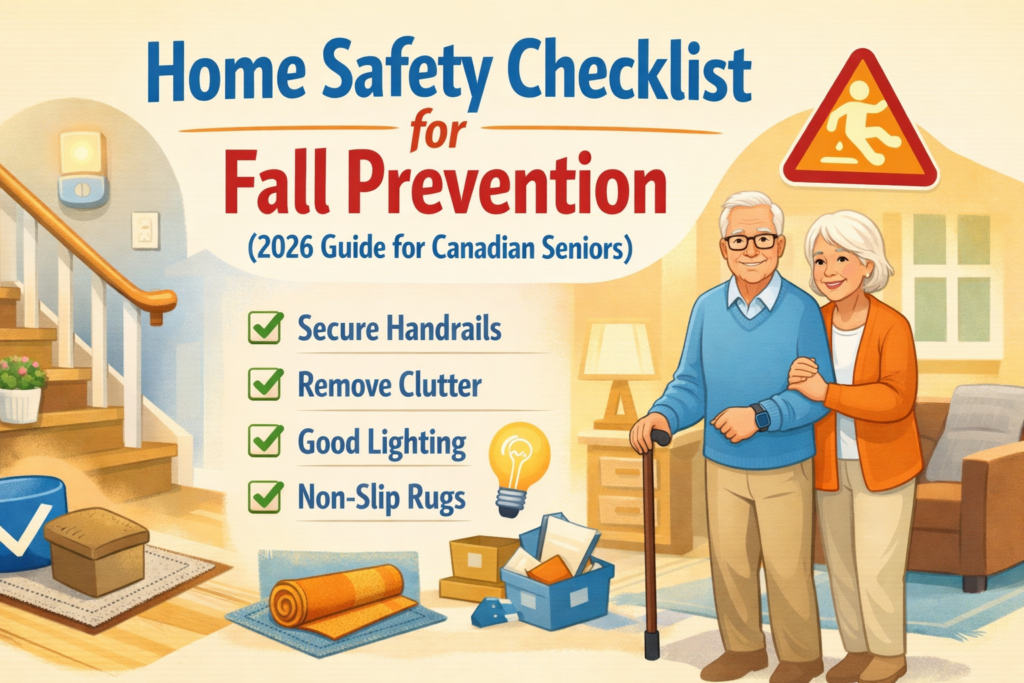
Fall Prevention for Seniors in Canada: Simple Safety Tips for 2026
Fall prevention for seniors in Canada is important and the reason is the weather changes quick. Just yesterday I was chatting with a friend who said he went outside to get something from the car hit an ice patch and he fell. He landed on his shoulder which he threw out of place and is still in pain months later. Same thing happened to me. Tripped over the rug and landed on my shoulder and was in pain for months.
This guide offers practical tips that seniors and caregivers across Canada can start using right away, with advice on home safety, better lighting, safe footwear, and daily habits to help older adults maintain their independence and keep from falling.
Improve Lighting Around the Home
Falls are one of the most common causes of injury for older adults in Canada. Staying safe at home and reducing fall risks can help seniors remain independent, confident, and active. This guide shares simple, practical steps that Canadian seniors can use every day to prevent falls and stay safe.
Good lighting makes a big difference in preventing trips and slips.
- Use bright bulbs in hallways and stairways
- Add night lights in bedrooms and bathrooms
- Keep a lamp within reach of the bed
- Open curtains during the day for natural light
Remove Tripping Hazards
Small changes can make your home much safer.
- Keep floors clear of clutter
- Remove loose rugs or secure them with non‑slip backing
- Tape down electrical cords
- Keep pathways wide and easy to walk through
Wear Safe, Supportive Footwear
Shoes matter more than people think.
- Choose shoes with non‑slip soles
- Avoid slippers without grip
- Make sure shoes fit properly and offer support
Use Handrails and Grab Bars
These simple supports can prevent serious falls.
- Install grab bars in the bathroom
- Use handrails on both sides of staircases
- Add a non‑slip mat in the bathtub or shower
Stay Active to Improve Balance
Regular movement helps maintain strength and stability.
- Gentle stretching
- Walking
- Light balance exercises
- Chair exercises
These activities help improve mobility and reduce fall risk.
Keep Frequently Used Items Within Reach
Avoid climbing or stretching to reach things.
- Store everyday items at waist or shoulder height
- Use a reacher tool instead of a step stool
Have Your Vision Checked Regularly
Clear vision helps prevent missteps and accidents. Regular eye exams can help seniors stay safe and confident at home.
Frequently Asked Questions (FAQs)
1. What are the most common causes of falls for seniors in Canada?
Falls often happen due to poor lighting, slippery floors, loose rugs, balance issues, medication side effects, and cluttered walkways. Winter ice and snow also increase risks for Canadian seniors.
2. How can seniors make their homes safer in 2026?
Simple changes help: install grab bars, improve lighting, remove tripping hazards, use non‑slip mats, and keep pathways clear. Many provinces also offer home‑safety assessments through local health authorities.
3. Are balance exercises effective for preventing falls?
Yes. Exercises like leg lifts, heel‑to‑toe walking, and gentle strength training improve stability. Physiotherapists can provide personalized routines.
4. Should seniors get their medications reviewed?
Absolutely. Some medications cause dizziness or drowsiness. A pharmacist or doctor can review prescriptions and adjust them to reduce fall risks.
5. What assistive devices help prevent falls?
Canes, walkers, grab bars, raised toilet seats, and non‑slip footwear all help. Occupational therapists can recommend the right devices for each senior’s needs.
6. What should I do if a senior falls but seems okay?
Even if there’s no visible injury, monitor for pain, dizziness, confusion, or swelling. If anything seems unusual, contact a healthcare provider. For serious injuries or head impacts, call 911 immediately.
7. Are fall‑prevention programs available in Canada?
Yes. Many provinces offer fall‑prevention classes through community centres, senior centres, and health authorities. Programs often include balance training, home‑safety education, and mobility support.
8. How often should seniors have vision and hearing checked?
At least once a year. Poor vision or hearing can make it harder to detect hazards and maintain balance.
Disclosure
This article provides general information to help Canadian seniors and caregivers reduce fall risks in 2026. It is not a substitute for professional medical advice, diagnosis, or treatment. Always consult a qualified healthcare provider, such as your doctor, nurse practitioner, or physiotherapist, for guidance tailored to your personal health needs.
Some recommendations in this article may not apply to every individual or living situation. SeniorsCanadaInfo.ca does not guarantee outcomes and is not responsible for actions taken based on this content.
For emergencies or urgent medical concerns, contact your local health services or call 911 immediately.
Conclusion
Preventing falls is one of the most important steps seniors can take to stay independent and healthy. With simple changes at home and regular movement, Seniors can reduce risks and feel more confident every day.