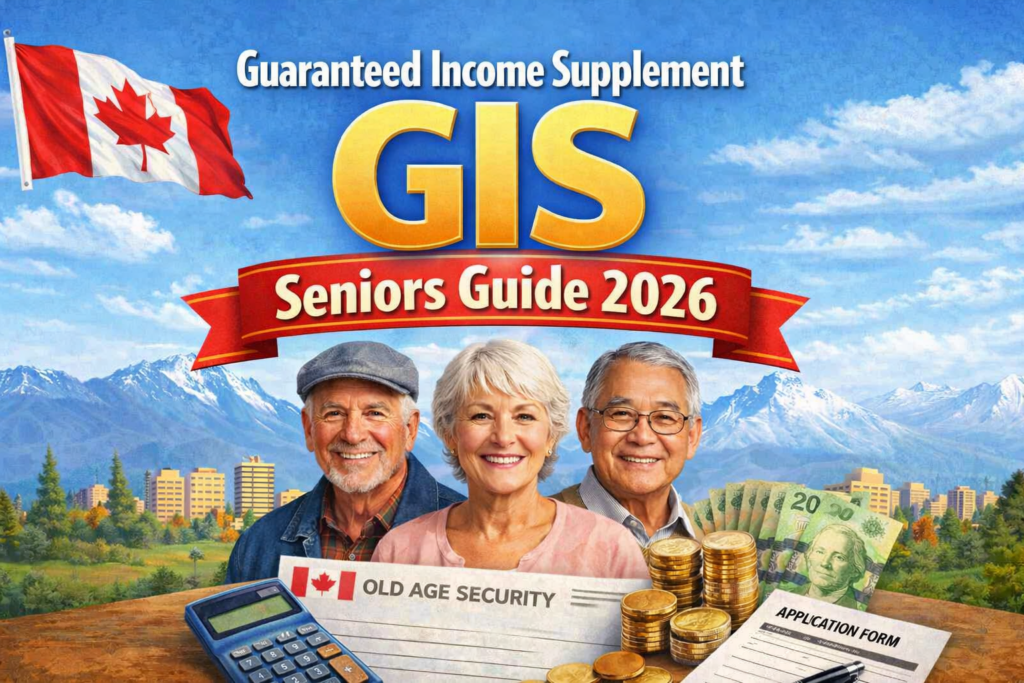
Guaranteed Income Supplement GIS Seniors Guide 2026
The Guaranteed Income Supplement (GIS) is one of the most important supports available to low‑income seniors in Canada, yet thousands miss out simply because the rules feel confusing. With the cost of groceries, rent, and daily essentials still rising in 2026, knowing whether you qualify — and how much you could receive — matters more than ever.
This updated 2026 GIS Seniors Guide explains everything in plain language. You’ll learn the current eligibility rules, projected income limits, how payments are calculated, and the steps to apply without delays. If you’re already receiving Old Age Security (OAS), this guide will help you understand exactly what you may be entitled to.
What Is the Guaranteed Income Supplement (GIS)?
The Guaranteed Income Supplement is a non‑taxable monthly payment for low‑income seniors who already receive Old Age Security. It’s designed to help cover essential costs like groceries, utilities, and housing.
GIS is different from other senior benefits:
- OAS is based on residency in Canada, not work history.
- CPP is based on contributions during your working years.
- GIS is based on your income today, not your past work or contributions.
GIS is “means‑tested,” meaning your income determines how much you receive.
GIS vs. OAS vs. CPP: What’s the Difference?
| Benefit | Based On | Taxable? | Who Gets It? |
|---|---|---|---|
| OAS | Years lived in Canada | Yes | Most Canadians 65+ |
| CPP | Contributions during working years | Yes | Anyone who paid into CPP |
| GIS | Current income level | No | Low‑income OAS recipients |
GIS is the only one that increases when your income is low and decreases as income rises.
GIS Eligibility Requirements for 2026
To qualify for GIS in 2026, you must meet all of the following:
1. You must receive Old Age Security (OAS).
No OAS = no GIS.
2. You must be 65 or older.
3. You must live in Canada.
Most seniors need at least 10 years of residency after age 18 to receive OAS, which then opens the door to GIS.
4. Your income must be below the annual GIS limits.
Projected 2026 income limits (based on 2025 + indexation):
- Single seniors: around $21,000 or less for full GIS
- Couples: around $28,000 combined income
These are estimates until the federal budget confirms the official numbers.
2026 GIS Payment Amounts and Indexation
GIS adjusts every year based on the Consumer Price Index. For 2026, a 2–3% increase is expected.
Projected 2026 maximums:
- Single senior: up to $1,100/month
- Couples: lower amounts because income is combined
Exact amounts will be announced in spring 2026.
How GIS Payments Are Calculated
GIS is reduced as your income rises. The formula is simple:
- For every $1 of income you earn, your GIS drops by 50 cents.
- Payments stop completely once you reach the upper income limit.
Projected 2026 Income Limits
(Estimates based on 2025 thresholds)
- Singles: full GIS under ~$21,624
- Couples: full GIS under ~$28,992 combined
These numbers help you estimate your 2026 entitlement.
Income That Affects GIS (and What Doesn’t)
Income that reduces GIS:
- CPP or QPP payments
- RRSP withdrawals
- Private pensions
- Employment or self‑employment income
- Rental income
- Investment income (interest, dividends)
- EI benefits
Income that does not reduce GIS:
- GST/HST credit
- Canada Child Benefit (rare for seniors)
- Some disability benefits
- Provincial supplements (varies by province)
Important: The Deemed Income Rule for Couples
GIS treats couples as a financial unit. If one spouse earns income, a portion may be “deemed” to the other spouse.
Example: Your spouse earns $15,000. GIS may treat $7,500 of that as your income. Your GIS drops from the maximum to a partial amount.
This is why timing RRSP withdrawals or pension income can make a big difference.
How to Apply for GIS in 2026
Step 1: Make sure your OAS is approved.
GIS cannot start until OAS is active.
Step 2: Apply online through My Service Canada Account.
This is the fastest method.
Step 3: Upload or mail required documents.
Step 4: Wait for approval.
- Online applications: 4–6 weeks
- Paper applications: 6–8 weeks
Apply by July 2026 if you want full-year retroactive payments.
Required Documents for GIS
Have these ready:
- Proof of age (birth certificate, passport)
- OAS approval letter
- Last year’s tax return (T1)
- Direct deposit banking info
- Proof of address
- Marriage certificate (if applying as a couple)
Missing documents cause delays — double-check everything.
Renewing GIS Each Year
Most seniors renew automatically. Just file your taxes every year, even if you have no income. If you don’t file, GIS stops. Watch for letters from Service Canada in March asking for updated information.
GIS Payment Dates for 2026
GIS is paid on the same schedule as OAS. Payments arrive monthly, usually in the last week of each month.
How to Maximize Your GIS in 2026
1. Use a TFSA instead of RRSP withdrawals.
TFSA withdrawals do not count as income.
2. Delay RRSP withdrawals until a non‑GIS year.
3. Pension splitting may reduce your combined income.
4. Apply for provincial supplements.
Examples:
- BC Senior’s Supplement
- Ontario GAINS
- Alberta Seniors Benefit
Most are automatic once you receive GIS.
Common GIS Problems and How to Fix Them
1. Payments stopped suddenly
Usually caused by:
- Not filing taxes
- Being outside Canada for more than 6 months
- Income changes
Call Service Canada to restart payments.
2. You disagree with a GIS decision
You can request a review within 90 days. If denied, you can appeal to the ESDC tribunal.
3. Your income changed mid‑year
You may qualify for a GIS reassessment based on your current income.
FAQS
Who qualifies for the Guaranteed Income Supplement in 2026? To qualify, you must receive Old Age Security (OAS), live in Canada, and have income below the annual GIS limits.
What are the GIS income limits for 2026? Income limits change each July. GIS is based on your previous year’s income and whether you’re single or married.
How much GIS can seniors receive in 2026? Payment amounts depend on your income, marital status, and OAS eligibility. Lower income = higher GIS.
Do I need to apply for GIS every year? Most seniors are automatically reviewed each year, but some must reapply if their situation changes.
Does CPP affect GIS payments? Yes. CPP counts as income and can reduce your GIS amount.
Does RRSP or RRIF income reduce GIS?
Disclaimer:
This guide is for general information only and is not official government advice. Guaranteed Income Supplement (GIS) rules, income limits, and payment amounts can change, and individual situations may be different. Seniors should always check the latest information directly from the Government of Canada or speak with a qualified professional before making decisions about benefits or applications.
Conclusion
GIS is one of the most important supports for low‑income seniors in Canada. By understanding the rules, managing income carefully, and filing taxes on time, you can make sure you receive the full benefits you’re entitled to.
If you’re unsure about your situation, contact Service Canada or speak with a community benefits advisor. Your financial stability matters — and the support is there for you.