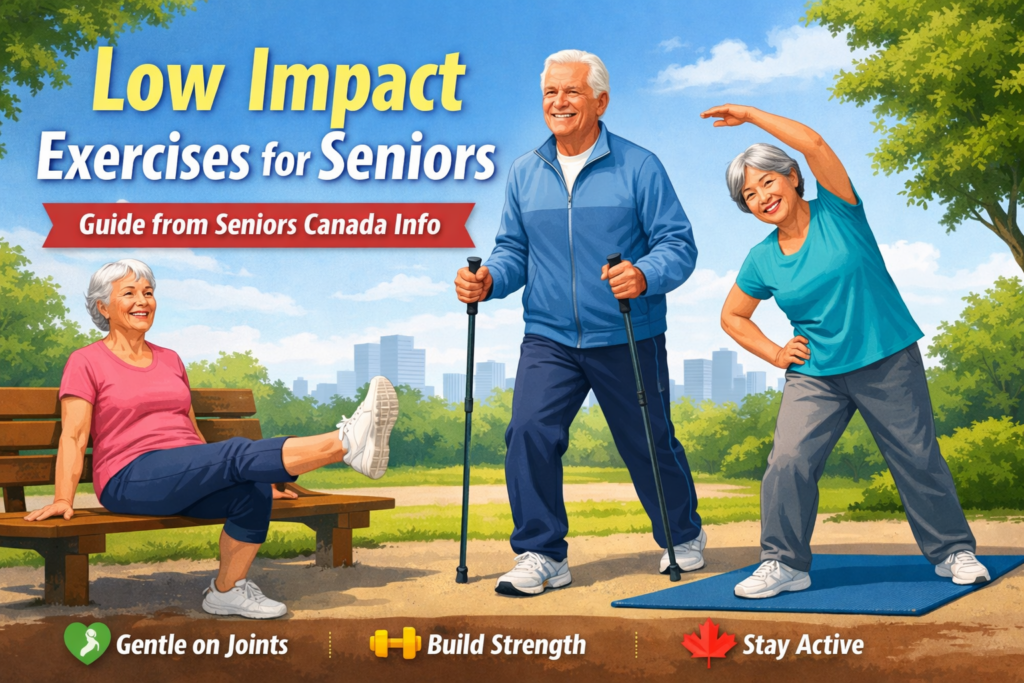
Low Impact Exercises for Seniors Guide From Seniors Canada Info
This Guide from Seniors Canada Info will help seniors on the road to better health with low impact exercises. Easy to do and recommended to keep muscles working and to build strength in a gentle way. This is not medical advice just a practical guide to give you tips to better your health.
Aging brings changes you can’t ignore. Joints stiffen, energy dips, and simple tasks like climbing stairs feel tough. Yet, many seniors in Canada dream of staying active and free from pain to keep their independence.
Why Low-Impact Exercise is Essential for Healthy Aging
Low-impact exercises offer a smart way forward. These gentle activities boost heart health, build muscle, and lift daily life without harming joints. This guide targets Canadian seniors and their caregivers, sharing safe, easy options proven to work.
You get tips on workouts, starting safely, and local resources. From pool sessions to chair stretches, find what fits your life. Let’s explore how these moves keep you strong and steady.
Low-impact exercises stand out for seniors. They cut injury risk while delivering real gains. Safety comes first, paving the way for lasting health benefits.
Understanding the Joint Impact Spectrum
High-impact moves like running or jumping jar bones and joints. They send shock through the body with each step. Low-impact ones keep at least one foot on the ground or use water for support.
Think of it as a soft landing every time. Joint-friendly workouts ease arthritis strain and protect cartilage. In Canada, where winters add slip risks, these choices matter most.
Doctors often recommend them for knee or hip issues. You avoid the pounding that worsens pain over time.
Cardiovascular Health Benefits Without the Strain
These exercises raise your heart rate just enough for good conditioning. They improve blood flow and lower pressure, key for avoiding strokes. Seniors see better energy and less fatigue from steady practice.
Picture your heart pumping stronger without extra stress. Circulation boosts help fight common age-related woes. Track your resting heart rate weekly to spot changes after a month.
In studies, folks over 65 cut heart risks by 20% with regular low-impact routines. That’s a win for long-term vitality.
Fall Prevention and Balance Improvement
Falls top the list of worries for older adults. The Public Health Agency of Canada reports over 200,000 senior falls yearly, many leading to injuries. Low-impact moves like Tai Chi stances fix that by sharpening balance.
Gentle leg raises build proprioception, your body’s sense of position. Static holds and slow shifts improve dynamic stability for everyday walks. You stand taller and move with confidence.
These efforts reduce fall odds by up to 25%, per health reports. Start small, and you’ll notice steadier steps soon.
Top Low-Impact Exercises for Full-Body Conditioning
Ready for action? This section breaks down key exercises. Each one targets full-body health in simple ways. Pick what suits you, and mix them up. You’ll cover strength, flexibility, and endurance without overload.
Aquatic Fitness: Swimming and Water Aerobics
Water lifts your weight, easing joint pressure. It’s perfect for those with bad arthritis or limited mobility. Buoyancy lets you move freely, building strength and range.
Community pools in Canada offer classes like aqua aerobics. These sessions include arm circles and leg kicks in shallow water. Many seniors regain motion after just weeks.
One woman in Toronto shared how pool therapy helped her walk without a cane again. Join a local YWCA or rec center—most have senior-friendly times.
Gentle Rhythms: Walking and Nordic Walking
Walking needs no gym or gear to start. It’s the easiest entry for busy seniors. Aim for flat paths in parks or neighborhoods.
Add Nordic poles for upper-body work. They cut knee load by 20% and burn more calories. Swing arms naturally to engage your core.
Keep posture right: shoulders relaxed, eyes ahead, steps deliberate. Start with 15 minutes daily. In Vancouver’s seawall trails, groups make it fun and social.
Controlled Strength: Chair Yoga and Resistance Bands
Build power for daily chores with these. Chair yoga uses a stable seat for twists and reaches. It tones muscles without floor work.
Resistance bands add pull for arms and legs. Choose light ones that stretch easy—scale up as you grow stronger. They keep Type II fibers active, vital for quick lifts like grabbing a bag.
A physiotherapist notes bands prevent muscle loss better than weights alone. Do 10 reps per side, three times a week. Feel the difference in grocery hauls.
Mind-Body Connection: Tai Chi and Gentle Pilates
Tai Chi flows slow, like a calm dance. It boosts flexibility and quiets stress while sharpening balance. Unlike quick stretches, it links breath to motion.
Gentle Pilates focuses on core control with seated rolls. Gentle Pilates is a softer, slower version of traditional Pilates that focuses on controlled movement, breathing, and alignment without putting stress on the joints. It’s designed to help older adults improve core strength, posture, and flexibility in a comfortable, low‑impact way. Movements are smooth and easy to follow, making it ideal for seniors who want to stay active, reduce stiffness, and support better balance without feeling overwhelmed or strained.
Integrating Movement Safely: Getting Started and Staying Consistent
Barriers like fear or boredom stop many. But smart steps make it stick. You can overcome them with ease. Focus on your pace and listen to your body. Small wins build big habits over time.
Consulting Healthcare Professionals Before Beginning
Always talk to your doctor first. They know your history with osteoporosis or heart issues, and getting clearance ensures a safe start. Ask questions like, “What limits should I set?” or “Are there any moves I should skip?” If you have diabetes, check for blood sugar tips as well. This way, the plan is tailored just for you.
Canadian guidelines from Health Canada stress this step. It avoids surprises and boosts confidence.
The Power of Gradual Progression (The 10% Rule)
Ramp up slow to dodge hurts. The 10% rule means add no more than 10% time or effort weekly. It keeps you fresh and injury-free. A senior in Alberta began with 10-minute water walks thrice weekly. By month two, she hit 30 minutes comfortably. No burnout, just progress.
Keep a journal to track your mood and comfort. Make adjustments if something feels off. Slow and steady always wins over rushing.
Finding Community and Motivation in Canada
Loneliness kills routines, so seek groups. Community centers host free senior fitness programs in Ontario. BC Parks offers walking clubs along ocean paths. Virtual classes via Zoom fit homebound days. Apps like Silver Sneakers connect you nationwide. Join for tips and cheers.
In Quebec, provincial leagues blend fun with fitness. Share goals with other seniors it doubles your drive.
Essential Gear and Environment Considerations
Gear matters for comfort and safety. Pick basics that support without fuss. Set up spaces right from day one. Affordable items last and prevent slips.
Footwear and Support Essentials
Good shoes are essential. Look for pairs with cushioning and good grip for walks, and steer clear of worn soles that can slip on wet sidewalks. For water activities, choose ones with secure straps to keep them in place. Orthotic inserts can help with flat feet or high arches. Always try them on in-store and walk around to ensure the right fit.
Creating a Safe Home Exercise Space
Clear floors of rugs or cords first. Lay non-slip mats under chairs for yoga. Bright lights show obstacles clear. Keep water nearby to stay hydrated. A fan cools hot rooms. Set near windows for fresh air.
FAQs
1. What are low‑impact exercises?
Low‑impact exercises are movements that are gentle on the joints and avoid heavy pounding or twisting. They include walking, stretching, chair exercises, light strength training, and water workouts.
2. Are low‑impact exercises safe for seniors with arthritis?
Yes — in most cases, low‑impact exercises are recommended for arthritis because they reduce stiffness and improve mobility. However, seniors should stop if they feel sharp pain and consult a healthcare provider if unsure.
3. How often should seniors do low‑impact exercises?
Most experts suggest 20–30 minutes, 3–5 days per week. Even short sessions — like 10 minutes at a time — offer real benefits.
4. Do I need special equipment?
No. Many low‑impact exercises use only body weight or household items. A chair, light dumbbells, or resistance bands can help but are optional.
5. Can I do these exercises if I have balance issues?
Yes — chair exercises, wall‑supported movements, and seated strength training are safe options. Always choose stable surfaces and avoid anything that feels risky.
6. What’s the best time of day for seniors to exercise?
Most seniors feel best in the morning or early afternoon, when energy levels are higher. The key is consistency — choose a time that feels comfortable.
7. Can low‑impact exercises really improve strength?
Absolutely. Gentle movements done regularly help maintain muscle, improve balance, and support independence.
Disclaimer
This article is for general information only and is not medical advice. Always consult a healthcare professional before starting any new exercise routine.
Conclusion
Consistency beats hard efforts in senior fitness. Stick with it, and gains follow naturally. You’ve got the tools now. Top picks: walking for ease, water aerobics for relief, and Tai Chi for balance. They cover body and mind well.
Pick one this week. Start with five minutes if needed. Your active life waits—no matter your age. Begin today.