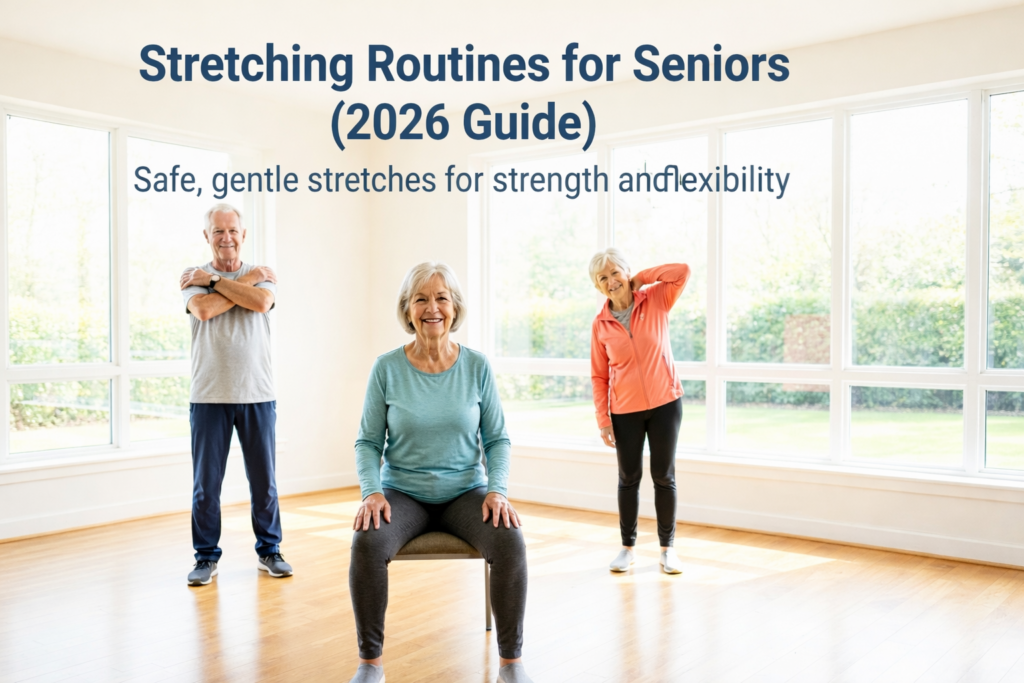
Stretching Routines for Seniors (2026 Guide)
Safe, gentle stretches for strength and flexibility. As we age, keeping our bodies flexible helps us move comfortably and enjoy daily activities without stiffness or discomfort. Stretching is one of the easiest ways to stay active, improve balance, and maintain independence.
This updated guide shows simple, safe stretches seniors can do at home — no equipment needed.
Why Stretching Matters
Regular stretching helps:
- Reduce stiffness in joints and muscles
- Improve posture and balance
- Make walking and daily tasks easier
- Support better mobility and independence
- Reduce discomfort from sitting too long
Stretching is gentle, low‑impact, and safe for most older adults.
Before You Start
- Move slowly and breathe normally
- Never bounce or force a stretch
- Stop if you feel sharp pain
- Hold each stretch for 10–20 seconds
- Use a sturdy chair for support if needed
Simple Stretching Routine for Seniors
These stretches can be done seated or standing — choose what feels comfortable.
1. Neck Side Stretch
Purpose: Reduces tension in the neck and shoulders. How to do it:
- Sit or stand tall.
- Gently tilt your head toward one shoulder until you feel a light stretch.
- Hold for 10–15 seconds, then switch sides.
2. Shoulder Roll Stretch
Purpose: Improves shoulder mobility and reduces stiffness. How to do it:
- Sit or stand upright.
- Roll your shoulders forward 10 times, then backward 10 times.
3. Chest Opener Stretch
Purpose: Helps with posture and upper‑body flexibility. How to do it:
- Sit or stand tall.
- Gently pull your shoulders back and open your chest.
- Hold for 10–15 seconds.
4. Seated Hamstring Stretch
Purpose: Reduces tightness in the back of the legs. How to do it:
- Sit on a chair.
- Extend one leg forward with your heel on the floor.
- Lean slightly forward from your hips until you feel a stretch.
- Hold for 10–20 seconds, then switch legs.
5. Ankle Flex & Point
Purpose: Improves ankle mobility and circulation. How to do it:
- Lift one foot slightly off the floor.
- Point your toes forward, then flex them back toward you.
- Repeat 10 times each foot.
6. Side Body Stretch
Purpose: Helps with flexibility and reaching movements. How to do it:
- Raise one arm overhead.
- Gently lean to the opposite side.
- Hold for 10–15 seconds, then switch sides.
7. Seated Lower Back Stretch
Purpose: Relieves tension in the lower back. How to do it:
- Sit tall.
- Slowly bend forward, letting your hands rest on your knees or thighs.
- Hold for 10–15 seconds, then return to sitting upright.
How Often Should Seniors Stretch?
Most older adults benefit from stretching 3–5 days per week, or even daily if comfortable. Short, consistent routines are more effective than long sessions.
🌳 Conclusion
When we reach those golden years, staying flexible keeps us moving freely. As a senior myself, I enjoy walking the local parks — and these stretches make it easier. Start today with a few gentle movements. Just five minutes can help you stay limber, confident, and independent.