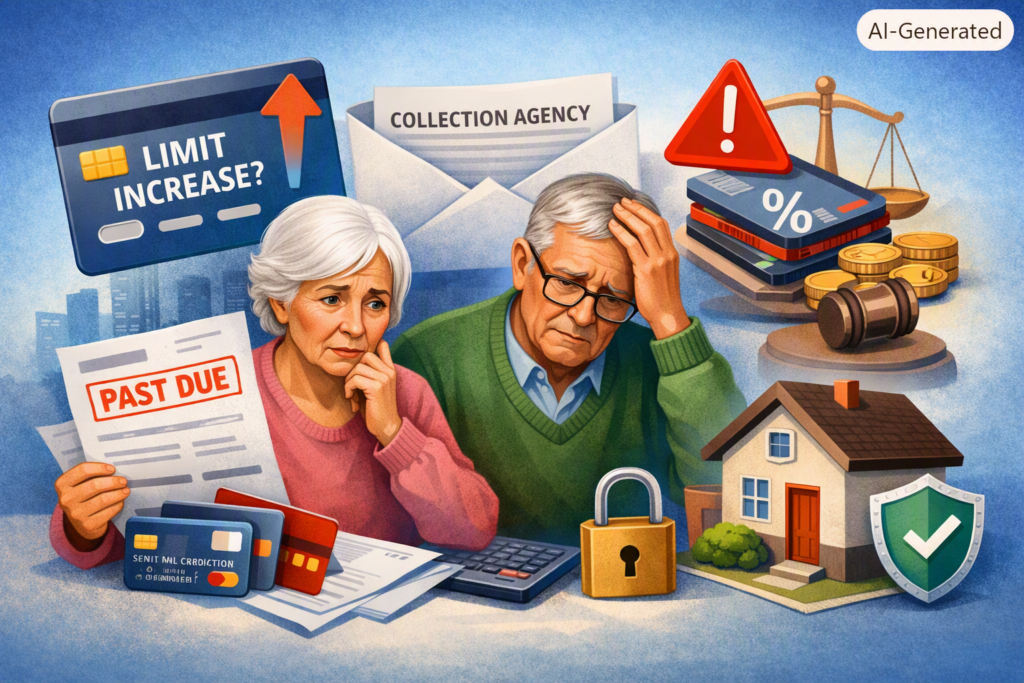
How Credit Card Debt For Seniors Can Trap You
Credit card companies love offering “pre‑approved” limit increases, especially to seniors. It feels flattering, convenient, and harmless. For older adults living on fixed incomes, these offers can quietly turn into a financial sinkhole. Higher limits often lead to higher balances, higher interest, and higher stress. And when things spiral, seniors can face collection calls, damaged credit, and even lawsuits. How Credit Card Debt For Seniors Can Trap You and what Seniors in Canada can do.
This article walks seniors through why these offers happen, how they create trouble, what warning signs to watch for, how to stay safe, and what to do if debt becomes overwhelming. It’s written in plain language, with practical steps that protect your financial stability and peace of mind.
Why Seniors Are Targeted With Limit Increases
Credit‑card companies know seniors often have long credit histories, predictable spending habits, and stable incomes such as pensions or CPP. That makes older adults “low‑risk, high‑profit” customers. When a senior accepts a limit increase, the bank earns more interest, more fees, and more long‑term revenue.
The danger is subtle: a higher limit doesn’t feel like debt — it feels like breathing room. But once spending rises, even slightly, the monthly minimums rise too. For seniors on fixed incomes, that shift can quietly destabilize a budget.
How Limit Increases Lead to Financial Trouble
A higher credit limit changes your financial psychology. It encourages larger purchases, reduces the urgency to pay down balances, and makes it easier to rely on credit for everyday expenses. Over time, balances creep upward, interest compounds, and minimum payments become harder to manage.
Once a senior begins using credit to cover groceries, medications, or emergencies, the card stops being a tool and becomes a lifeline — and that’s when trouble begins.

Warning Signs Seniors Should Never Ignore
If you notice any of the following, it’s time to pause and reassess your financial situation:
- Your balance keeps rising even though your spending hasn’t changed much.
- You’re paying only the minimum each month.
- You’re using credit for essentials instead of extras.
- You’re receiving repeated “pre‑approved” limit increase offers.
- Your minimum payment suddenly jumps after accepting a limit increase.
These signals often appear months before serious financial strain sets in.
How Seniors Can Protect Themselves Before Trouble Starts
The safest approach is to treat credit‑limit increases with caution. You can decline them, freeze your limit, or call your bank to block future offers. Setting spending alerts helps you stay aware of your balance, and reviewing statements monthly keeps surprises away.
If you do carry a balance, keeping it under 30% of your limit protects your credit score and reduces interest costs. And if you’re tempted to use credit for emergencies, consider building a small cash buffer instead — even $20 a week adds up.
Responsible Ways to Handle Existing Credit‑Card Debt
If your balance is already higher than you’d like, there are safe ways to regain control. You can ask your bank for a hardship program, request an interest‑rate reduction, or explore nonprofit credit counselling. Seniors often benefit more from lowering interest than from aggressive payoff strategies.
Consolidating debt into a lower‑interest line of credit can also help, but only if you avoid re‑using the credit card afterward.
What Happens If You Default on Credit‑Card Debt
Missing payments triggers late fees and interest. After 60–90 days, the account may be sent to collections. After 180 days, the bank “charges off” the debt and may sell it to a debt‑buyer.
This is where many seniors panic — but defaulting does not mean losing your home, your pension, or your independence. It simply means the creditor will try to recover the debt through calls, letters, or legal action.
What To Do If You’re Sued for Credit‑Card Debt
If a debt‑buyer or bank sues you, the most important step is to respond. Many seniors lose cases simply because they ignore the paperwork. Responding forces the creditor to prove the debt, show proper documentation, and justify the amount.
In many cases, debt‑buyers cannot produce the required paperwork. Seniors often win, settle for less, or negotiate payment plans. In BC, your primary residence has strong protections, and pensions are generally exempt from seizure.
FAQs About Seniors and Credit‑Card Debt
Why do credit‑card companies target seniors?
Seniors often have strong credit histories and predictable incomes, making them profitable customers for banks. This leads to more limit‑increase offers and marketing pressure.
Is a credit‑limit increase ever a good idea for seniors?
It can be helpful for emergencies, but only if the senior has a stable budget and avoids carrying a balance. For most older adults, declining increases is safer.
Can a senior lose their home over credit‑card debt?
In Canada, especially BC, primary residences have strong protections. Credit‑card debt alone rarely leads to losing a home.
What should a senior do if they receive a lawsuit notice?
Respond immediately. Ignoring the notice leads to automatic judgment. Responding forces the creditor to prove the debt and often leads to better outcomes.
Where can seniors get safe help with debt?
Nonprofit credit‑counselling agencies, provincial consumer‑protection offices, legal‑aid clinics, and senior‑advocacy organizations offer trustworthy support.
Disclosure
This article provides general financial information for seniors and is not legal or financial advice. Laws vary by province, and individual situations differ. Seniors facing serious debt or legal action should consult a licensed financial counsellor or lawyer for personalized guidance.
Conclusion
Credit‑card companies design limit increases to look helpful, but for seniors, they often create long‑term financial strain. By understanding the traps, watching for warning signs, and taking proactive steps, older adults can protect their independence and financial stability.
If debt becomes overwhelming, remember: you’re not alone, you have rights, and help is available. Responding early — whether to rising balances or to a lawsuit — is the key to staying safe.