Illegal Fishing Vanishing Species and Why Canadian Seniors Should Care
This Article was written to enlighten Canadian Seniors on the disaster that is happening in the Pacific North West. Between BC and Japan there is horrific illegal fishing activity going on. Warning this article is hard to read but it is information I find should be shared with every senior in Canada. Let’s look at Illegal Fishing, Vanishing Species. and Why Canadian Seniors Should Care.
The Rise of Illegal Fishing in the North Pacific
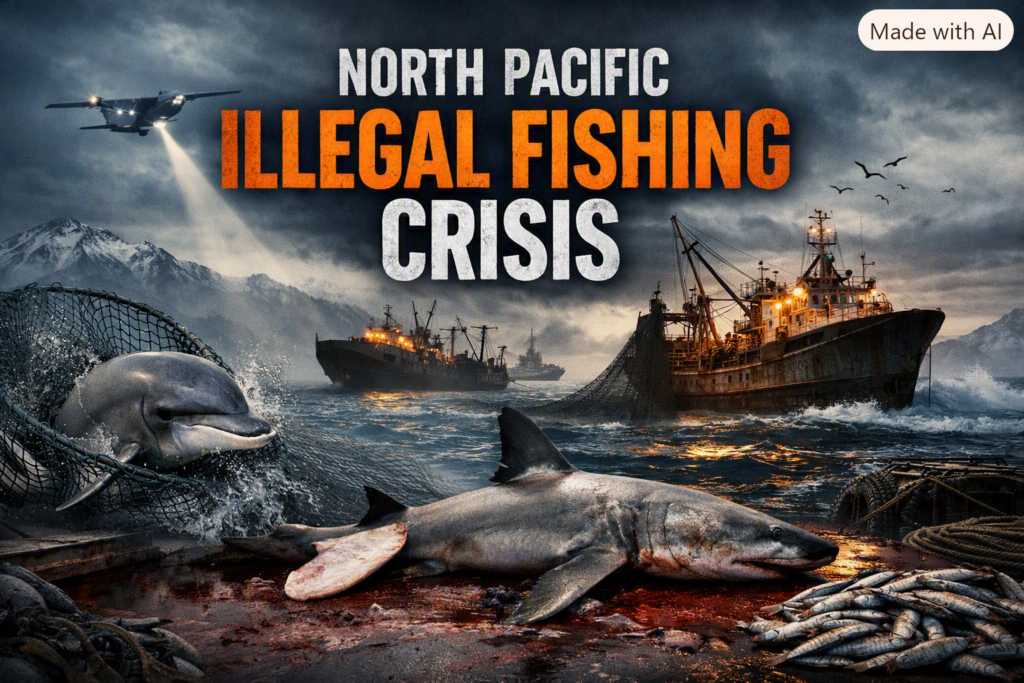
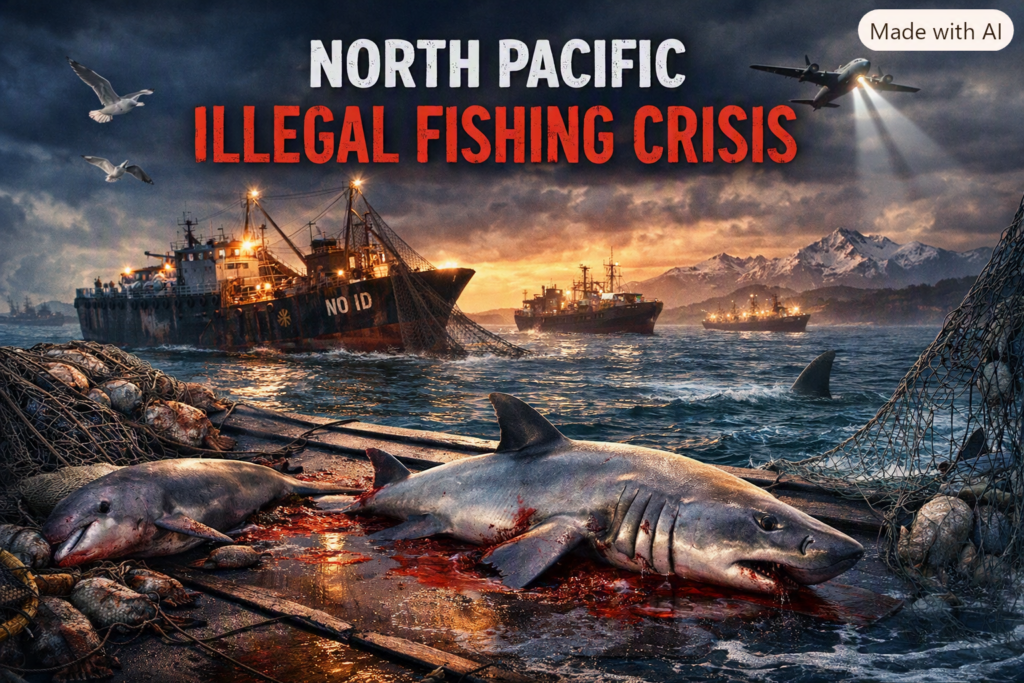
Illegal, unreported, and unregulated fishing — often called IUU fishing — has grown into one of the largest environmental crimes in the world. In the waters between British Columbia, Alaska, Russia, and Japan, rogue fleets operate far from public view. These vessels often turn off their tracking systems, use banned drift nets stretching kilometres long, and target species that are already under pressure. International watchdogs have documented ships catching protected marine mammals, harvesting sharks only for their fins, and dumping carcasses back into the sea. The remoteness of the North Pacific makes enforcement extremely difficult, allowing criminal operations to thrive.
Shark Finning and Dolphin Bycatch: The Dark Reality
One of the most disturbing practices involves shark finning, where sharks are caught, their fins removed, and their bodies discarded. This is done because fins are valuable on the black market, while the rest of the shark is considered waste. Some illegal fleets have been reported using dolphins or small whales as bait to attract sharks, a practice that is both cruel and ecologically devastating. These actions destroy apex predators that keep marine ecosystems balanced, and they contribute to the collapse of species that reproduce slowly and cannot withstand heavy exploitation.
The Disappearance of Sardines and Salmon Food Sources
Sardines, anchovies, and other forage fish are the foundation of the Pacific food chain. They feed salmon, seabirds, whales, and countless other species. Historically, sardines were so abundant on the BC coast that they supported a thriving fishery until the mid‑20th century. Today, their numbers have dropped dramatically. Scientists debate the causes, but many point to overfishing, climate shifts, and industrial fleets harvesting massive quantities for fishmeal and foreign markets. When these small fish disappear, salmon suffer, and so do the communities that depend on them. Seniors who remember strong salmon runs can see how much has changed.
How Illegal Fishing Impacts Canada Directly
Although much of the illegal activity occurs far offshore, Canada is not insulated from its effects. Salmon returning to BC rivers must survive the open ocean, where food scarcity and predatory pressure are increasing. Canadian fishermen face unfair competition from fleets that ignore quotas and conservation rules. Coastal First Nations, whose cultures are tied to salmon and marine life, experience the consequences firsthand. Even consumers feel the impact, as illegally caught seafood can enter global supply chains, raising concerns about mislabeling, contamination, and sustainability. The ocean is shared, and damage done thousands of kilometres away eventually reaches our shores.
Why This Matters to Canadian Seniors
Canadian seniors have a unique perspective on this issue. Many grew up during a time when fishing was a family tradition, when salmon was plentiful, and when coastal towns thrived on marine resources. The decline of these species is not just an environmental story — it is a cultural one. Seniors often care deeply about food safety, environmental stewardship, and leaving a healthy world for their grandchildren. Understanding illegal fishing helps them make informed choices about the seafood they buy, the policies they support, and the legacy they want to protect. This topic resonates because it connects memory, identity, and responsibility.
Disclosure
This article is based on publicly available environmental reports, international marine conservation research, and documented cases of illegal fishing activity in the North Pacific. It does not rely on classified information or unpublished sources. All descriptions of illegal practices reflect known patterns reported by global watchdog organizations, scientific bodies, and government agencies. The purpose of this article is educational and intended to raise awareness among Canadian seniors about the environmental and cultural impacts of illegal fishing.
Frequently Asked Questions
Is illegal fishing really happening near Canadian waters?
Yes. While most activity occurs in international waters, the North Pacific is interconnected. Illegal fleets operating between Japan, Russia, and Alaska affect the same migratory species that travel through Canadian waters.
Are dolphins truly used as bait by illegal fleets?
There have been documented cases in parts of the Pacific where dolphins and small whales were used as shark bait. This is not common everywhere, but it is part of the broader pattern of unethical practices in unregulated fisheries.
Why are sardines and anchovies disappearing?
Scientists point to a combination of climate change, ocean temperature shifts, and heavy industrial fishing. These species are harvested in enormous quantities, and their decline affects salmon and other wildlife.
Does illegal fishing affect the seafood sold in Canada?
It can. Illegally caught fish sometimes enter global supply chains through mislabeling or transshipment. This raises concerns about sustainability and food safety for Canadian consumers.
What can seniors do to help?
Seniors can support sustainable seafood programs, stay informed about ocean conservation, and encourage policymakers to strengthen monitoring and enforcement in the Pacific. Awareness is the first step toward protecting marine ecosystems.
Conclusion
The crisis unfolding in the North Pacific is not a distant problem. It is a story that touches Canada’s environment, economy, and cultural heritage. Illegal fishing threatens species that have shaped our coastal identity for generations, from salmon to sardines to sharks. For Canadian seniors, this issue carries emotional weight because it reflects a dramatic shift from the ocean they once knew. By understanding the scale of the problem and recognizing how global actions affect local waters, seniors can play a meaningful role in advocating for a healthier Pacific. The ocean has given so much to Canada — now it needs our protection more than ever.