
Can the Sheriff Take Your Possessions If You’re Sued for Debt? A Guide for Low‑Income Seniors in Canada
For many seniors living on fixed incomes, the fear of being sued for an old debt can feel overwhelming. The idea of a sheriff showing up at your door and taking your belongings is terrifying — especially when you rely on those items for daily living, mobility, and comfort. Debt collectors often use aggressive language, and civil court paperwork can look intimidating. But the truth is far different from the fear. Can the Sheriff take your possessions if you’re sued for debt in Canada if your a low income senior?
Across Canada, seniors have strong legal protections. Sheriffs cannot simply walk into your home and take whatever they want. Every province has laws that protect essential household items, medical equipment, pension income, and even a modest vehicle. In reality, most low‑income seniors do not own anything a sheriff is legally allowed to seize. Understanding your rights can remove the fear and help you make informed decisions if a creditor threatens civil court action.
This article explains what really happens when a senior is sued, what sheriffs can and cannot take, and how the rules differ across Canada. If you’re worried about losing your possessions, this guide will give you clarity, confidence, and peace of mind.
What Happens When a Senior Is Sued in Civil Court
Being sued does not mean the sheriff is automatically coming to your home. A civil claim is simply a legal document stating that a creditor is asking the court to confirm you owe a debt. If you do not respond, the court may issue a default judgment. Even then, enforcement is not automatic.
Before any sheriff action can occur, the creditor must take additional steps. They must ask the court for permission to enforce the judgment, and the sheriff must review your financial situation. This review determines whether you have any non‑exempt assets — meaning items that can legally be taken and sold to pay the debt. For most seniors, the answer is no. Their income is protected, their belongings are exempt, and their assets fall below seizure thresholds.
Civil court is not designed to punish seniors or take away essential property. It is a process creditors use to formalize a debt, but enforcement is limited by law.
Canada‑Wide Protections for Seniors
Although each province has its own legislation, the protections for seniors are remarkably similar across the country. Essential household goods such as beds, clothing, basic furniture, and appliances are exempt from seizure. Medical devices — including walkers, wheelchairs, CPAP machines, and mobility scooters — are fully protected. Pension income such as CPP, OAS, and GIS cannot be seized by a sheriff.
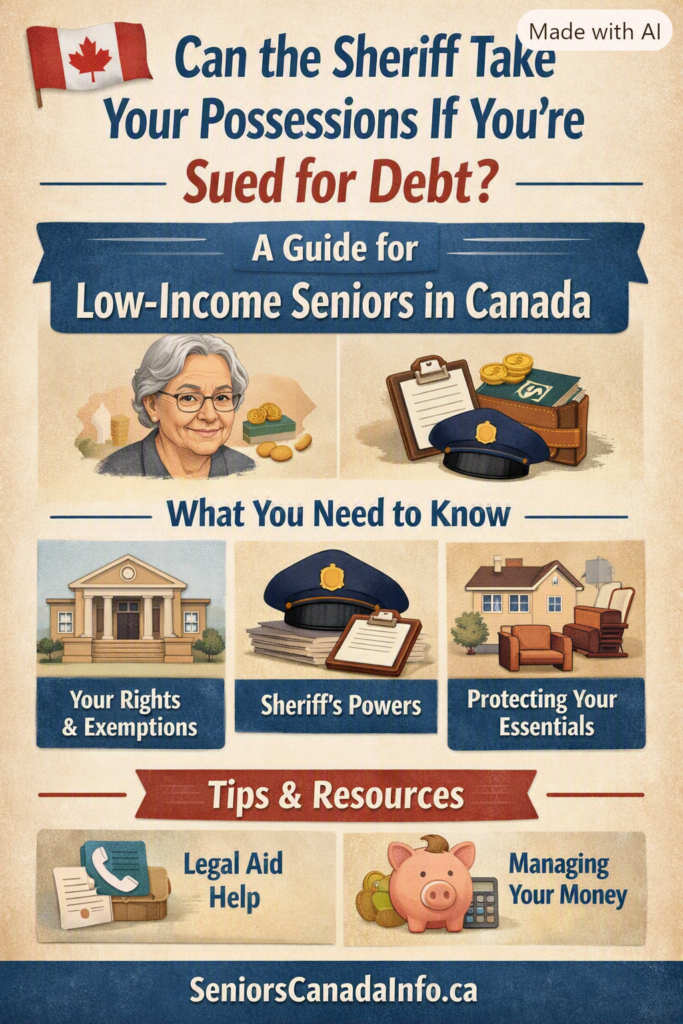
Most provinces also protect a modest vehicle up to a certain value. This ensures seniors can attend medical appointments, buy groceries, and maintain independence. Even tools of the trade are protected, which matters for seniors who still work part‑time or run small home‑based businesses.
These exemptions exist because the law recognizes that taking essential items would cause harm and violate basic human dignity. Sheriffs are required to respect these protections.
Provincial Differences in Seizure Rules
While the overall protections are similar, each province sets its own exemption limits. For example, one province may allow a higher vehicle exemption value than another. Some provinces list specific categories of household goods, while others use broader language such as “necessary personal items.”
Despite these differences, the outcome for low‑income seniors is almost always the same. Their belongings fall within the exemption categories, and their income sources are protected. A creditor may obtain a judgment, but enforcement rarely results in seizure because seniors simply do not have seizable assets.
If you want to expand this section into a province‑by‑province breakdown later, you can use provincial exemption rules as a starting point.
What Sheriffs Can Legally Seize
Sheriffs can only seize non‑exempt property. This usually means luxury items or high‑value assets. Examples include expensive jewelry, high‑end electronics, recreational vehicles, or a vehicle worth more than the provincial exemption limit. Bank accounts can be frozen, but pension‑only accounts are protected.
For most seniors living on fixed incomes, these items simply do not exist. This is why civil enforcement against seniors is rare and often unsuccessful. Creditors know this, which is why many rely on intimidation rather than actual legal action.
Why Seniors Are Strongly Protected
Canadian law recognizes that seniors often live on limited incomes and rely on essential items for health and daily living. Taking these items would cause hardship and violate the purpose of civil enforcement, which is to recover money — not to harm vulnerable individuals.
Because seniors typically receive protected income and own minimal assets, they are considered “judgment‑proof.” This means a creditor may win a judgment, but they cannot collect on it. Understanding this concept can help seniors feel safer when dealing with aggressive collectors.
What to Do If You Receive a Civil Claim
If you receive a civil claim, do not panic. Read the document carefully and consider responding within the required timeframe. Even if you choose not to respond, the outcome is usually a judgment that cannot be enforced against your essential property or protected income.
If you are unsure, speaking with a legal advocate or community organization can help you understand your options. Seniors do not need to face civil court alone, and many free resources exist across Canada.
Frequently Asked Questions
Can the sheriff take my bed, furniture, or appliances?
No. Essential household items are exempt from seizure in every province. Sheriffs cannot take your bed, fridge, stove, or basic furniture.
Can the sheriff take my mobility scooter or medical equipment?
No. Medical devices are fully protected. This includes walkers, wheelchairs, scooters, CPAP machines, and other health‑related items.
Can the sheriff take my CPP, OAS, or GIS?
No. Pension income is protected from seizure. Sheriffs cannot take your government benefits.
Can the sheriff take my car?
Only if it is worth more than the provincial exemption limit. Most seniors drive modest vehicles that fall under the protected value.
Can the sheriff enter my home without permission?
Sheriffs cannot force entry into your home for civil debt seizure. They may only enter if invited or if the court grants special permission, which is extremely rare.
What happens if I ignore a civil claim?
The court may issue a default judgment, but enforcement is limited. Most seniors do not have seizable assets, so no property is taken.
Are the rules the same across Canada?
The details vary, but the protections are similar. Essential items, medical devices, and pension income are protected nationwide.
Conclusion
Debt can be stressful, especially for seniors living on fixed incomes. But the fear of losing your possessions is often based on misunderstanding and intimidation. Canadian law provides strong protections that prevent sheriffs from taking essential household goods, medical equipment, and pension income. While civil court can result in a judgment, enforcement against seniors is rare and limited. Understanding your rights can help you stay calm, make informed decisions, and avoid being pressured by aggressive collectors.
Disclosure
This article provides general information about civil enforcement and debt collection laws in Canada. It is not legal advice. Seniors facing a civil claim or debt issue should consider speaking with a qualified legal professional or community advocate for guidance specific to their situation.