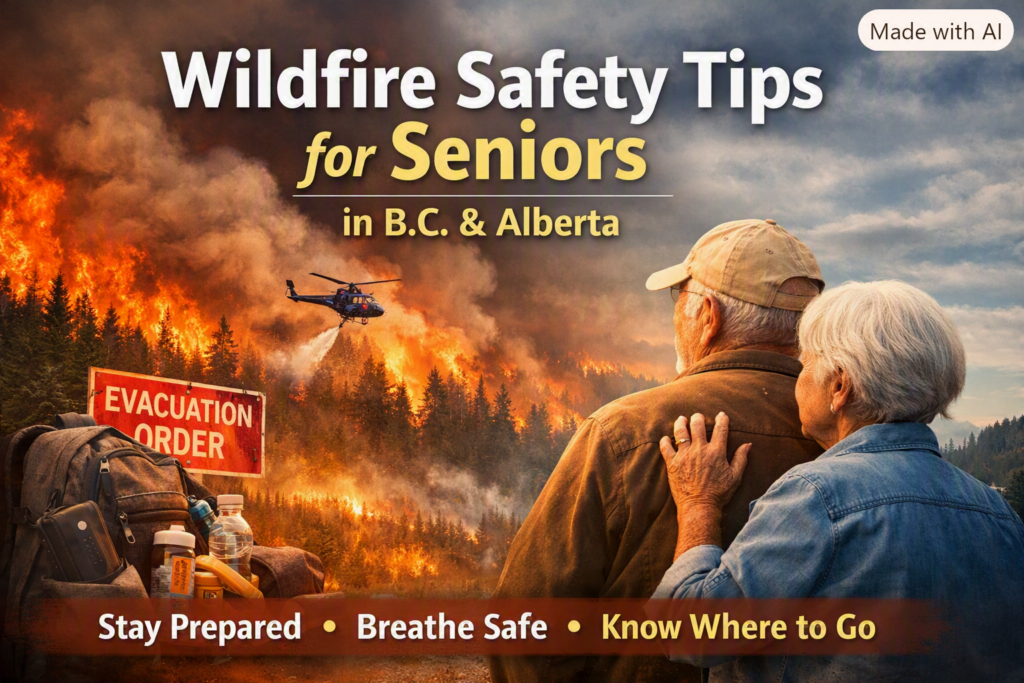
Wildfire Safety for Seniors in British Columbia and Alberta (2026 Guide)
Wildfires in British Columbia and Alberta have become more intense, more unpredictable, and more dangerous for seniors than ever before. In 2026, both provinces faced out of control fires, mass evacuations, thick smoke, extreme heat, and widespread power outages. Seniors are at higher risk during these events because smoke affects aging lungs more severely, mobility challenges make evacuation harder, and disruptions to medications or medical equipment can quickly become Life-threatening. This guide explains how seniors can stay safe, how to prepare for evacuation, what to expect from insurance, and where to go for help during wildfire emergencies. It is written in clear, friendly for seniors language and grounded in current Canadian wildfire and insurance guidance.
Understanding the Risks for Seniors During Wildfires
Wildfires can affect communities with little warning, and seniors face additional health and safety risks when smoke, heat, and service disruptions occur. According to the Seniors Advocate BC, wildfire smoke, extreme heat, and power outages can worsen breathing problems, heart conditions, and mobility limitations for older adults. Staying informed through official sources such as EmergencyInfoBC and the BC Wildfire Service is essential for seniors living in or travelling through affected areas.
Protecting Your Health During Smoke Events
Wildfire smoke contains fine particles that irritate the lungs and can trigger coughing, wheezing, chest pain, and severe breathing difficulty. Seniors should stay indoors when air quality is poor, keep windows closed, and drink plenty of water to stay hydrated. HealthLink BC advises contacting a healthcare provider if symptoms worsen and calling 9‑1‑1 for any medical emergency.
Preparing for Evacuation Before an Alert Is Issued
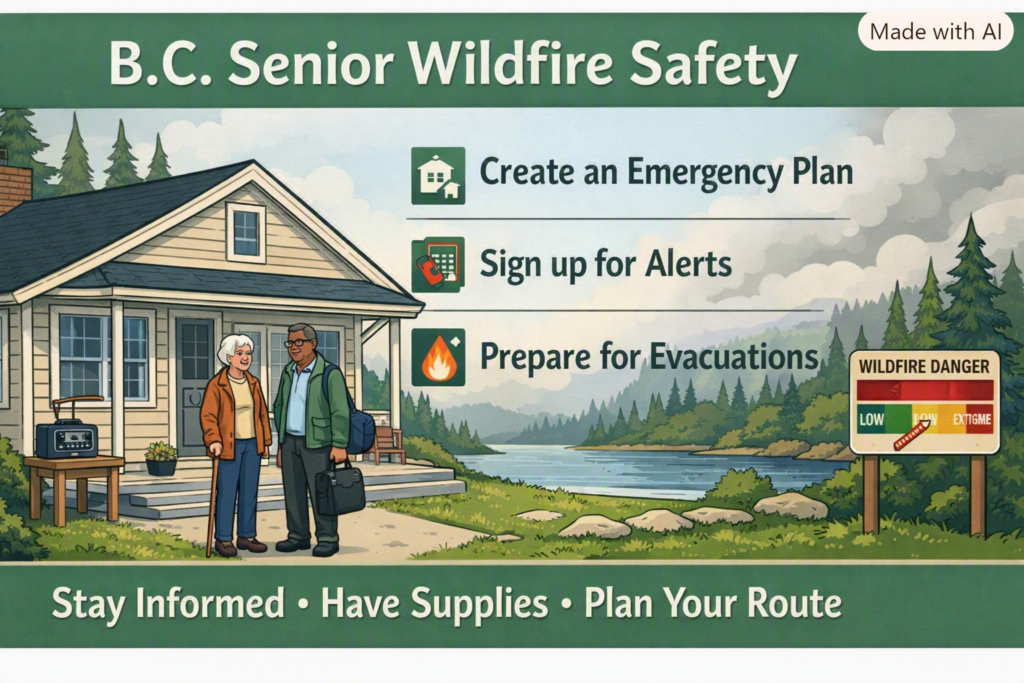
Being prepared is one of the most important steps seniors can take. A grab and go bag should include medications, medical supplies, important documents, and essentials needed for several days away from home. Seniors who rely on oxygen, powered medical equipment, or mobility aids should have a plan in case of a power outage or sudden evacuation. If you receive home support or in-home care speak with your provider about what will happen if services are disrupted.
Staying Connected and Asking for Help
Wildfires can isolate seniors quickly, especially those living alone. The Seniors Advocate BC recommends letting family, friends, or neighbours know if you may need assistance and arranging for someone to check in during heavy smoke or evacuation alerts. Staying connected ensures seniors receive help with transportation, medication access, and emergency updates.
Following Evacuation Alerts and Orders
When an evacuation alert is issued, seniors should prepare to leave immediately. When an evacuation order is issued, you must leave without delay. EmergencyInfoBC provides real time updates on evacuation alerts, orders, and reception centres. Seniors should follow official instructions and avoid returning home until authorities confirm it is safe.
Where Seniors Can Go During Evacuations
Emergency Support Services (ESS) reception centres are set up across BC and Alberta during wildfire events. These centres provide temporary lodging, food, and essential support. In 2026, the Insurance Bureau of Canada deployed trained professionals to reception centres such as the Penticton Trade and Convention Centre to help evacuees navigate insurance questions and claims. Seniors can also contact IBC’s Consumer Information Centre at 1‑844‑227‑5422 for assistance.
Insurance Guidance for Seniors During Wildfires
Wildfires can destroy homes, damage property, or force seniors to evacuate for extended periods. The Insurance Bureau of Canada provides clear guidance for residents affected by wildfires:
Home insurance policies generally cover fire damage, even if the fire began on a neighbouring property. Seniors should contact their insurance representative as soon as possible to begin the claims process. Most insurers offer 24‑hour claims service. When safe, list damaged items, gather receipts, and take photos of damage. Keep all receipts related to cleanup and living expenses if you’ve been displaced.
Understanding Additional Living Expenses (ALE)
One of the most important insurance protections for seniors during wildfires is Additional Living Expenses (ALE) coverage. ALE pays for hotel stays, meals, and other necessary costs when a mandatory evacuation order prevents you from staying in your home—even if your home never burns. Coverage is typically capped by both time and dollar amount, and the clock usually starts the day the evacuation order is issued. Seniors should ask their insurer about their ALE limits and whether smoke damage is covered under a separate sublimit.
Civil‑Authority Evacuation Coverage
Civil‑authority coverage can begin paying for living expenses as soon as a mandatory evacuation order is issued. In August 2026, more than 20,000 people were evacuated from Summerland and surrounding Okanagan communities due to the Bald Range wildfire. Even if fire never reaches your home, evacuation coverage may still apply. Seniors should open a claim early to protect their benefits and confirm whether their policy limits living expenses by time or by dollar amount.
Returning Home Safely After a Wildfire
Emergency officials may take time to determine when residents can return home. Once permitted, seniors should inspect their home carefully, document damage, and contact their insurer with updated information. Keep receipts for all expenses incurred during displacement. If your home support services were disrupted, reconnect with providers to resume care safely.
Frequently Asked Questions (FAQs)
Why are seniors more vulnerable during wildfires?
Seniors face higher risks because wildfire smoke worsens breathing and heart conditions, extreme heat affects older adults more severely, and mobility challenges make evacuation harder.
What should seniors do when air quality becomes dangerous?
Stay indoors, keep windows closed, drink water, and monitor symptoms. Contact a healthcare provider if breathing becomes difficult.
Do I need to wait for damage before contacting my insurer?
No. You can begin a claim as soon as you are evacuated or affected. Insurers encourage early contact to ensure ALE coverage starts promptly.
Does insurance cover wildfire smoke damage?
Most home insurance policies cover fire damage, but smoke damage may fall under a separate sublimit depending on the policy. Seniors should ask their insurer directly.
Where can seniors get help during evacuations?
ESS reception centres provide lodging and support. IBC’s helpline (1‑844‑227‑5422) offers insurance guidance.
Disclosure
This article provides general wildfire safety and insurance information for seniors in British Columbia and Alberta. It is not legal or medical advice. Seniors with health concerns should consult a healthcare provider, and those with insurance questions should speak directly with their insurer or broker. SeniorsCanadaInfo.ca is not affiliated with any government agency.
A Strong Conclusion
Wildfires in BC and Alberta are becoming more severe, and seniors must take proactive steps to stay safe. Understanding smoke risks, preparing for evacuation, staying connected with loved ones, and knowing how insurance works can make a difficult situation more manageable. With preparation, awareness, and support from community services, seniors can protect their health, secure their homes, and navigate wildfire emergencies with confidence. Canada’s wildfire seasons may be unpredictable, but senior safety does not have to be.