How Seniors Can Stay Safe During Wildfire Smoke in Canada (2026)
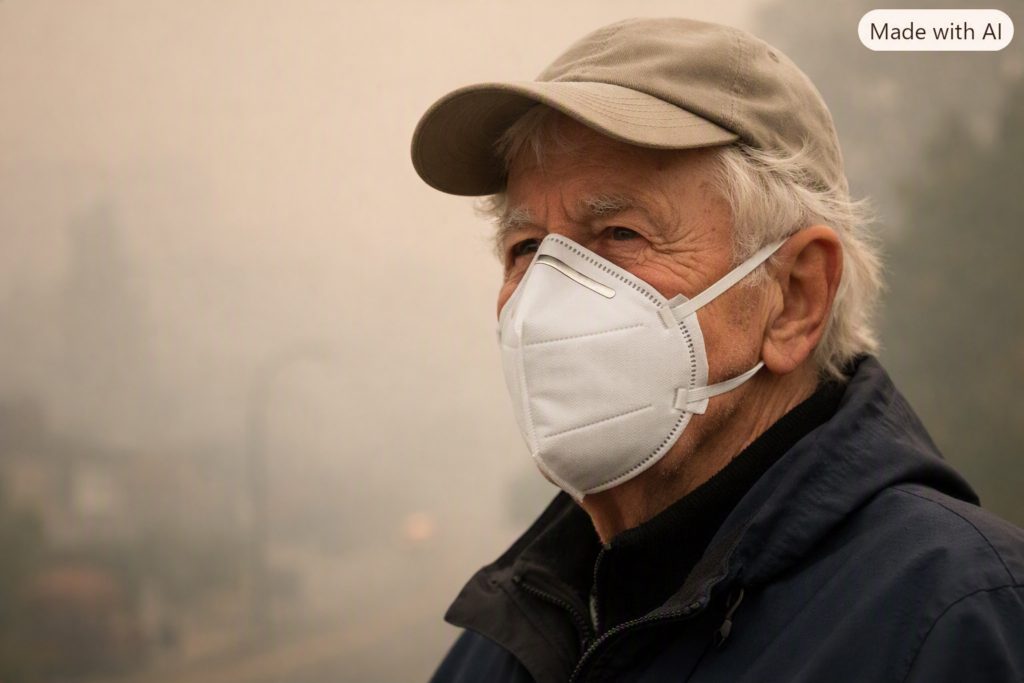
Wildfire smoke has become a regular part of Canadian summers, and for seniors, it brings real health risks that can’t be ignored. As fires burn across British Columbia, Alberta, and other provinces, the air fills with fine particles that make breathing harder, irritate the eyes and throat, and worsen conditions like asthma, COPD, and heart disease. Older adults are more vulnerable because aging lungs and immune systems struggle to filter out polluted air. This guide explains How Seniors Can Stay Safe During Wildfire Smoke in Canada and what wildfire smoke does to the body. How seniors can protect themselves, and what steps to take when air quality becomes dangerous.
Understanding Why Wildfire Smoke Is Dangerous for Seniors
Wildfire smoke contains tiny particles called PM2.5 — small enough to travel deep into the lungs and even enter the bloodstream. For seniors, this can trigger coughing, wheezing, shortness of breath, chest discomfort, headaches, and fatigue. Those with chronic conditions may experience flare‑ups that require medication or medical attention. Canadian health agencies warn that seniors should take smoke advisories seriously, even if symptoms seem mild at first. The effects can build over hours or days, especially during long periods of poor air quality.
Staying Indoors When Air Quality Is Poor
When smoke levels rise, the safest place for seniors is indoors. Closing windows and doors helps keep polluted air out, and reducing outdoor activity prevents unnecessary exposure. Many seniors notice symptoms only after being outside for a short time, especially during errands or walks. Staying inside during heavy smoke days protects the lungs and reduces strain on the heart. If indoor air feels stale or warm, using fans or air conditioning can help maintain comfort without bringing in outdoor smoke.
Creating a Cleaner Air Space at Home
Canadian health authorities recommend setting up one room in the home as a “cleaner air space.” This is usually the bedroom or living room. A HEPA air purifier can remove most smoke particles from the air, making breathing easier and reducing irritation. Seniors who don’t have a purifier can create a simple DIY version using a box fan and a high‑quality furnace filter. Cleaner air spaces are especially helpful during multi‑day smoke events, giving seniors a safe place to rest and recover.
Protecting Yourself When You Must Go Outside
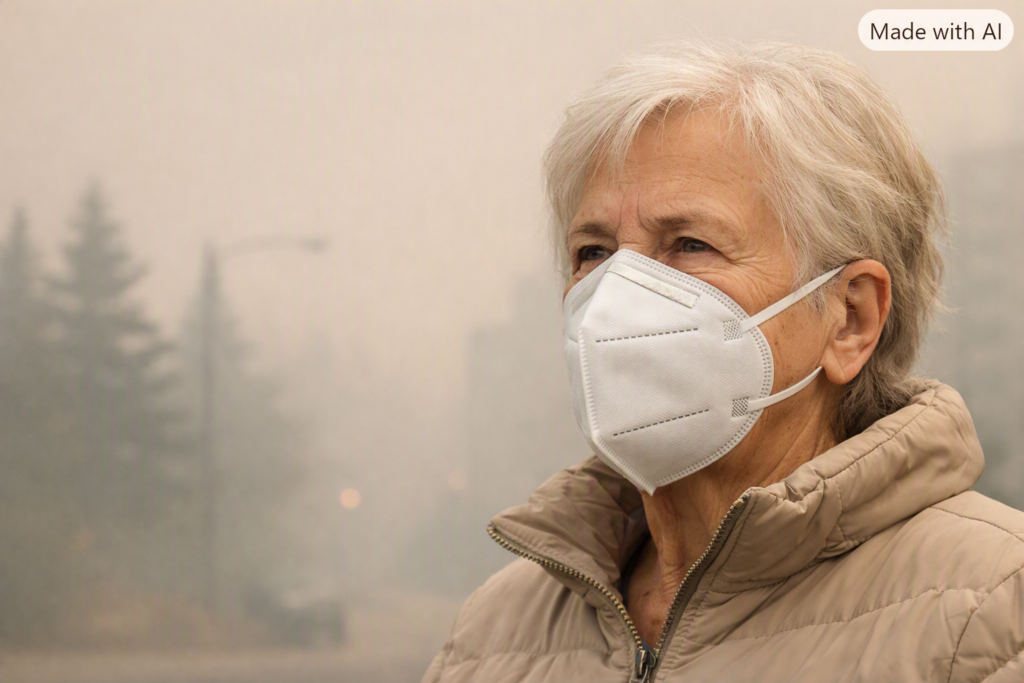
Sometimes seniors need to leave the house for appointments, groceries, or essential errands. When that happens, wearing a well‑fitted N95 or KN95 mask provides meaningful protection against smoke particles. These masks filter out PM2.5 far better than cloth or surgical masks. Moving slowly, staying hydrated, and avoiding strenuous activity can also reduce symptoms. Seniors should pay attention to how they feel outdoors and return inside if breathing becomes difficult or if coughing increases.
Managing Health Conditions During Smoke Events
Seniors with asthma, COPD, or heart disease should keep medications close at hand during smoke advisories. Inhalers, rescue medications, and daily prescriptions should be easy to reach and not stored in another room. Many seniors experience flare‑ups during smoky periods, even if their conditions are normally stable. Staying hydrated helps keep airways moist, and resting more than usual reduces strain on the lungs and heart. If symptoms worsen or breathing becomes difficult, contacting a healthcare provider is important.
Staying Cool When It’s Smoky and Hot
Wildfire smoke often arrives during heat waves. For seniors, heat can be even more dangerous than smoke. If the home becomes too warm, visiting a community centre, mall, or library with air conditioning may be safer than staying inside. These locations usually have cleaner air and cooler temperatures, reducing stress on the body. Seniors should avoid outdoor cooling stations if they are located in smoky areas.
Checking on Seniors Who Live Alone
Wildfire smoke can affect seniors quickly, especially those with breathing or heart conditions. Friends, neighbours, and family members should check in on older adults who live alone. A simple phone call or visit can make sure they are safe, hydrated, and aware of the current air quality conditions. Many seniors hesitate to ask for help, so proactive check‑ins are important during smoke events.
A Strong Conclusion
Wildfire smoke is becoming a regular part of Canadian summers, and seniors face the highest risks when air quality drops. Staying indoors, creating a cleaner air space, wearing proper masks, and managing health conditions carefully can make a major difference. With the right steps, seniors can stay safe, breathe easier, and protect their health during smoky periods. Canada’s wildfire seasons may be unpredictable, but senior safety doesn’t have to be. Knowledge, preparation, and simple daily habits can keep older adults secure and supported until the air clears again.