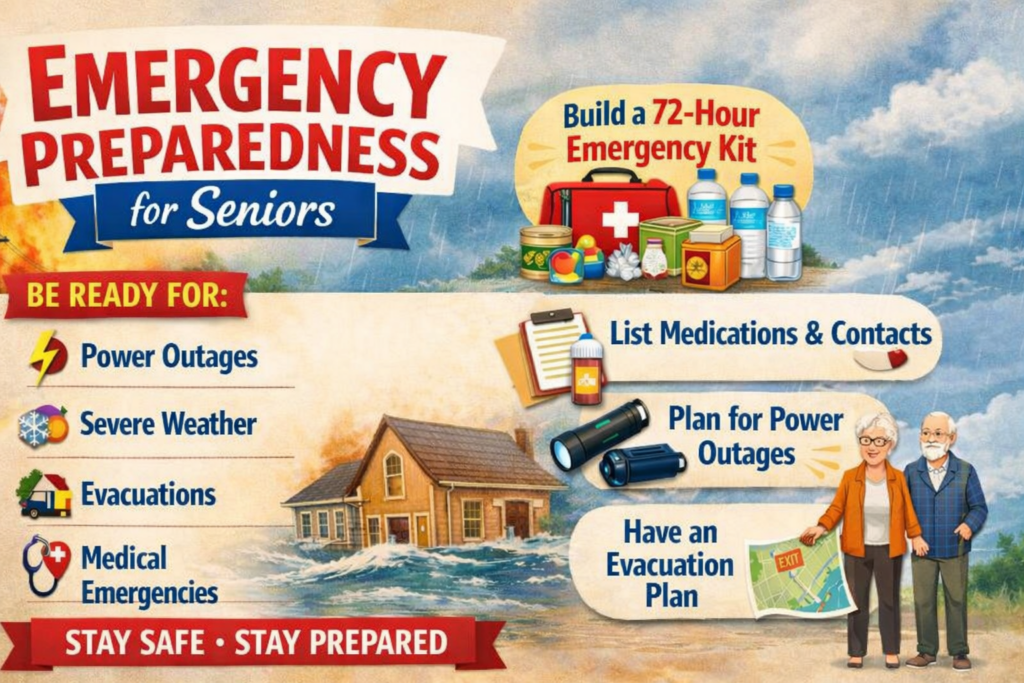
Emergency Preparedness for Seniors in Canada (2026 Guide)
Emergencies can happen anywhere in Canada from summer wildfires to heavy rain and windstorms that cause power outages. Seniors are especially vulnerable when disaster strikes, so being prepared is essential. This simple guide explains what seniors need, how to plan ahead, and how to stay safe during emergencies in 2026 and beyond. You’ll find clear, easy‑to‑understand tips designed to help older Canadians stay calm, confident, and ready for anything.
Emergency Preparedness for Seniors in Canada (2026 Guide)
Why Emergency Preparedness Matters for Seniors
Emergencies can affect seniors differently because of:
- Mobility challenges
- Medication needs
- Health conditions
- Limited transportation
- Living alone
A simple plan helps reduce stress and keeps you safe during:
- Power outages
- Winter storms
- Heat waves
- Wildfires
- Floods
- Medical emergencies
For more safety tips, see Fall Prevention and Home Safety.
Build a Simple Emergency Kit
A senior‑friendly emergency kit should be easy to carry and stored in one place. Include:
- Bottled water (2 litres per person per day)
- Non‑perishable food (canned goods, protein bars)
- Manual can opener
- Flashlight and extra batteries
- Portable phone charger
- Warm blanket
- Extra clothing and socks
- Cash in small bills
- Copies of important documents
- Small first‑aid kit
- Extra eyeglasses or hearing aid batteries
If you take medication, see the next section.
Medication & Health Information Checklist
Keep a small folder or envelope with:
- A full list of medications
- Dosages and instructions
- Pharmacy name and phone number
- Doctor’s contact information
- Health card number
- Allergies
- Emergency contacts
If possible, keep one week of extra medication in your kit. For more support, see Medication Safety for Seniors.
Emergency Contacts & Communication Plan
Write down the phone numbers of:
- Family or friends
- Neighbours
- Doctor
- Pharmacy
- Local emergency services
- Building manager or landlord
Keep this list:
- On your fridge
- In your wallet
- In your emergency kit
If you live alone, arrange a daily or weekly check‑in with someone you trust.
Preparing for Power Outages
Power outages are common in Canada, especially during storms. Seniors should:
- Keep a flashlight in every room
- Charge phones before storms
- Have a battery‑powered radio
- Keep blankets nearby
- Avoid using candles
- Keep fridge and freezer doors closed
If you use medical equipment that needs power, contact your utility company to register as a priority customer.
Preparing for Extreme Weather in Canada
Canada experiences a wide range of weather emergencies.
Winter Storms
- Stay indoors
- Dress in layers
- Keep salt or sand for icy steps
- Have extra blankets
Heat Waves
- Drink water often
- Close blinds during the day
- Use fans
- Visit cooling centres if needed
Wildfires
- Keep windows closed
- Use an air purifier if possible
- Follow evacuation alerts
For more safety information, see Extreme Weather Tips for Seniors.
Emergency Plans for Mobility or Health Issues
If you use a walker, cane, wheelchair, or have mobility challenges:
- Keep mobility aids near your bed
- Make sure pathways in your home are clear
- Tell neighbours or building staff about your needs
- Keep a small bag with essentials ready to go
If you rely on oxygen or medical devices, include backup supplies in your plan.
How to Stay Informed During Emergencies
Seniors can stay updated using:
- Local radio stations
- Weather alerts
- Provincial emergency apps
- TV news
- Community centres
- Neighbours and family
If you use a smartphone, enable emergency alerts in your settings.
Conclusion
Being prepared helps you stay safe, calm, and confident during unexpected situations. Whether it’s a road trip or a sudden power outage, having essentials ready makes all the difference. Preparation isn’t just about supplies — it’s about peace of mind, independence, and knowing you can handle whatever comes your way.