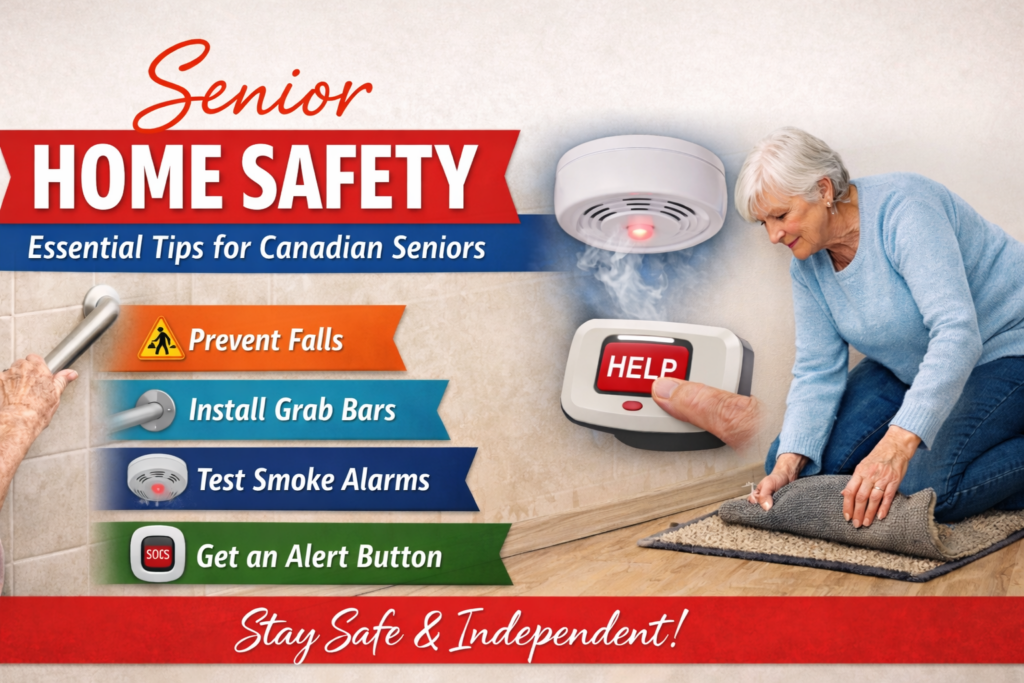
Senior Home Safety Checklist (2026 Guide for Canadian Seniors)
A safe home is one of the most important parts of staying independent as we age. This simple senior home safety checklist is designed for Canadian seniors who want to prevent falls, slips, and other common accidents around the house. Falls, in particular, are one of the most serious risks for older adults — yet many of them are easy to prevent with a few small changes.
Below, you’ll find practical tips and preventive steps that any senior can use to make their home safer, more comfortable, and easier to move around every day.
A simple, room‑by‑room guide to help older adults stay safe, independent, and confident at home.
Why Home Safety Matters for Seniors
1. Entrance & Hallways
- Clear pathways — Remove clutter, loose mats, and shoes.
- Good lighting — Add bright bulbs and motion‑sensor night lights.
- Secure railings — Ensure stair railings are sturdy on both sides.
- Non‑slip mats — Use non‑slip backing at entrances.
2. Bathroom Safety
Bathrooms are the #1 fall‑risk area for seniors.
- Grab bars — Install near toilet and inside the shower.
- Non‑slip shower mat — Prevent slipping on wet surfaces.
- Raised toilet seat — Makes sitting and standing easier.
- Shower chair — Helps with balance and reduces fatigue.
- Handheld shower head — Safer and easier to use.
3. Kitchen Safety
- Keep essentials within reach — Avoid climbing or bending.
- Check appliance cords — Replace frayed or damaged cords.
- Stove safety — Use automatic shut‑off devices if needed.
- Good lighting — Bright counters reduce cutting accidents.
- Store heavy items low — Prevent dropping injuries.
4. Bedroom Safety
- Clear walking space — Remove clutter around the bed.
- Bed height check — Should allow feet to touch the floor firmly.
- Night lights — Light the path to the bathroom.
- Keep phone nearby — Place on a bedside table.
5. Lighting & Visibility
- Bright bulbs — Use LED daylight bulbs for clearer vision.
- Motion lights — Ideal for hallways and bathrooms.
- Reduce glare — Use curtains or blinds to soften bright sunlight.
6. Trip & Fall Prevention
- Remove loose rugs — Or secure them with non‑slip backing.
- Tidy cords — Keep wires away from walking paths.
- Wear indoor shoes — Better grip than socks.
- Check flooring — Repair uneven surfaces.
7. Medication Safety
- Use a pill organizer — Helps prevent missed or double doses.
- Keep a medication list — Update regularly and share with family.
- Store safely — Keep away from heat, moisture, and confusion.
8. Fire & Emergency Preparedness
- Check smoke alarms — Test monthly; replace batteries yearly.
- Have a fire extinguisher — Keep one in the kitchen.
- Emergency contacts list — Post near the phone.
- Plan escape routes — Practice simple, clear steps.
9. Technology & Safety Devices
- Medical alert system — Wearable help button for emergencies.
- Phone with large buttons — Easier to see and use.
- Smart plugs — Auto‑shutoff for appliances.
FAQs
- Q: What is the most common cause of falls for seniors at home? Loose rugs, clutter, poor lighting, and slippery bathroom floors are the most common causes. Small fixes like securing mats and adding night lights can greatly reduce the risk.
- Q: How can seniors make their homes safer without spending a lot of money? Simple changes — like removing tripping hazards, adding non‑slip mats, improving lighting, and keeping walkways clear — are low‑cost and highly effective.
- Q: Are grab bars and handrails really necessary? Yes. Grab bars in the bathroom and sturdy handrails on stairs provide stability and prevent many avoidable falls.
- Q: What rooms in the home are the most dangerous for seniors? Bathrooms and stairways are the highest‑risk areas due to slippery surfaces and elevation changes.
- Q: How often should seniors review their home safety setup? At least once a year, or anytime mobility, vision, or health changes. A quick yearly check helps keep the home safe and up to date.
Conclusion
A fall can happen in the blink of an eye — I learned that firsthand. I once slipped on a loose mat in my own living room, and that simple moment could have been avoided if the mat had been properly secured. It was a reminder that small, easy fixes can prevent serious injuries. By taking a few simple steps to remove hazards and make your home safer, you protect yourself and stay confident moving around every day.