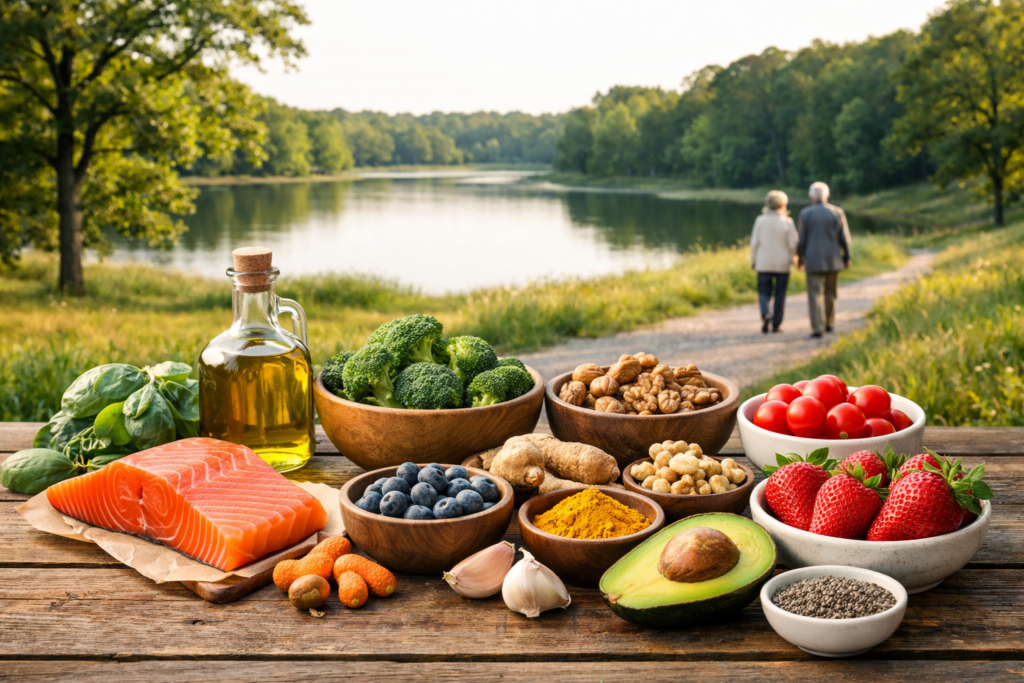
Foods That Reduce Arthritis Pain (2026 Guide for Canadian Seniors)
Arthritis pain can make simple daily activities like walking, cooking, sleeping, or getting dressed more challenging. Food might not be able to cure Arthritis Pain but it can help with inflammation. Below are Foods that reduce Arthritis Pain a guide for Canadian Seniors for 2026.
This guide focuses on simple, affordable foods that Canadian seniors can add to their daily meals to help manage arthritis pain naturally.
Fatty Fish (Omega‑3 Powerhouse)
Examples: salmon, sardines, trout, mackerel Omega‑3 fatty acids help reduce inflammation in joints and may lower morning stiffness.
How to use:
- Add canned salmon to salads
- Make a simple salmon patty in the air fryer
- Eat fish 2–3 times per week
Berries (Antioxidant Boost)
Examples: blueberries, strawberries, raspberries Berries contain anthocyanins — natural compounds that reduce inflammation.
How to use:
- Add frozen berries to oatmeal
- Blend into a smoothie
- Eat a handful as a snack
Leafy Greens (Vitamin K for Joint Health)
Examples: spinach, kale, Swiss chard Vitamin K helps protect cartilage and reduce inflammation.
How to use:
- Add spinach to soups or Instant Pot meals
- Mix greens into scrambled eggs
- Use kale in salads or smoothies
Olive Oil (Healthy Fats for Mobility)
Extra‑virgin olive oil contains oleocanthal, which acts similarly to anti‑inflammatory medications.
How to use:
- Drizzle on vegetables
- Use instead of butter
- Add to pasta or rice dishes
Turmeric & Ginger (Natural Anti‑Inflammatories)
Turmeric contains curcumin, a powerful anti‑inflammatory compound. Ginger helps reduce swelling and joint pain.
How to use:
- Add turmeric to soups, rice, or eggs
- Drink ginger tea
- Add fresh ginger to stir‑fries
Nuts & Seeds (Healthy Fats + Magnesium)
Examples: walnuts, almonds, chia seeds, flaxseed These support joint lubrication and reduce inflammation.
How to use:
- Add chia seeds to yogurt
- Snack on almonds
- Sprinkle flaxseed on oatmeal
Tomatoes (Lycopene for Inflammation)
Tomatoes contain lycopene, which helps reduce inflammatory markers.
How to use:
- Add to salads
- Use tomato sauce in pasta
- Add diced tomatoes to Instant Pot meals
Beans & Lentils (Protein + Fiber)
Examples: black beans, lentils, chickpeas High in protein and fiber, which help reduce inflammation and support muscle strength around joints.
How to use:
- Instant Pot lentil soup
- Chickpea salad
- Black beans with rice
Foods That Make Arthritis Worse
Avoid or limit:
- Sugary snacks
- Deep‑fried foods
- Processed meats
- White bread and pastries
- Excess alcohol
These increase inflammation and can worsen joint pain.
❓ FAQ — Foods for Arthritis Pain
Do certain foods really reduce arthritis pain?
Yes — anti‑inflammatory foods can reduce swelling and stiffness over time.
How long does it take to feel a difference?
Most seniors notice improvement in 2–6 weeks of consistent eating.
Are supplements better than food?
Food is safer and more effective long‑term. Supplements can help but should be discussed with a doctor.
Can diet replace arthritis medication?
No — but it can reduce symptoms and support your treatment plan.
Is coffee bad for arthritis?
Moderate coffee is fine. Too much caffeine may increase inflammation.
Final Thought
For me working on construction most of my life Arthritis can be a challenge. Even going for a walk out in nature can be demanding. Personally I don’t like pain killing drugs so I try to deal with the discomfort in a natural way. Foot soaks in Epson salts help the feet and simple deep penetrating natural oils can also help. some natural oils can help ease arthritis discomfort when gently massaged into the skin, though they don’t replace medical treatment. Always check with a healthcare professional first, especially if you have sensitive skin or other conditions.
Conclusion
Keeping your heart healthy doesn’t have to be complicated. Simple daily habits — like walking more, eating balanced meals, managing stress, and getting regular check‑ups — can make a meaningful difference as you age. Most heart‑related issues develop slowly, which means small, steady changes often have the biggest impact over time. If you ever notice new symptoms or feel unsure about your heart health, talking with a healthcare professional is always a wise step. With the right information and a few supportive routines, seniors can protect their heart, stay active, and enjoy a healthier, more confident life.