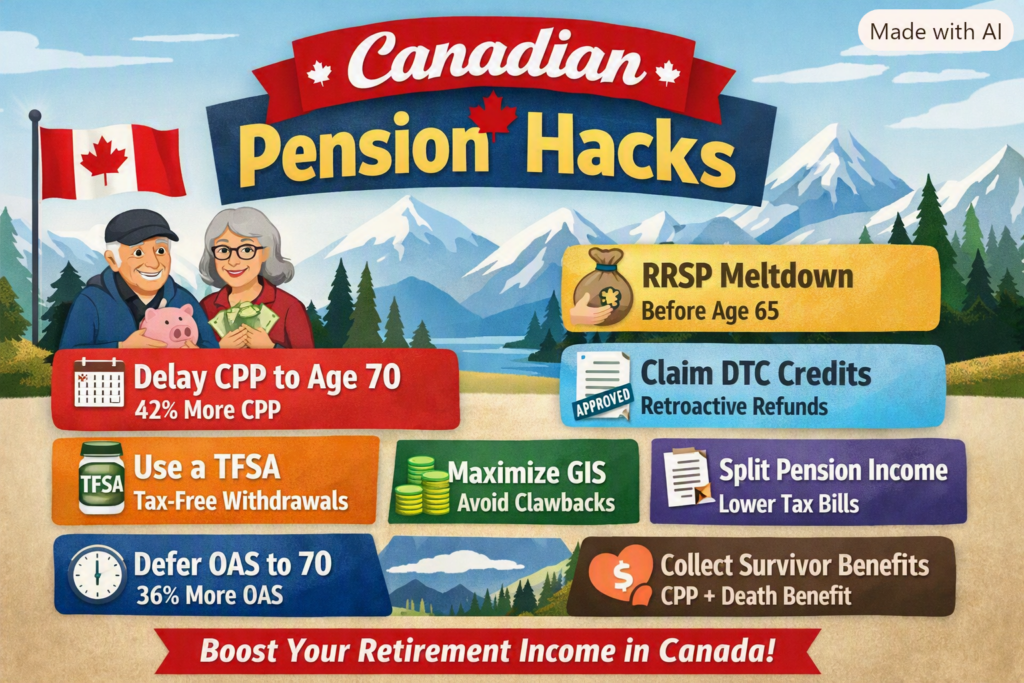
Canadian Pension Hacks For Seniors on OAS CPP and GIS
Canadian seniors can legally boost their retirement income by timing CPP and OAS properly, reducing taxable income, and using smart strategies that protect GIS. These aren’t loopholes — they’re government‑approved options many seniors simply don’t know about. As we get older, every dollar matters. Canada provides several retirement benefits, including CPP, OAS, and GIS, but how you manage them can greatly impact the amount of money you end up receiving. This senior‑friendly guide breaks down the most powerful Canadian pension hacks in plain language. No complicated math, no confusing jargon — just clear explanations that help you keep more money in your pocket.
Delay CPP to 70
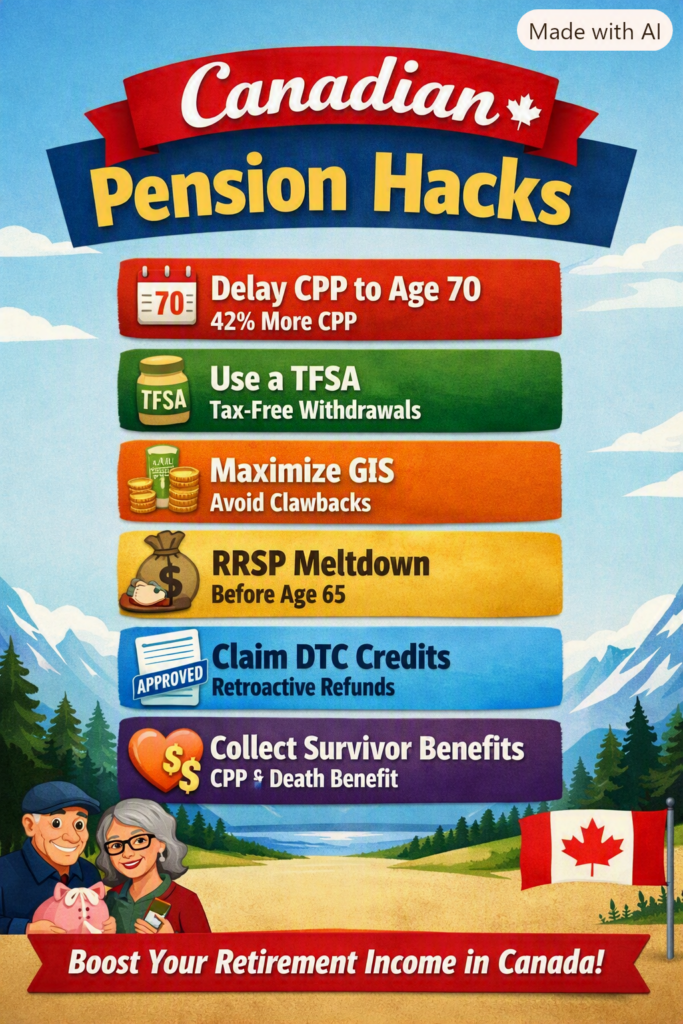
Delaying CPP past age 65 increases your monthly payment by 0.7% for every month you wait, up to 42% more at age 70.
Why this helps
CPP is guaranteed for life and rises with inflation. Getting a 42% boost is one of the strongest retirement income strategies available to Canadians.
Best for
- Seniors who still work part‑time
- Seniors who receive GIS (delaying CPP avoids clawbacks)
- Anyone who wants higher income later in life
Use a TFSA to Reduce Taxable Income
TFSA withdrawals do not count as taxable income. This is huge for seniors.
Why this helps
GIS and OAS clawbacks are based on taxable income. TFSA withdrawals don’t affect them at all.
Example
A senior withdrawing $6,000 from a TFSA pays zero tax and loses zero GIS.
Best for
- Low‑income seniors
- Anyone trying to protect GIS
- Seniors who want tax‑free flexibility
Avoid GIS Clawbacks by Timing CPP
GIS is reduced when taxable income goes up. CPP counts as taxable income.
Why this helps
If you delay CPP until 70, you can collect GIS from 65–69 with no clawbacks.
Potential benefit
This can add up to $20,000–$30,000 in extra GIS over those years.
Split Pension Income With a Spouse
If one spouse earns more, splitting eligible pension income can lower taxes and increase benefits.
Why this helps
Income splitting can:
- Reduce your tax bill
- Increase GIS eligibility
- Lower OAS clawbacks
Best for
Couples with different income levels.
Claim the CPP Post‑Retirement Benefit
If you keep working while collecting CPP, you can continue contributing and earn an extra lifetime CPP benefit on top of your regular CPP.
Why this helps
Most seniors don’t know this exists. It’s a small but permanent boost.
Use the RRSP Meltdown Strategy Before 65
RRSP withdrawals count as taxable income and can reduce GIS.
Why this helps
By withdrawing RRSP funds before age 65, you can move money into a TFSA and reduce taxable income later.
Best for
Seniors with RRSPs who want to protect GIS.
Delay OAS for a 36% Bonus
Delaying OAS up to age 70 increases payments by 36%.
Why this helps
This is ideal for seniors who:
- Still work
- Have high income at 65
- Want higher guaranteed income later
Use the Disability Tax Credit (DTC) Retroactively
If you qualify for the DTC, you can claim it up to 10 years retroactively.
Why this helps
This can result in:
- Thousands in tax refunds
- Lower taxable income
- Higher GIS eligibility
Maximize CPP Survivor Benefits
Survivor benefits can include:
- Monthly payments
- Combined CPP retirement + survivor amounts
- A death benefit (up to $2,500)
Why this helps
Many seniors don’t know they qualify for more than one type of survivor benefit.
Use the GIS “Zero‑Income Year” Trick
GIS is based on last year’s income.
Why this helps
If you have a year with:
- No CPP (delayed)
- No RRSP withdrawals
- No part‑time work
You can qualify for maximum GIS the following year.
FAQs for Canadian Seniors
1. Can I collect GIS and CPP at the same time?
Yes, but CPP counts as taxable income and can reduce GIS. Delaying CPP helps protect GIS.
2. Is delaying CPP always the best choice?
Not always. It’s best for seniors who have other income sources or receive GIS.
3. Do TFSA withdrawals affect my benefits?
No. TFSA withdrawals do not affect GIS or OAS clawbacks.
4. Can I split CPP with my spouse?
You can apply for CPP pension sharing, which can reduce taxes and increase benefits.
5. What happens if I work while collecting CPP?
You may earn the CPP Post‑Retirement Benefit, which increases your lifetime CPP.
Disclosure
This article is for general information only and is not financial advice. Pension decisions depend on your personal situation. Always consider speaking with a qualified financial professional before making major retirement income changes.
Conclusion
Canadian pension hacks aren’t complicated — they’re simply smart ways to use the rules to your advantage. By delaying CPP or OAS, protecting GIS with TFSA withdrawals, splitting income with a spouse, or planning RRSP withdrawals early, seniors can significantly increase their retirement income.