CPP Disability & Survivor Benefits (Canada Pension Plan) – 2026 Guide
The CPP Disability & Survivor Benefits program provides financial support to Canadians who face serious illness, disability, or the loss of a spouse or partner. This 2026 guide from SeniorsCanadaInfo.ca explains who qualifies, how much you can receive, and how to apply — all in clear, simple language designed to help seniors and families understand their options.
CPP Disability & Survivor Benefits – 2026 Guide. Learn who qualifies, how much you can receive, and how to apply for CPP disability and survivor support in Canada.
The Canada Pension Plan (CPP) provides more than just retirement income. Two major supports help Canadians who face hardship:
- CPP Disability Benefits — for contributors who can no longer work due to a severe and prolonged disability
- CPP Survivor Benefits — for the spouse, common‑law partner, or dependent children of a deceased CPP contributor
These benefits provide monthly, taxable income and are available nationwide.
Part 1 — CPP Disability Benefits (2026)
2. What CPP Disability Benefits Are
CPP Disability provides monthly income to people who:
- contributed to CPP, and
- have a severe and prolonged disability, meaning they cannot regularly work at any job, and
- are under age 65
Once you turn 65, CPP Disability automatically converts to the CPP Retirement Pension.
3. Types of CPP Disability Benefits
There are two forms:
A) CPP Disability Benefit (for adults)
For contributors under 65 who cannot work due to disability.
B) CPP Post‑Retirement Disability Benefit
For people who are already receiving CPP Retirement Pension but become disabled before age 65.
4. CPP Disability Payment Amounts (2026)
A) CPP Disability Benefit (under 65)
2026 maximum monthly amount: $1,683.00 Average monthly amount: $1,150.00
This includes:
- a fixed amount, plus
- an earnings‑based amount based on your CPP contributions
B) Post‑Retirement Disability Benefit
2026 monthly amount: $583.00 (flat rate)
5. Eligibility Requirements
To qualify, you must:
- be under age 65
- have contributed enough to CPP
- have a severe and prolonged disability
- be unable to regularly work at any job
“Severe” means you cannot work. “Prolonged” means long‑term or indefinite.
6. How to Apply
You can apply:
- online through My Service Canada Account (MSCA)
- by paper application
- by mail or in person
You must include medical forms completed by your doctor or nurse practitioner.
Processing time
Most applications take 120 days (4 months). Appeals can take longer.
Part 2 — CPP Survivor Benefits (2026)
7. What CPP Survivor Benefits Are
CPP Survivor Benefits provide monthly income to:
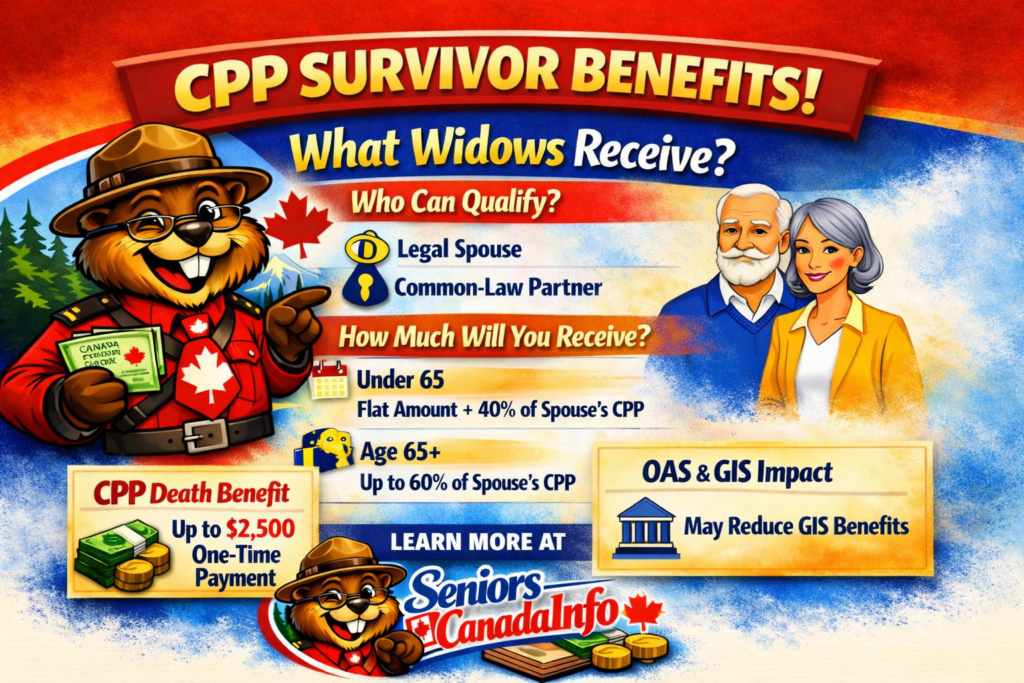
- the spouse or common‑law partner of a deceased contributor
- the dependent children of the contributor
- the estate (one‑time death benefit)
These benefits help families manage financial hardship after a loss.
8. Types of CPP Survivor Benefits
A) Survivor’s Pension (for spouse or partner)
Paid monthly to the surviving spouse or common‑law partner.
B) Children’s Benefit
Paid to dependent children under:
- age 18, or
- age 25 if attending school full‑time
C) CPP Death Benefit
A one‑time payment to the estate of the deceased contributor.
9. Survivor Benefit Amounts (2026)
A) Survivor’s Pension
Amount depends on:
- your age
- whether you receive CPP yourself
- the deceased contributor’s CPP contributions
Typical ranges:
- Under age 65: $500–$700/month
- Age 65+: $350–$750/month
Maximum for 2026: $818.76/month
B) Children’s Benefit
2026 monthly amount: $308.33 per child
C) Death Benefit
One‑time payment: up to $2,500
To qualify:
10. Eligibility Requirements
- the deceased must have made valid CPP contributions
- the spouse/partner must have been legally married or in a common‑law relationship
- children must be under 18, or 18–25 and in full‑time school
11. How to Apply
Applications can be submitted:
- online through MSCA
- by paper form
- by mail or in person
You may need:
- proof of death
- marriage or common‑law documents
- children’s school enrollment (if over 18)
12. Tax Rules
CPP Disability and Survivor Benefits are taxable income. You can request tax withholding through Service Canada.
13. Key Takeaways
- CPP Disability supports Canadians under 65 who cannot work due to a severe and prolonged disability
- CPP Survivor Benefits support spouses, partners, and dependent children after a contributor’s death
- Payments vary based on contribution history
- Benefits are taxable
- Applications must be submitted — they do not start automatically
14. Official Government Links
Government of Canada — CPP Survivor Benefits