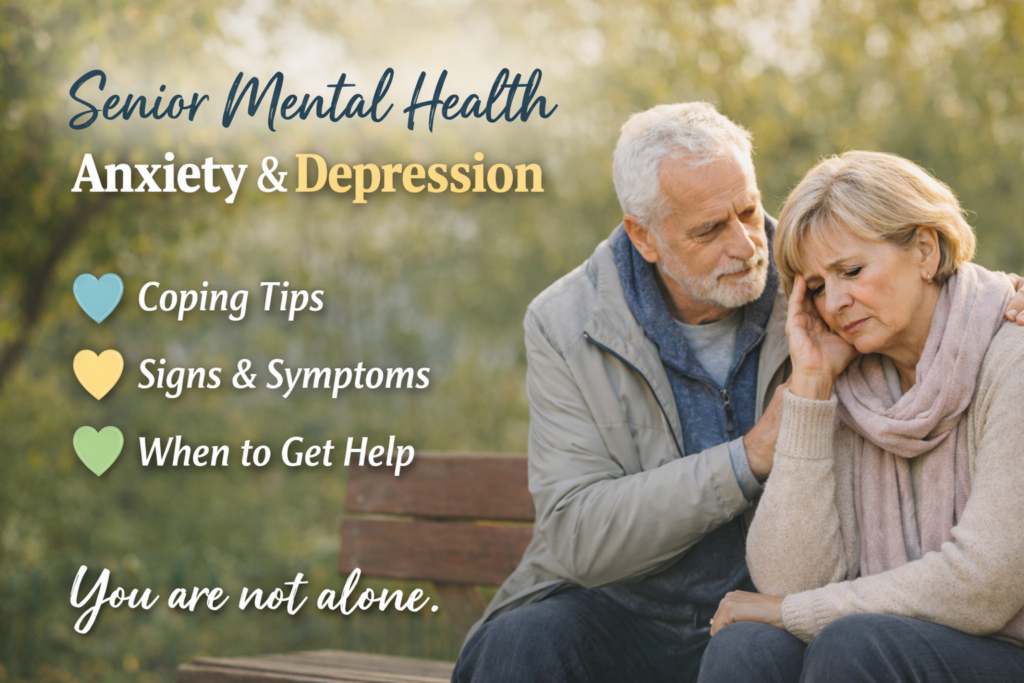
Mental Health in Canada Understanding Anxiety and Depression in Seniors
Mental health challenges among seniors in Canada are becoming more common. Especially as many older adults face major life changes such as losing a spouse, rising housing and food costs, or caring for an aging partner. These pressures can lead to anxiety, depression, and emotional strain that often go unnoticed. Understanding the signs early can make a big difference. This guide explains what to watch for, why these changes happen, and practical steps seniors and families can take to feel supported.
What Anxiety and Depression Look Like in Older Adults
Quick Summary
• This Guide explains anxiety and depression in older adults in Canada.
• You’ll learn common symptoms, causes, and simple ways to feel better.
• Seniors get practical tips for managing stress, loneliness, and mood changes.
• Includes one trusted Health Canada link for mental health guidance.
Anxiety and depression can appear differently in seniors than in younger adults. Instead of sadness or worry alone, older adults may notice:
- Feeling tense, restless, or “on edge”
- Trouble sleeping or waking up too early
- Loss of interest in hobbies or social activities
- Low energy or fatigue
- Difficulty concentrating
- Feeling overwhelmed by small tasks
- Physical symptoms such as headaches or stomach discomfort
These symptoms can be mistaken for aging, but they are often signs of treatable mental health conditions.
Common Causes in Later Life
Many seniors experience anxiety or depression due to life changes such as:
- Chronic health conditions
- Reduced mobility
- Loneliness or social isolation
- Grief after losing a partner or friend
- Financial stress
- Moving to new housing or downsizing
- Medication side effects
Understanding the cause can help seniors and families find the right support.
Simple Ways Seniors Can Feel Better
Small daily habits can make a meaningful difference:
- Take short daily walks or gentle exercise
- Keep a regular sleep routine
- Stay connected with friends or family
- Join community programs or senior centres
- Practice deep breathing or relaxation exercises
- Limit alcohol and caffeine
- Spend time outdoors when possible
These steps support both mental and physical health.
When to Speak With a Healthcare Professional
Seniors should consider talking to a doctor or mental health professional if:
- Symptoms last more than two weeks
- Daily tasks feel harder than usual
- Sleep problems become persistent
- Appetite changes significantly
- Feelings of sadness or worry interfere with daily life
A healthcare professional can help identify the cause and discuss treatment options. If symptoms are severe or worsening, it’s important to seek help promptly.
Treatment Options for Older Adults
Treatment for anxiety and depression may include:
- Counselling or talk therapy
- Support groups
- Medication (when appropriate)
- Lifestyle changes
- Community mental health programs
A doctor or mental health professional can help determine what approach is most suitable. Seniors should never start or stop medication without medical guidance.
FAQs
What are the early signs of anxiety or depression in seniors?
Changes in sleep, appetite, energy, or interest in hobbies are common early signs. Some seniors also feel more irritable or report more physical aches without a clear cause.
Is it normal to feel more anxious or sad with age?
Occasional sadness or worry is normal, but ongoing symptoms are not just “part of aging.” Persistent emotional changes deserve attention and support.
What causes anxiety and depression in older adults?
Health issues, loneliness, grief, medication side effects, and major life changes can all contribute. Often it’s a mix of factors.
How can seniors manage symptoms at home?
Light exercise, fresh air, simple routines, and staying connected with others can help improve mood. Relaxation techniques may also ease anxiety.
When should a senior talk to a doctor?
If symptoms last more than two weeks or begin affecting daily life, it’s a good time to reach out to a healthcare provider.
Can anxiety or depression look like memory problems?
Yes. Trouble concentrating or remembering things can be linked to mood changes. When mood improves, memory often improves too.
Are these conditions treatable in older adults?
Yes. Seniors respond well to treatment, including counselling, medication, and lifestyle changes.
What treatment options are available?
Options include therapy, medication, support groups, and community programs. A doctor can help choose what fits best.
Disclaimer
This article is for general information only and is not a substitute for professional medical advice. Seniors experiencing ongoing anxiety, depression, or emotional distress should speak with a doctor or mental health professional. If symptoms are severe or worsening, seek help immediately or contact a local crisis line.
Conclusion
When my wife passed away, I fell into a deep depression. It was one of the hardest periods of my life. Over time, with self‑care and the support of friends and family, I slowly began to heal. If you’re going through something similar, reach out for help you don’t have to face it alone.