
Shelter Aid For Low Income Senior Renters in BC (SAFER)
Rent, utilities, and food costs can quickly consume a fixed retirement income. For many older renters, even a small rent increase creates a hard choice between housing, medicine, and daily needs. Shelter Aid For Low Income Senior Renters in BC (SAFER) may help eligible seniors lower their monthly housing costs through a rent subsidy.
BC Housing administers SAFER, formally called the Shelter Aid for Elderly Renters program. It is intended for eligible British Columbia renters aged 60 and older with low household income. Age rules, income limits, subsidy amounts, forms, and rental requirements can change, so check the latest information with BC Housing before applying.
Find Out Whether You Qualify for SAFER BC
SAFER eligibility depends on more than age. BC Housing reviews your income, household details, rental home, rent amount, and residency or immigration status. Some cases need an individual review, especially when housing arrangements are unusual.
Meet the Age and Residency Requirements
Applicants generally must be at least 60 years old and live in British Columbia. BC Housing also lists requirements related to residency, citizenship, permanent residence, or other immigration status.
These rules can change or depend on your circumstances. Review the current SAFER eligibility criteria and application form through BC Housing. If you recently moved to BC or have questions about your status, ask the program administrator before sending your application.
Confirm Your Income Falls Within the Program Limits
SAFER is for low-income senior renters. BC Housing updates income limits from time to time, so an amount that qualified in one year may not qualify in another.
The income review may include pensions, employment earnings, government benefits, investment income, and other taxable or reportable income. Report income for every person included in your household. Do not rely on a rough estimate from memory.
Check Whether Your Rental Situation Is Eligible
You must rent a qualifying home and usually pay rent to a landlord or housing provider. Rules may differ for roommates, shared homes, co-ops, manufactured homes, and subsidized housing.
Family rental arrangements may also require extra proof or review. Your tenancy agreement should show who rents the unit, where it is located, how much rent is charged, and how payments are made. Check BC Housing’s current rules before assuming your arrangement qualifies.
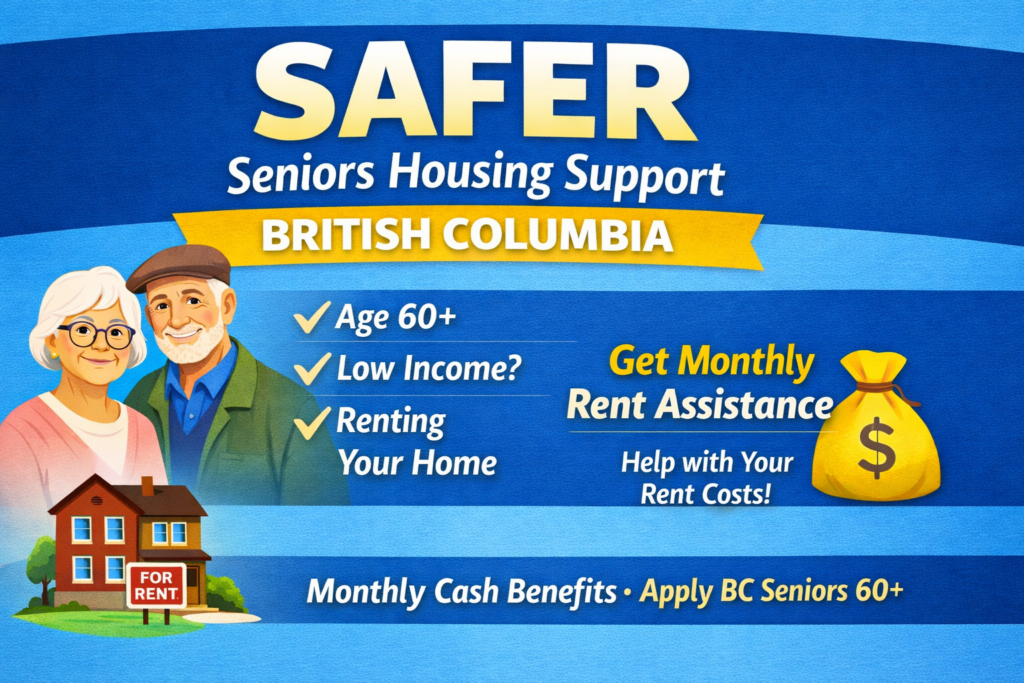
SAFER remains one of the most important supports for low‑income seniors renting in British Columbia. As housing costs continue to rise, this monthly supplement can make the difference between struggling and staying stable. If you meet the age, income, and residency requirements, it is well worth applying. The process is straightforward, there is no waiting list, and payments begin as soon as your completed application is received.
For many older adults, SAFER provides peace of mind and helps ensure that rent stays manageable throughout retirement.
Understand How the SAFER Rent Subsidy Works
The BC senior rent subsidy is designed to help reduce the share of income spent on eligible housing costs. Your payment can differ from another renter’s payment because each application uses household income, rent, and program limits.
SAFER does not promise to cover all rent. A higher monthly rent also does not always mean a higher subsidy.
Learn How Rent and Income Affect the Monthly Benefit
BC Housing generally considers your household income and eligible rent when setting the monthly benefit. Lower income and eligible housing costs may support a larger subsidy, subject to program rules and maximums.
The calculation also uses income thresholds and payment limits. Because rates can change, avoid relying on old articles or figures shared online. Use current BC Housing rate information or its official calculation tools, when available.
Identify What Counts as Rent and Household Income
Give BC Housing the exact rent you pay. Review the current rules for charges included with rent, such as utilities, parking, meals, support services, or other fees.
Your application should also include total household income from all required sources. This may include public pensions, workplace pensions, benefits, wages, interest, and investment payments. Keep statements that support every amount you report.
Estimate Your Potential Payment Without Overpromising
The official SAFER information and calculation tools are the best way to estimate possible support. Third-party calculators may use old income limits or incorrect rent rules.
An estimate is not an approval. BC Housing sets the final amount after checking your documents, household details, rent, and eligibility under the rules in effect when it reviews your application.
Prepare the Right Documents Before Applying
Good records can prevent delays. Missing pages, different rent amounts, or income details that do not match your tax records may lead BC Housing to request more information.
Gather documents before starting the application. Keep a full copy of the form and every document you send.
Gather Proof of Age, Identity, and Residency
BC Housing may ask for documents that confirm your name, date of birth, identity, and British Columbia address. Follow the current application form because accepted documents can change.
If you cannot obtain a birth certificate, immigration record, or other required paper, contact BC Housing or a trusted community agency. Do not leave a required section blank without asking what to do.
Collect Income and Tax Information
You may need tax returns, Notices of Assessment, pension statements, benefit statements, employment records, or investment documents. BC Housing may request records for other household members as well.
Use current statements where possible. Report all required income, even if a payment is small or comes from more than one source. Accurate information is safer than guessing.
Obtain Proof of Rent and Landlord Details
A current tenancy agreement is often useful. Other accepted proof may include rent receipts, a landlord declaration, or records showing your name, rental address, rent amount, and payment arrangement.
Ask your landlord or housing provider for missing details early. Keep copies of the agreement, receipts, declarations, and submitted application in a safe place.
Apply for SAFER and Avoid Common Delays
Use BC Housing’s official SAFER application page for the latest instructions. Application options may include online submission, a printable form, mail, or help from an assisted application service.
Choose the Correct Application Method
Start with the current BC Housing SAFER page rather than an old form saved on your computer. It should identify available application methods and any accessibility support.
If reading, writing, hearing, mobility, or language needs make the process harder, ask about assistance. A seniors’ centre, community agency, or benefits worker may also help you complete the form without charging an unnecessary fee.
Complete Every Required Field Accurately
Check signatures, household members, rent amounts, income details, mailing address, phone number, and payment information. Small errors can delay a decision or lead to more questions.
If a question does not apply, follow the form’s instructions instead of leaving it empty. Ask BC Housing for help when you are unsure how to answer.
Track the Application and Respond to Requests
Record when you submitted the application and save any confirmation number. Watch your mail, email, or other messages for requests from BC Housing.
Reply by the stated deadline and keep proof of what you sent. If BC Housing denies the application, delays a decision, or approves an amount you believe is wrong, ask about the current review, reconsideration, or appeal process.
Keep Your SAFER Support After Approval
Approval does not remove the need to update your information. Changes to your income, rent, household, or address can affect eligibility or payment amounts.
Complete Annual Renewal Requirements
BC Housing may require renewal or updated information at set times. Renewal can include new income details, rent records, tax documents, or signed declarations.
Read every notice and return the required information before the deadline. Waiting until the last week can cause payment interruptions if a document is missing.
Report Changes That Could Affect Eligibility
Tell BC Housing when you move, your rent changes, your household changes, or your income rises or falls. Marriage, separation, extended absences, and changes in residency or immigration status may also matter.
Do not assume the subsidy will adjust on its own. Use the official reporting process and keep confirmation of the change.
Review Payments and Keep Reliable Records
Check each payment against your approval notice. Contact BC Housing if payments stop, the amount changes without explanation, or your personal information looks wrong.
Keep approval letters, rent records, renewal forms, and messages together. Organized records can help resolve a payment issue faster.
Find Additional Housing Help If SAFER Is Not Enough
SAFER may reduce part of your housing cost without covering the full gap. Other programs may help, but each has its own rules and may not combine with SAFER.
Explore Other BC Housing Programs
Check current BC Housing options for subsidized housing, affordable rental homes, rent banks, emergency help, and other housing supports. Waitlists and application steps vary by program.
A housing worker can help you understand which options fit your situation. Apply early when a program has limited openings.
Check Federal and Provincial Income Supports
Review senior benefits, income supplements, tax credits, and other assistance through Canada.ca and the Government of British Columbia. Your local tax clinic or benefits worker may help identify programs you have missed.
Rules and payment amounts change. Use official government pages when checking eligibility or applying.
Get Help From a Trusted Service Provider
Seniors’ centres, community agencies, legal clinics, settlement groups, Indigenous service providers, and benefits navigators may help with forms. Choose a reputable organization and protect your personal information.
You should not need to pay a private company a large fee to apply for SAFER. Ask how your information will be stored before sharing tax records or identity documents.
Key Takeaways for BC Senior Renters Applying for SAFER
SAFER is a BC Housing rent subsidy for eligible low-income renters aged 60 and older. Eligibility depends on current income, rent, household, residency, and housing rules. Payment amounts vary, so an estimate cannot replace a formal decision.
Start by checking the latest SAFER criteria. Gather identity, income, tax, and rent documents, then apply through BC Housing. Respond to follow-up requests and complete renewals on time.
Conclusion
Shelter Aid For Low Income Senior Renters in BC (SAFER) can help eligible seniors manage rent on a fixed income. Before applying, confirm the current rules, income limits, subsidy rates, accepted documents, and application options with BC Housing.
Save copies of everything you submit and report changes promptly. Program policies, forms, contact details, and payment limits can change, so verify the latest information before making housing or financial decisions.