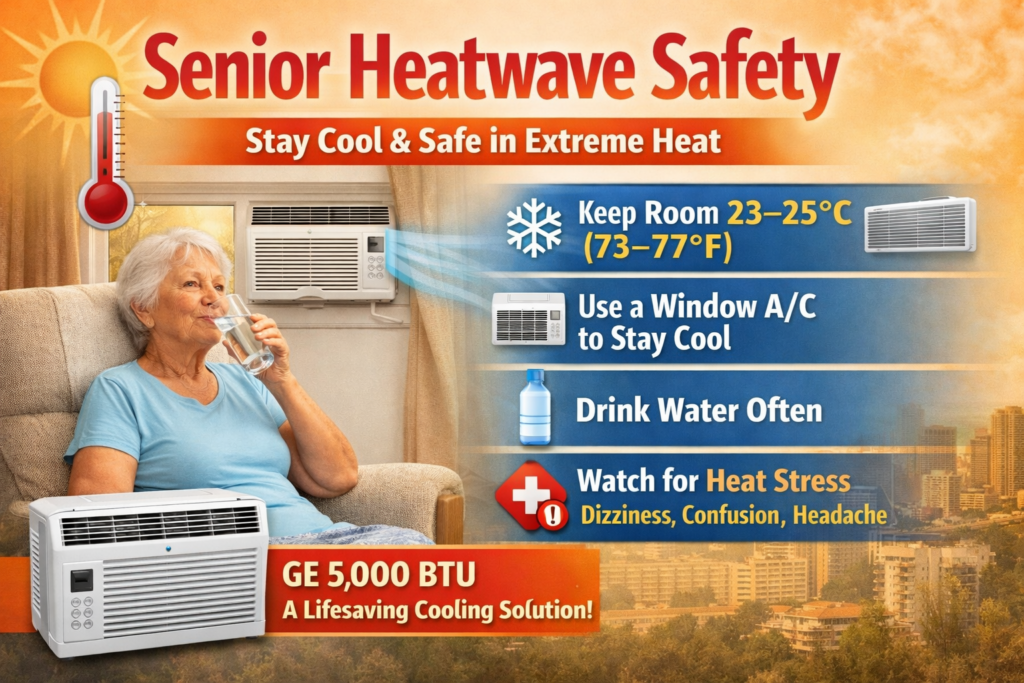
Heat‑Wave Safety for Seniors How a Simple Window Air Conditioner Can Save Lives
Canada’s summers are getting hotter, and seniors are among the most vulnerable during extreme heat. A heat wave isn’t just uncomfortable — it can be dangerous, even life‑threatening. The good news is that a small, easy‑to‑use window air conditioner can make a world of difference.
This guide explains why heat waves are risky for older adults, how to set up a safe cooling zone at home, and why a simple unit like the GE 5,000 BTU Window Air Conditioner is one of the most effective tools for staying safe.
Why Heat Waves Are Dangerous for Seniors
As we age, our bodies become less efficient at cooling themselves. Seniors often:
- Sweat less, making it harder to regulate temperature
- Take medications that affect hydration
- Have chronic conditions that worsen in heat
- Live alone, making symptoms easier to miss
Indoor temperatures above 26–28°C can quickly lead to dehydration, dizziness, confusion, and heat stroke. During a heat wave, indoor temperatures can rise even with windows open — especially in apartments or older homes.
The Window Air Conditioner: A Lifesaving Tool
A small window AC is one of the most reliable ways to keep indoor temperatures safe. Unlike fans, which only move hot air around, an air conditioner actively cools the room and reduces the risk of heat‑related illness.
Mechanical‑dial units are especially senior‑friendly because they’re simple, durable, and easy to operate.
Why the GE 5,000 BTU Window AC Is Ideal for Seniors
TheGE 5,000 BTU Window Air Conditioner is a top choice for seniors because it’s:
- Easy to use — simple knobs, no digital menus
- Quiet — 56 dB is comfortable for sleep
- Sized for safety — cools rooms up to 150 sq ft
- Low maintenance — removable filter for easy cleaning
- Affordable — often around $139 CAD
- Energy efficient — won’t spike hydro bills
This unit is perfect for bedrooms, small living rooms, or dens — exactly where seniors spend most of their time.
How to Set Up a Safe Cooling Zone
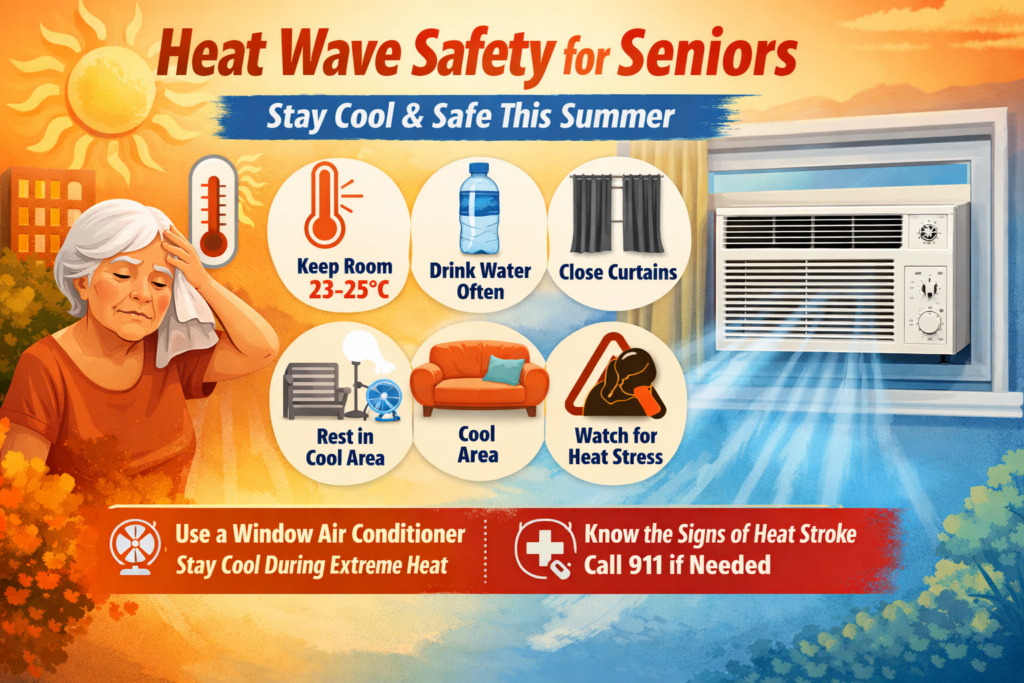
A “cooling zone” is a single room kept at a safe temperature during a heat wave. Seniors don’t need to cool the whole home — just one comfortable space.
Steps to create a cooling zone:
- Choose a small room (bedroom or living room).
- Install the AC securely in a double‑hung window.
- Close doors to keep cool air contained.
- Use blackout curtains to block sunlight.
- Keep a room thermometer visible.
- Aim for 23–25°C during the hottest hours.
- Place a comfortable chair or bed in the cooled area.
- Keep water within reach at all times.
Daily Heat‑Wave Safety Checklist for Seniors
- AC running during peak heat (11am–8pm)
- Curtains closed
- Drink water every hour
- Avoid using the stove or oven
- Wear light, loose clothing
- Check for signs of heat stress:
- dizziness
- headache
- confusion
- rapid heartbeat
- nausea
Family or caregivers should check in twice daily during extreme heat.
When to Seek Medical Help
Call emergency services immediately if a senior shows:
- Confusion or disorientation
- Fainting
- Hot, dry skin
- Rapid breathing
- No sweating despite heat
Heat stroke is a medical emergency — fast action saves lives.
Cost & Accessibility
The GE 5,000 BTU unit is widely available in Canada:
- Amazon.ca
- Walmart
- Best Buy
Its low cost makes it one of the most accessible heat‑wave safety tools for seniors on fixed incomes.
Frequently Asked Questions (FAQs)
1. How cool should I keep my room during a heat wave?
Most seniors feel safest at 23–25°C. Anything above 26–28°C can increase the risk of dehydration, dizziness, and heat stress. A small window AC helps keep the temperature steady and comfortable.
2. Is it safe to run my air conditioner all day?
Yes. During a heat wave, it’s recommended to run the AC during the hottest hours (usually 11am–8pm). Modern units like the GE 5,000 BTU are energy‑efficient and designed for continuous use.
3. What if I can’t lift or install the air conditioner myself?
Many seniors need help with installation — that’s normal. Family, neighbours, or local community programs can assist. Some cities also offer heat‑wave support services for seniors who live alone.
4. How often should I clean the AC filter?
Check the filter once a month during summer. A clean filter keeps the air fresh and helps the AC cool more effectively. The GE unit’s filter slides out easily, so it’s simple for caregivers to clean.
5. What signs of heat stress should I watch for?
Call for help immediately if you notice:
- dizziness or headache
- confusion
- nausea
- rapid heartbeat
- hot, dry skin These can be early signs of heat exhaustion or heat stroke.
Final Recommendation
For seniors in BC — especially in Port Coquitlam, where summer heat spikes are becoming more common — a simple window air conditioner is one of the most effective, affordable, and senior‑friendly ways to stay safe during extreme heat.
The GE 5,000 BTU Window Air Conditioner is a reliable choice that offers comfort, safety, and peace of mind. “As an Amazon Associate, I earn from qualifying purchases.” “If you purchase through these links,
I may receive a small commission at no extra cost to you.”
Disclosure
This article is for general information only and is not a substitute for professional medical advice, diagnosis, or emergency care. Seniors and caregivers should always follow guidance from healthcare providers and local authorities during extreme heat events. Product recommendations, including the GE 5,000 BTU Window Air Conditioner, are based on publicly available information and typical senior‑friendly features. Prices and availability may change over time. If you choose to purchase through links on SeniorsCanadaInfo.ca, the site may earn a small commission at no additional cost to you. This helps support the creation of senior‑focused safety resources.