
If a Senior Gets Sued for Credit Card Debt in Canada: What You Need to Know, What Happens Next, and How to Protect Yourself
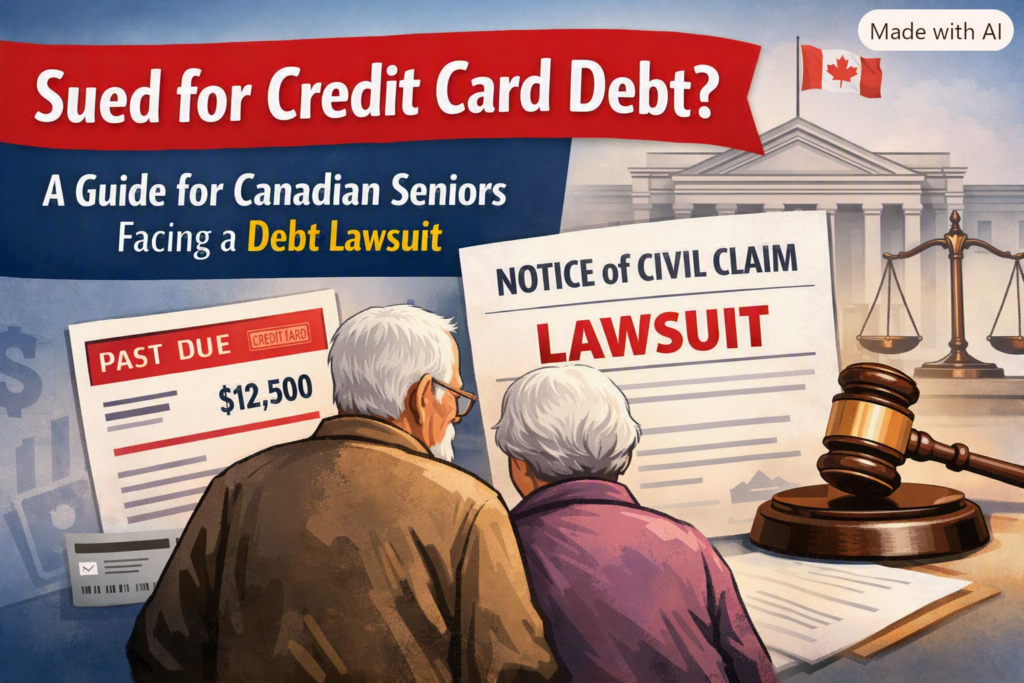
Being sued for credit card debt in Canada is scary. For Canadian seniors living on CPP, OAS, GIS, or limited retirement income, it can feel overwhelming. The good news is that you have rights, you have options, and in many cases, you may be judgment‑proof, meaning a creditor cannot legally collect from you even if they win in court. The important thing is not to ignore the civil claim. A response can keep them from attaining a judgement.
This article explains exactly what happens when a senior is sued, how to respond, how to stop an automatic judgment, how long each step takes, what documents you need, where to get them, how settlements work, and what realistic outcomes look like for seniors in Canada.
Understanding What a Credit‑Card Lawsuit Actually Means
When a senior is sued, the lawsuit usually comes from either the bank itself or a collection‑law firm acting on behalf of the bank. The lawsuit is not a criminal matter — it is a civil claim for unpaid debt. The creditor wants a court judgment, which allows them to attempt enforcement such as wage garnishment or bank account seizure.
For seniors, enforcement is often limited because CPP, OAS, and GIS cannot be garnished under Canadian law. But you must still respond to avoid an automatic judgment.
What Happens If You Ignore the Lawsuit
If you do nothing, the creditor can request a default judgment. This usually happens 21 days after you receive the claim in BC, and similar timelines apply across Canada.
A default judgment allows the creditor to:
- Freeze bank accounts
- Garnish employment income
- Register the judgment against property
- Add court costs and interest
Ignoring the lawsuit is the fastest way to lose — even if you are judgment‑proof.
How to Respond to a Notice of Civil Claim
Responding prevents an automatic judgment and forces the creditor to prove their case.
Documents You Need
You will need:
- The Notice of Civil Claim you received
- A Response to Civil Claim form
- Your financial documents (proof of income, CPP/OAS/GIS statements, bank statements)
- Any letters or agreements with the creditor
Where to Get the Response Form
In BC, download it from the official court website or pick it up at any courthouse registry. Other provinces have similar forms available online through their provincial court websites.
How Long It Takes
Filling out the response usually takes 30–60 minutes. Filing it at the courthouse takes 10–20 minutes. Once filed, the court process slows down dramatically — often months before anything else happens.
Expected Results After Filing
Once you file:
- No default judgment can be issued
- The creditor may contact you to negotiate
- The court may schedule a settlement conference
- You may be asked for financial disclosure
- Many cases stall because creditors know seniors have limited income
Responding buys you time and protects you from automatic loss.
Are You Judgment‑Proof?
Many Canadian seniors are judgment‑proof, meaning a creditor cannot collect even if they win.
You are likely judgment‑proof if:
- Your income is CPP, OAS, GIS, disability, or other protected benefits
- You have no real estate
- You have no employment income
- You have no significant savings
Creditors cannot garnish protected benefits, and they cannot take what you do not have.
However, you must still respond to the lawsuit to avoid a default judgment.
How to Negotiate or Settle the Debt
Most credit‑card lawsuits settle before trial.
What Seniors Can Expect
- Creditors often accept 20–40% lump‑sum settlements
- Payment plans may be available
- Interest can sometimes be frozen
- You must get any agreement in writing
If you are judgment‑proof, you can explain your financial situation and request the case be dropped or settled for a small amount.
Stopping or Preventing a Default Judgment
The most important step is filing your response on time.
If a default judgment has already been issued, seniors can apply to set aside the judgment. Courts are often flexible with seniors, especially those with health issues, mobility challenges, or limited income.
Setting aside a judgment typically takes 2–8 weeks, depending on the province.
Realistic Outcomes for Canadian Seniors
Most senior credit‑card lawsuits end in one of the following ways:
- The senior files a response and the creditor backs off
- The case settles for a reduced amount
- The senior is judgment‑proof and enforcement is impossible
- The creditor obtains a judgment but cannot collect
- The senior applies to set aside a default judgment and succeeds
Very few cases go to trial.
Frequently Asked Questions
What happens if I do nothing after being sued?
A default judgment may be issued after about 21 days in BC and similar timelines elsewhere. This allows the creditor to attempt enforcement, even if you are judgment‑proof.
Can CPP, OAS, or GIS be garnished?
No. These benefits are protected under federal law and cannot be garnished by creditors.
Do I need a lawyer to respond?
No. Seniors can file a Response to Civil Claim themselves. Free legal clinics can help if needed.
How long does the court process take?
After filing your response, the process often slows down. Many cases take months before the next step.
Can I settle the debt after being sued?
Yes. Creditors often settle for reduced amounts, especially when dealing with seniors on fixed incomes.
What documents should I gather?
Your Notice of Civil Claim, Response form, proof of income, bank statements, and any communication with the creditor.
Conclusion
Being sued for credit‑card debt is stressful, but seniors in Canada have strong protections. Your government benefits cannot be garnished, your income is often shielded, and you have the right to respond, negotiate, and defend yourself. Filing a response prevents automatic loss, and understanding your judgment‑proof status can give you confidence and control.
You are not powerless — and you are not alone. With the right steps, most seniors resolve these cases without losing money, assets, or peace of mind.
Disclosure
This article provides general information for Canadian seniors and is not legal advice. Laws vary by province, and individual situations differ. Seniors facing a lawsuit should consider speaking with a qualified legal professional or contacting a free legal clinic for personalized guidance.