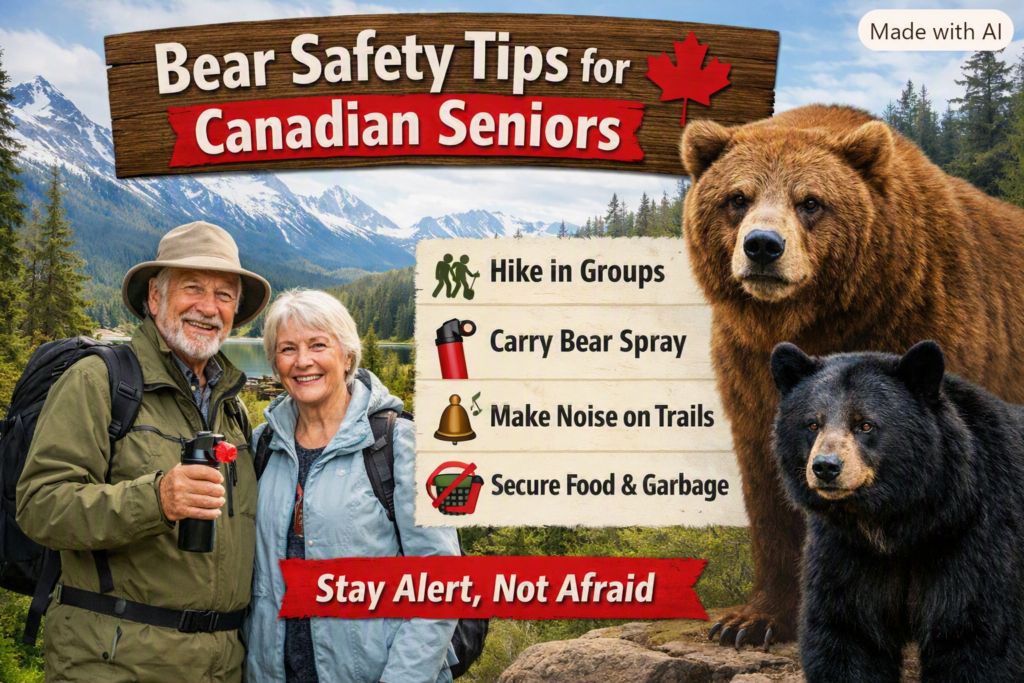
Bear Safety Tips for Canadian Seniors (2026 Guide)
Why Bear Encounters Are Increasing in 2026 and should Canadian Seniors be concerned? After all running into a bear walking down a lonely outdoor trail can be quite scary to say the least. Bear Safety Tips for Canadian Seniors (2026 Guide) is a good read for any Senior planning a hike in the local woods. So why are there so many bear attacks this year.? Well according to my research much of it has to do with climate changes.
Staying active outdoors is one of the best ways for older adults to stay healthy, but 2026 has brought an increase in bear encounters across Canada — especially in British Columbia, Alberta, and Saskatchewan. While bear attacks remain very rare, seniors should stay aware and take simple precautions when walking, hiking, gardening, or spending time near forests and greenbelts.
Why Bear Encounters Are Increasing in 2026
Wildlife experts across Canada report more bear sightings this year. The reasons are natural and predictable:
- Drought and low berry crops — bears search for food closer to communities.
- Wildfire displacement — bears move into new areas after habitat loss.
- Thick summer foliage — harder for hikers to spot bears early.
- More people outdoors — seniors walking, hiking, and camping more often.
Even with these factors, bears are not becoming more aggressive — they’re simply trying to survive.
Should Seniors Be Worried?
No — but staying informed is smart.
Most bear encounters are harmless, and most attacks happen because the bear was startled, protecting cubs, or attracted to food. Seniors are not targeted, and urban/suburban seniors face extremely low risk.
Higher‑risk situations for seniors
- Walking alone on forested trails
- Gardening near greenbelts
- Cabin stays in remote areas
- Camping without proper food storage
- Approaching wildlife for photos
Lower‑risk situations
- Walking in neighbourhoods
- Visiting city parks
- Staying on busy trails
- Hiking in groups
How Seniors Can Stay Safe Outdoors
These steps are simple, practical, and recommended by Canadian wildlife agencies.
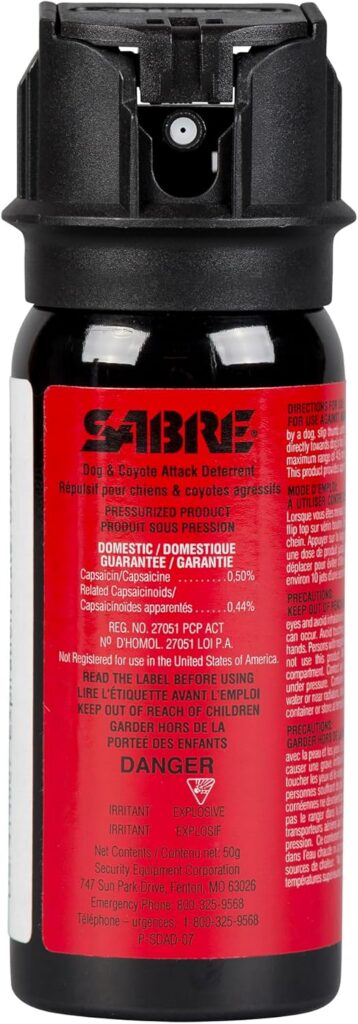
1. Carry bear spray
Keep it accessible — on your belt or shoulder strap, not buried in a backpack.
2. Make noise while walking
Talk, clap, or use a bear bell. Bears avoid humans when they hear them coming.
3. Hike in groups
Groups make more noise and are easier for bears to detect from a distance.
4. Stay on marked trails
Avoid thick brush where visibility is low.
5. Keep dogs leashed
Off‑leash dogs can provoke bears and run back to their owners.
6. Avoid dawn and dusk
These are peak bear activity times.
7. Secure food and garbage
At home, cabins, or campsites — bears are attracted to smells.
8. Know what to do if you see a bear
Different bears require different responses:
- Black bear:
- Stand tall
- Make noise
- Back away slowly
- If attacked → fight back
- Grizzly bear:
- Stay calm
- Speak softly
- Back away slowly
- If attacked defensively → play dead
- If predatory → fight back
Bear Safety for Seniors at Home
Many seniors in B.C. and Alberta live near forests or greenbelts. These simple steps reduce backyard encounters:
- Freeze food scraps before garbage day
- Keep garbage bins locked
- Remove bird feeders during bear season
- Clean BBQs after every use
- Store pet food indoors
- Keep doors and windows closed at night
What To Do If You Encounter a Bear
Stay calm and follow these steps:
- Stop and assess — don’t run.
- Speak calmly — “Hey bear…”
- Back away slowly — give the bear space.
- Keep your bear spray ready
- Avoid eye contact — it can be seen as a challenge.
- If the bear follows you — stand your ground.
- If the bear charges — use bear spray when it’s within 5–10 metres.
Quick Safety Table for Seniors
| Situation | Risk Level | Safety Tips |
|---|---|---|
| Walking in neighbourhoods | Very low | Keep garbage secure |
| Hiking alone | Medium | Make noise; carry bear spray |
| Hiking in groups | Low | Stay on marked trails |
| Cabin stays | Medium–High | Proper food storage; bear spray |
| Gardening near forests | Medium | Make noise; stay alert |
Final Takeaway
Canadian seniors don’t need to fear bears — but staying aware is important. With a few simple precautions, older adults can safely enjoy walking, hiking, gardening, camping, and cabin life across Canada. Bear encounters may be more common in 2026, but serious attacks remain rare, and most can be prevented with good habits and awareness.