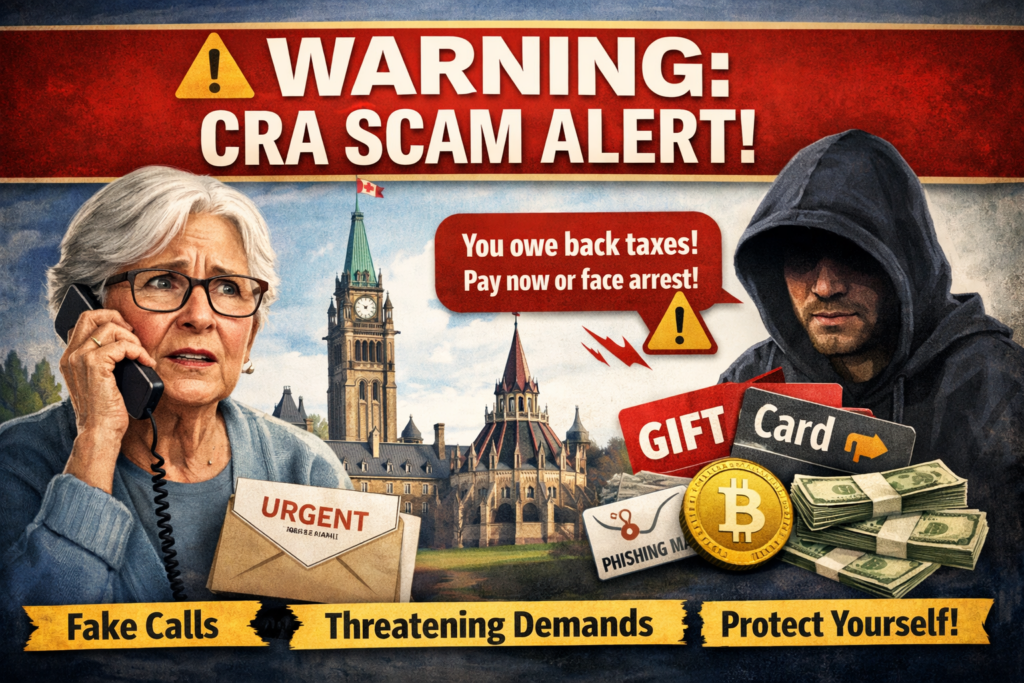
How To Spot CRA Scams in Canada
CRA and Service Canada scams are rising fast in Canada, and they’re getting more sophisticated every year — catching many seniors off guard. This guide on CRA scam awareness will help seniors recognize the warning signs before a scammer steals their money or personal information.
Imagine answering the phone and hearing a stern voice claiming you’re in serious trouble with the government. Your heart pounds as they demand immediate payment or threaten arrest. This frightening scenario is becoming more common for Canadian seniors, and in 2026, these scams are smarter, more convincing, and harder to spot.
Government impersonation scams
Scams pretending to be the Canada Revenue Agency (CRA) or Service Canada prey on trust, fear, and confusion. Many seniors lose savings meant for retirement, medication, or daily living. With fraud reports up 15% last year, according to the Canadian Anti‑Fraud Centre, staying alert is more important than ever.
Imagine picking up the phone to hear a stern voice claiming you’re in big trouble with the government. Your heart races as they demand payment right now or face arrest. This nightmare hits Canadian seniors hard, and in 2026, these scams grow smarter and sneakier.
Understanding the Anatomy of the CRA/Service Canada Impersonation Scam
Scammers love targeting seniors because they often trust officials and live alone. These crooks build fear fast, making you act without thinking. They know seniors might not check details right away.
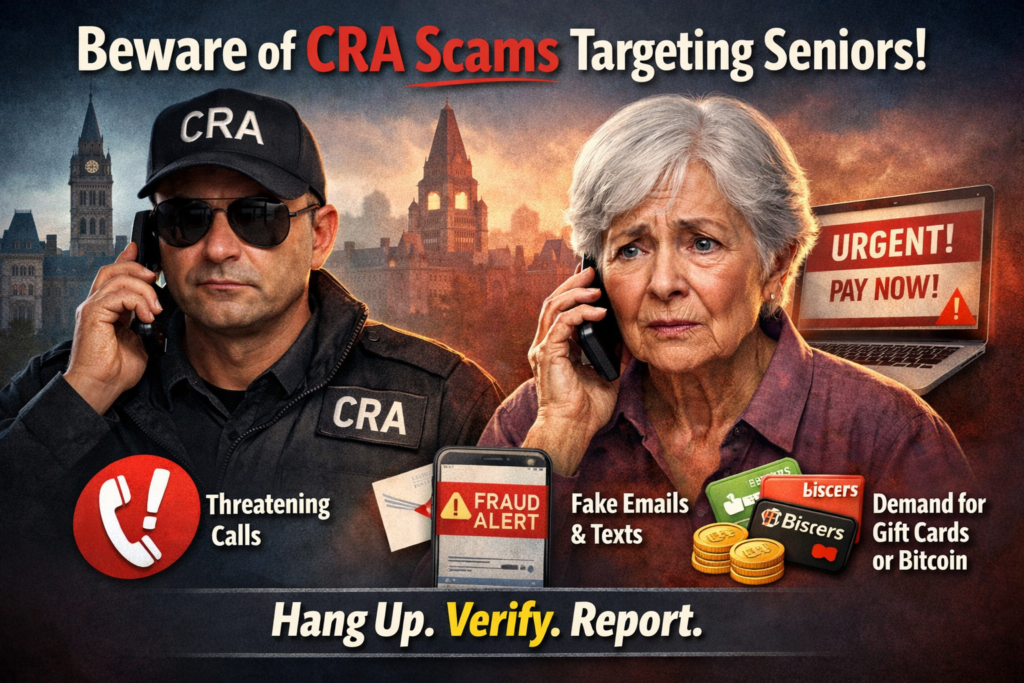
How Scammers Target Seniors: Psychological Triggers
Crooks use pressure to cloud your judgment. They yell about unpaid taxes or lost benefits, saying you’ll go to jail if you don’t pay now. Often, they push for quick cash through gift cards or bank wires—methods real agencies never use.
Seniors face higher risks due to isolation or less tech savvy. A lonely retiree might chat longer with a fake caller seeking comfort. Stats show over 40% of victims are 65 or older, per recent RCMP data.
These tricks play on respect for authority. You grew up following rules, so a voice sounding official feels real. But remember, true help comes calm, not chaotic.
Red Flags: CRA vs. Service Canada Contact Methods
Real CRA contacts start with mailed letters, not surprise calls. Emails from them end in @canada.ca, and they never ask for personal info over phone. Service Canada follows suit—booked appointments or secure portals for talks.
Scammers skip this. They call from spoofed numbers mimicking Ottawa area codes. Watch for threats like “Pay now or we seize your home”—pure fiction from officials.
Government sites warn: No agency demands instant funds via Bitcoin or prepaid cards. Check cra-arc.gc.ca or canada.ca for exact protocols. If it feels off, it is.
Defending Against the CRA / Service Canada Seniors Tax Scam
Evolution of the Scam in 2026
By April 2026, fraudsters mix in AI tools like deepfake voices to sound just like a known CRA rep. Scripts now weave in current events, like fake carbon tax refunds, to seem timely. Phishing emails hide malware in links promising “urgent benefit updates.”
Tech shifts make old tricks outdated. Scammers use apps to clone voices from social media clips. Expect more texts with QR codes leading to fake sites that steal data.
Stay ahead by updating your scam knowledge yearly. Official alerts from the CAFC highlight these changes, so check them often.
Recognizing and Reacting to a Live Scam Attempt
Spotting a scam early saves headaches. Your gut often knows first—trust that twinge of doubt. Act quick to shut it down.
Identifying the Phishing or Vishing Attack
During a call, listen for pushy tones or background noise from call centers abroad. Common openers include “This is CRA; you owe $500 in back taxes” or “Service Canada here—claim your pension boost now.” They rush you, avoiding questions.
In emails or texts, bad grammar or weird links scream fake. Hover over URLs; real ones match government domains. Demands for Social Insurance Numbers right away? Huge red flag.
Use this checklist for vishing (voice phishing):
- Caller threatens legal action without proof.
- Asks for payment in unusual ways, like iTunes cards.
- Won’t give a callback number or hangs up if you probe.
Phishing signs include unsolicited attachments or “click to verify” buttons. Pause and verify before touching anything.
What to Do When You Receive a Suspicious Call or Email
Hang up right away—don’t argue or confirm details. Block the number and delete the message. Real agents give time to check facts.
CRA guidelines say: Never pay on demand; they use formal processes. Call back using numbers from official websites, not the ones provided by the caller. Service Canada echoes this—no cold calls for sensitive info.
Breathe deep and tell a friend. Sharing the story reinforces your resolve. If rattled, jot notes to calm your mind.
Documenting the Incident for Reporting
Grab a notepad for key facts. Note the date, time, and caller ID if shown. Write down exact words, like threats or payment methods mentioned.
Even if you said nothing, record what they wanted. Save emails or screenshots of texts, including headers. This builds a clear picture for authorities.
Keep files organized in a folder labeled “Scam Alerts.” Review them monthly to spot patterns. Your details help track these crooks nationwide.
Reporting the CRA / Service Canada Scam Attempt: A Step-by-Step Process
Reporting feels like a chore, but it stops others from falling victim. Your story adds to the big picture. Act soon—details fade fast.
Reporting to the Canadian Anti-Fraud Centre (CAFC)
Start at antifraudcentre.ca or call 1-888-495-8501. Fill the online form with your notes: what happened, when, and how they contacted you. It takes 10-15 minutes.
Even without loss, report it. CAFC shares data with police to bust rings. In 2025, their tips led to 200 arrests—your input counts.
Follow up if needed; they send a reference number. Use it for all related chats.
Notifying the Respective Government Agency
For CRA scams, email phishing@cra-arc.gc.ca with email details or call 1-800-959-8281 to flag the issue. Describe the fake claims clearly.
Service Canada wants reports at 1-800-277-9914 or via their secure site. Provide call logs or message copies. This updates their fraud logs and protects others.
Agencies thank reporters and may offer verification tips. It builds a shield for everyone.
Local Law Enforcement Involvement
If money vanished or you shared bank info, call your local police non-emergency line. File a report with incident details and evidence. For bigger losses, they coordinate with RCMP. Seniors’ programs in many cities offer free help navigating this. Don’t wait—quick action recovers funds sometimes.
Ask about victim support services. They guide you through stress and next steps.
Protecting Against Future Scams and Mitigating Risk
Build habits now to stay safe long-term. Small changes block big problems. You control more than you think.
Essential Digital Security Practices for Seniors
Use passwords with letters, numbers, and symbols—change them every three months. Turn on two-factor authentication for emails and bank apps; it adds a code sent to your phone.
Skip clicking unsolicited links; type addresses yourself. Install free antivirus like those from trusted providers. Keep your devices updated to patch weak spots.
Practice with a family member. Role-play a scam call to build confidence. Tech feels less scary when handled step by step.
Empowering Family Members and Caregivers
Talk openly with loved ones about scams over coffee. Share this guide’s tips without scaring them. Ask what they’d do in a suspicious call. Set up alerts for odd account activity through banks. Jointly review statements monthly. Tools like shared apps let you monitor without invading privacy.
Build a “scam buddy” system. If one gets a weird message, the other verifies it first. Trust strengthens your net.
Reviewing Financial Safety Nets
Check your bank’s fraud policy—many refund scam losses if reported fast. Set daily transfer limits to cap damage. Understand protections under the Financial Consumer Agency of Canada. They cover unauthorized charges. Add a trusted contact to your accounts for quick checks.
Review benefits like direct deposit for pensions. It cuts check-theft risks. Stay proactive; banks often run free senior workshops.
FAQs Frequently Asked Questions
What is a CRA scam?
A CRA scam is when a criminal pretends to be the Canada Revenue Agency to steal money or personal information. They often use threats, urgency, or fake caller IDs to pressure seniors into paying immediately.
How can I tell if a CRA call is real?
Real CRA contact usually begins with a mailed letter. They never threaten arrest, demand instant payment, or ask for gift cards, Bitcoin, or e‑transfers. If a call feels rushed or aggressive, it’s almost always fake.
Does the CRA ever call seniors directly?
Yes, but only in specific situations — and never without prior written communication. Real agents are calm, patient, and willing to let you verify their identity.
What should I do if I get a suspicious CRA or Service Canada call?
Hang up immediately. Do not give personal details. Call the CRA or Service Canada using the numbers listed on their official websites, not the number that contacted you.
Where do I report CRA or Service Canada scams?
Report all scam attempts to the Canadian Anti‑Fraud Centre at 1‑888‑495‑8501 or antifraudcentre.ca. You can also forward scam emails to phishing@cra-arc.gc.ca.
What if I already sent money to a scammer?
Contact your bank immediately. Then file a police report and notify the Canadian Anti‑Fraud Centre. Quick action increases the chance of recovering funds.
Are seniors more likely to be targeted?
Yes. Scammers often target seniors because they trust authority, may live alone, and may not be familiar with new technology. Staying informed is the best defense.
Can scammers spoof real government phone numbers?
Absolutely. Scammers can make their number look like a real CRA or Service Canada line. Never trust caller ID alone — always verify independently.
Disclosure
This article is for informational purposes only. SeniorsCanadaInfo.ca is not affiliated with the Canada Revenue Agency (CRA), Service Canada, or any government department. Always verify information directly through official government websites such as cra-arc.gc.ca and canada.ca. If you believe you have been targeted by a scam, contact the Canadian Anti‑Fraud Centre immediately.
Conclusion
Stay alert, trust your instincts, and never respond to surprise demands for money or personal information. Hang up immediately, verify through official channels, and report every attempt to the Canadian Anti‑Fraud Centre. In 2026, scams are more advanced. Your awareness is your strongest defense. Share this guide with friends, family, and neighbours to help keep your community safe.