Latest New Scam In Canada is The Grandparent Scam
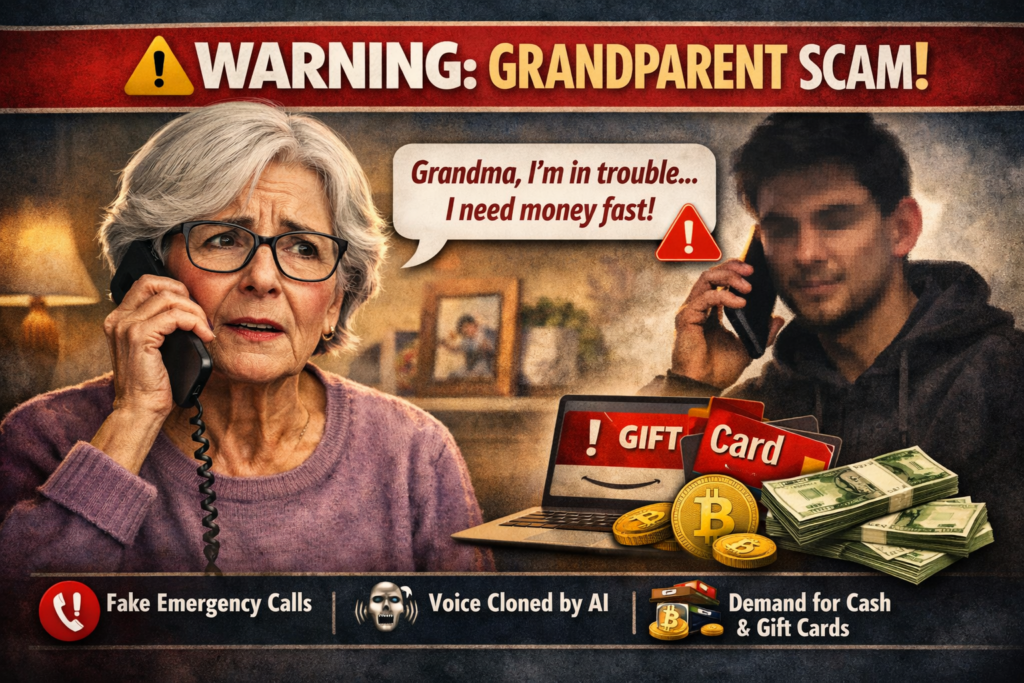
AI scams are the new wolves in sheep’s clothing and they’re prowling for seniors. Across Canada, fraudsters are using artificial intelligence to mimic voices, fake emergencies, and steal millions from trusting grandparents. One phone call can sound heartbreakingly real. A trembling voice claiming to be your grandchild, begging for help from a foreign jail. Your heart races, your instincts say “help,” and that’s exactly what these predators count on. Latest New Scam In Canada is The Grandparent Scam.
In 2026, technology gives scammers a sharper edge. With AI voice cloning, they can copy a loved one’s tone, accent, even laughter. It’s not just a scam anymore it is AI emotional manipulation powered by machines.
This guide will show you how to spot, verify, and stop the grandparent scam before it empties your savings or breaks your peace of mind. Whether you’re a senior, caregiver, or family member, these insights will help you stay one step ahead of the fraudsters and protect what matters most — your trust and your family.
Understanding the Anatomy of the 2026 Grandparent Scam
Scammers prey on emotions. They twist family bonds into traps. In Canada, this fraud costs victims dearly. Reports from the Canadian Anti-Fraud Centre show losses topped $12 million in 2025 alone, with numbers climbing in 2026 due to new tech twists.
How the Scam Mechanism Has Evolved
The basic play stays the same, but tools get slicker. You pick up the phone. A caller says your grandkid is in big trouble—like arrested for a fight in Mexico or hurt in a crash in Europe. They need bail or hospital bills paid fast, often thousands of dollars.
Now, in 2026, AI voice cloning makes it scarier. Scammers grab clips from social media videos and fake a grandchild’s voice. Deep fake audio fools even sharp ears. They add fake background noise, like sirens, to sell the story.
Pressure builds quick. The caller urges secrecy: “Don’t tell Mom or Dad—they’ll be mad.” They might switch to a “lawyer” or “cop” for backup. This isolates you and rushes your choice. Real emergencies don’t work this way.
Key Indicators: Recognizing the Red Flags
Spot the signs early to save your money. Listen close during the call. Does the voice sound off, even a bit? Scammers slip up on small facts, like wrong birthdates or trip details. They push for odd payments. Think wire transfers to strangers, crypto buys, or gift cards from stores like Walmart. Couriers might show up for cash bundles. Legit cops or lawyers never ask this—ever.
Urgency screams scam. “Pay now or your grandkid rots in jail!” they yell. Stats from the CAFC note average losses hit $5,000 per hit in Canada last year. Secrecy demands are huge red flags too. Family shares real crises openly.
- Wrong family details: Names mixed up or events that didn’t happen.
- Payment pressure: No bank checks, just quick cash grabs.
- Voice glitches: Pauses or robotic tones from AI fakes.
These clues help you pause and think.
Protecting Your Finances: Actionable Verification Steps
Don’t rush. Scammers win when you act fast. Take a breath and follow simple rules. This section gives you a plan to check facts without panic.
The Golden Rule: Stop, Verify, Consult
Seniors should just hang up. Never keep talking. The call could be a trick to pull you deeper. Next, verify on your own. Dial your grandchild’s real number from your contacts. Ask if they’re okay. Or call another family member who sees them often.
If they claim a lawyer or police, look up the number yourself. Use Google or a phone book, not the caller’s info. Ask pointed questions: “What’s our family code word?” Real help won’t mind waits.
This protocol works every time. It breaks the scam’s speed.
Digital Defenses Against Impersonation
Social media feeds scammers ammo. They scan posts for names, photos, and travel hints. Tighten privacy now. Set accounts to friends-only and hide location tags. Never give codes over the phone. Banks send two-factor texts—keep those secret. Even if a “cop” demands them, say no.
Update your phone apps too. Use caller ID blockers against spoofed numbers. In 2026, apps like Truecaller spot fakes better. These steps lock down your info.
- Lock social profiles: Share less about grandkids online.
- Guard codes: No sharing, no matter who calls.
- Block unknowns: Let voicemails filter strangers.
Stay digital smart to block the tricks.
The Role of Family and Community Support Systems
You’re not alone in this fight. Lean on kin and groups. They catch what you miss. Building these ties now stops isolation later.
Educating Relatives and Caregivers
Talk scams over coffee, not as lectures. Share stories from news to show real risks. Ask, “What would you do if I got that call?” It opens doors without shame. Set a family code word. Pick something silly, like “blueberry pie.” Anyone needing emergency cash must say it. Grandkids learn it young.
Chat often with no agenda. Weekly calls keep bonds tight. Scammers hate close families—they can’t wedge in easy.
This prep saves hearts and wallets.
Leveraging Institutional Support and Reporting Mechanisms
Canada has help spots for seniors. Check local senior centers for free workshops on fraud. They teach spot-the-scam games. Provincial agencies, like Ontario’s Consumer Protection, offer hotlines. Call them for advice tailored to your area.
Report to the Canadian Anti-Fraud Centre always. Even if you dodge the scam, tell them. In 2026, their database tracks AI patterns to bust rings.
- CAFC hotline: 1-888-495-8501—easy and free.
- Senior centers: Find one near you for group talks.
- Police non-emergency: File tips to build cases.
These resources empower you.
Aftermath: Responding to a Successful Scam
It happens—don’t beat yourself up. Act quick to limit damage. Recovery starts with calm steps. This part guides you through the mess.
Immediate Steps Following a Transfer
Call your bank right away. For wire transfers, they might stop or trace funds. Act in the first hour for best odds. File a police report next. Go to your local station or call non-emergency. Give all details: call logs, amounts, names used. And yes there are even Bank Scams in Canada.
Contact credit firms if cards were hit. They offer fraud alerts. A report helps with insurance claims too—some policies cover elder scams.
Speed matters here. Delays make recovery harder.
Emotional Recovery and Rebuilding Trust
Falling for it hurts deep. Shame and guilt hit hard. Talk to a counselor who gets financial abuse. Groups like Victim Services in your province help free.Join support circles for scam survivors. Hear others’ tales—it eases the load. You’re not foolish; scammers are pros.
Resources like the Elder Abuse Hotline (1-866-299-1011) offer kind ears. Healing takes time, but you bounce back stronger.
FAQs
What is the grandparent scam?
The grandparent scam is when a fraudster pretends to be your grandchild (or another family member) in an emergency. They often use fear, urgency, and emotional pressure to convince seniors to send money quickly.
Can scammers really clone voices with AI?
Yes. In 2026, scammers use AI tools to copy a person’s voice from social media videos or online recordings. These voice clones can sound extremely real, making the scam harder to detect.
How can I verify if the call is real?
Hang up and call your grandchild directly using the number saved in your phone. You can also call another family member to confirm their safety. Never trust the number the caller gives you.
What are the biggest red flags of this scam?
- Urgent demands for secrecy
- Requests for gift cards, crypto, or wire transfers
- A voice that sounds “almost right” but slightly off
- Wrong details about trips, birthdays, or family events
- A “lawyer” or “police officer” suddenly joining the call
Where do I report a grandparent scam in Canada?
Report all attempts to the Canadian Anti‑Fraud Centre at 1‑888‑495‑8501 or antifraudcentre.ca. If you sent money, contact your bank immediately and file a police report.
What should I do if I already sent money?
Act fast. Call your bank to try to stop or trace the transfer. File a police report and notify the Canadian Anti‑Fraud Centre. Quick action increases your chance of recovering funds.
How can families prevent this scam?
Create a family “code word” for real emergencies. Keep social media privacy settings tight. Talk openly about scams so everyone knows what to expect.
Disclosure
SeniorsCanadaInfo.ca provides general information to help Canadian seniors stay safe from scams. We are not affiliated with law enforcement, government agencies, or financial institutions. Always verify emergencies directly with family members and contact official authorities using publicly listed phone numbers. If you believe you have been targeted by a scam, report it immediately to the Canadian Anti‑Fraud Centre at 1‑888‑495‑8501.
Conclusion
Vigilance isn’t fear—it’s power. It guards your well-being too. Share this guide with friends at the club or church. One chat could save a neighbor. Stay alert in 2026. You’ve got the tools now—use them.