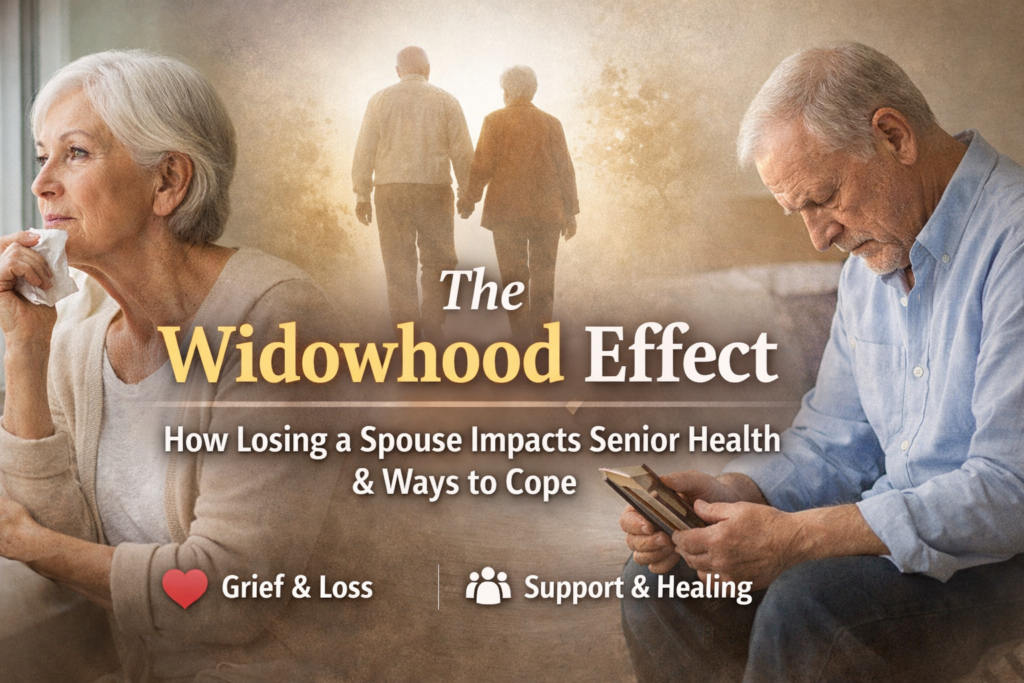
The Widowhood Effect Why Losing a Spouse Can Impact Senior Health How to Reduce the Risk
Losing a spouse is one of the most painful experiences a person can face. For seniors, the impact can be even more profound. Researchers call this the widowhood effect a measurable increase in health problems and even mortality in the months following a partner’s death.
While the statistics can sound frightening, there is also hope. Understanding the widowhood effect helps seniors, families, and caregivers take practical steps to protect emotional and physical well‑being during one of life’s hardest transitions.
What Is the Widowhood Effect?
The widowhood effect refers to the increased risk of illness or death that occurs after a spouse passes away. Studies show that seniors may face a 30–90% higher risk in the first year, especially the first 3–6 months.
This doesn’t mean widowhood is a death sentence — far from it. It means seniors need extra support, connection, and routine during this vulnerable period.
Why Seniors Are More Vulnerable
As people age, their spouse often becomes their closest companion, daily support system, and emotional anchor. When that anchor disappears, the sudden change can affect:
- Mental health — loneliness, depression, anxiety
- Physical health — increased blood pressure, weakened immune system
- Daily functioning — loss of routines, reduced motivation
- Cognitive load — managing finances, paperwork, and decisions alone
The combination of grief and stress can overwhelm the body, especially for seniors already managing chronic conditions.
Warning Signs Families Should Watch For
Each of these can indicate a senior is struggling after losing a spouse:
- Withdrawal from social activities
- Skipping meals or medical appointments
- Neglecting hygiene or household tasks
- Sudden weight loss
- Increased confusion or forgetfulness
- Expressions of hopelessness
- Sleeping too much or too little
If you notice these signs, gentle support and early intervention can make a world of difference.

Practical Ways to Reduce the Risk
The widowhood effect is not inevitable. Seniors can take steps to protect their health, and families can help create a supportive environment.
1. Stay Socially Connected
Isolation is one of the biggest risk factors. Even small interactions help:
- Coffee with a friend
- Weekly phone calls
- Senior centre activities
- Faith or community groups
Social connection is one of the strongest predictors of long-term health.
2. Build New Routines
Daily structure helps stabilize emotions. Simple routines include:
- Morning walks
- Regular meal times
- Scheduled hobbies
- Weekly outings
Routine gives the day purpose and reduces the feeling of drifting.
3. Seek Grief Counselling
Talking to a professional can prevent depression from becoming overwhelming. Many Canadian communities offer:
- Free grief groups
- Senior-focused counselling
- Online support sessions
Even a few sessions can help seniors process emotions safely.
4. Stay Physically Active
Movement improves mood, heart health, and sleep. Good senior-friendly options:
- Walking
- Stretching
- Chair exercises
- Light yoga
Aim for 10–20 minutes a day.
5. Keep Up With Medical Care
After a spouse passes, many seniors skip appointments. Regular check-ins help catch:
- Blood pressure changes
- Heart issues
- Medication problems
- Depression symptoms
Healthcare providers can also connect seniors with community resources.
6. Find New Purpose
Purpose is powerful. Seniors often thrive when they:
- Volunteer
- Join hobby groups
- Care for grandchildren
- Start creative projects
Purpose helps rebuild identity after loss.
Canadian Resources for Grief Support
Here are helpful options across Canada:
- Local senior centres
- Bereavement groups through churches or community halls
- Canadian Mental Health Association (CMHA)
- Hospice societies offering grief programs
- Online grief support networks
- Provincial health authority counselling services
These programs are often free or low-cost.
Hope and Healing: Life After Loss
While the widowhood effect is real, it is not destiny. Seniors can and do rebuild meaningful, joyful lives after losing a spouse. With connection, routine, support, and purpose, healing becomes possible — and health can remain strong.
If you or someone you love is navigating widowhood, remember: You don’t have to go through it alone. Help is available, and hope is real.
Frequently Asked Questions
What exactly is the widowhood effect?
The widowhood effect is the increased risk of health decline or death that can occur after a spouse passes away. It’s most common in seniors and is linked to loneliness, stress, depression, and sudden changes in daily routines. Understanding it helps families take early steps to support a grieving senior.
How long does the widowhood effect last?
The highest risk period is usually the first 3–12 months after losing a spouse, especially the first few months. However, every senior is different. With strong social support, healthy routines, and medical care, many seniors stabilize and begin healing well before a year has passed.
Are women or men more affected?
Both men and women experience the widowhood effect, but research often shows men may be at slightly higher risk because they tend to rely more heavily on their spouse for emotional support and daily structure. Women, however, are not immune — especially if they were the primary caregiver.
What are the warning signs a senior may be struggling?
Common signs include withdrawal from social activities, skipping meals, missing medical appointments, confusion, sudden weight loss, or expressing hopelessness. These signs don’t mean danger is guaranteed, but they do mean a senior needs extra care and connection.
Can the widowhood effect be prevented?
While grief is unavoidable, the health risks can be reduced. Staying socially connected, maintaining routines, seeking grief counselling, staying physically active, and keeping up with medical care all help seniors stay healthy during the grieving process.
Where can seniors in Canada find grief support?
Canadian seniors can access help through local senior centres, hospice societies, the Canadian Mental Health Association (CMHA), provincial health authorities, church groups, and online grief communities. Many programs are free or low‑cost and designed specifically for older adults.
Conclusion
The widowhood effect reminds us of something deeply human: when we lose someone who has been part of our life for decades, the impact reaches far beyond grief. It touches our routines, our health, our identity, and the way we move through each day. But while the statistics can sound overwhelming, they do not define the future. Seniors are remarkably resilient, especially when surrounded by connection, compassion, and steady support.
Healing after the loss of a spouse is not about “moving on” — it’s about moving forward, one small step at a time. With social connection, meaningful routines, medical care, and a renewed sense of purpose, seniors can rebuild a life that still holds joy, comfort, and belonging. Families, friends, and communities play a vital role in this journey, reminding seniors that they are not alone and that their lives continue to matter deeply.
Loss changes everything — but with the right support, seniors can continue to live fully, love deeply, and find new reasons to wake up each morning. Hope is real, healing is possible, and life after loss can still be rich and meaningful.
Disclosure
This article is intended for general informational purposes only and is not a substitute for professional medical, psychological, or legal advice. Every senior’s situation is unique, and health outcomes can vary widely. If you or someone you know is experiencing grief, depression, or health concerns after the loss of a spouse, please consult a qualified healthcare provider, counsellor, or mental‑health professional. The information provided here is based on publicly available research and is not meant to diagnose, treat, or predict individual outcomes.