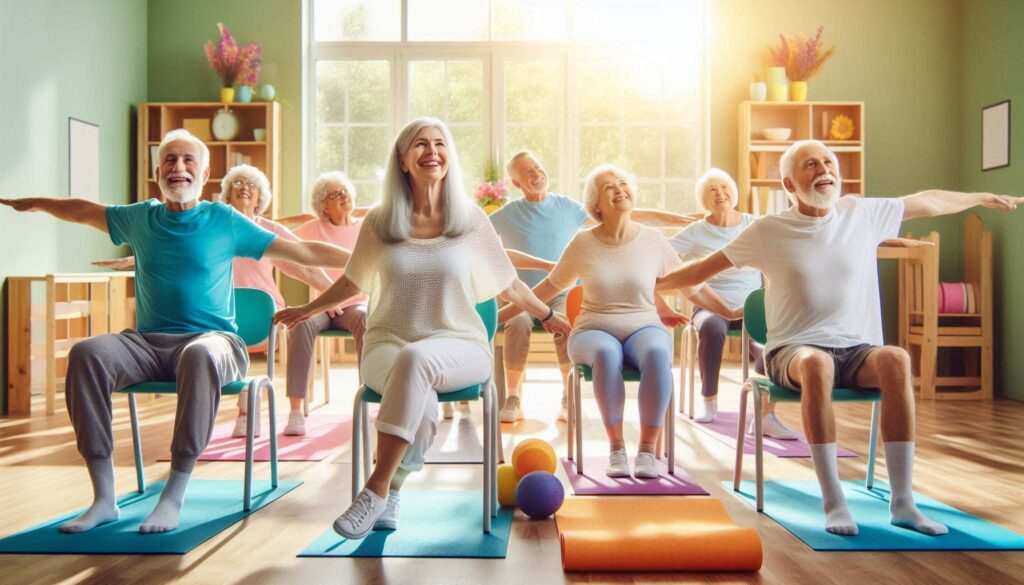
Seniors Staying Active at Home (No Equipment Needed)
A simple easy to understand guide for seniors staying active at home no equipment needed exercises. These exercises are easy to do for seniors and do not cause excessive pressure or strain on sensitive joints. Easy to understand low impact exercise that you can start today. Check out the easy to follow tips and methods below.
Core Strength and Stability: Building a Foundation Without Weights
Your core holds everything together. Weak abs and back muscles lead to poor posture and slips. Strong cores help you stand tall and move with ease. These no-equipment exercises target that area safely. They use your body weight or a chair for support. Focus on slow breaths to stay in control.
Start small if you have back issues. Always sit or lie down for comfort. Over time, you’ll notice better stability in daily tasks like reaching for a shelf.
Seated Marching and Foot Taps
Sit in a firm chair with feet flat on the floor. Lift one knee toward your chest, then lower it. Switch sides for 10 reps each. Keep your back straight and pull your belly button in. This wakes up your lower abs without strain.
Now add foot taps. Point your toes down, then flex them up. Do 15 taps per foot. Roll your ankles in circles too, five times each way. These moves improve circulation and core engagement. You’ll feel steadier when you stand up.
Wall Push-Ups and Countertop Planks
Stand arm’s length from a wall. Place hands at shoulder height, shoulder-width apart. Bend elbows to lean in, then push back. Aim for 8-12 reps. This builds chest and arm strength gently. Adjust your distance to make it easier or harder.
For planks, face a kitchen counter. Lean forward with hands on the edge, body straight like a board. Hold for 10-20 seconds. Squeeze your core tight. It’s a safe way to work your midsection. Repeat three times, resting between holds.
Pelvic Tilts (Supine or Seated)
Lie on your back with knees bent, feet flat. Tilt your pelvis to press your lower back into the floor. Hold for five seconds, then release. Do 10 tilts. This strengthens deep core muscles and eases back tension.
If lying down hurts, try it seated. Sit tall and contract your abs to tuck your tailbone. Hold and breathe. Repeat 12 times. Both versions improve posture. You’ll carry groceries with less effort.
Seniors Staying Active at Home: Enhancing Balance and Preventing Falls
Falls top the list of worries for many over 65. Good balance keeps you on your feet during walks or turns. These exercises build that skill with support nearby. Use a chair or wall at first. Practice daily to make it second nature.
They mimic real-life moves like stepping over curbs. Progress slowly to avoid frustration. Soon, you’ll trust your steps more.
Single-Leg Stance Progression
Hold onto a chair with both hands. Lift one foot an inch off the ground. Hold for five seconds, then switch. Do three sets per leg. Focus your eyes on one spot ahead. This trains your brain and muscles to work together.
Next, use just your fingertips for light touch. Build to 10 seconds. Finally, try no hands for a few beats. Stop if you wobble. This cuts fall odds by sharpening reflexes.
Heel-to-Toe Walking (Tandem Gait Practice)
Stand near a wall for balance. Step your right heel right against your left toes. Keep going for 10 steps forward. Turn and repeat back. Go slow to stay steady.
Practice in a hallway if space allows. It helps with uneven ground outside. Do this twice a day. Your confidence in walking will grow fast.
Sit-to-Stand Practice
Sit on a chair without arms. Place feet hip-width apart. Stand up using your legs, not your hands. Lower back down with control. Aim for 10 reps.
If it’s tough, scoot to the edge first. Keep knees over toes. This boosts leg power for getting out of bed or chairs. You’ll feel more self-reliant.
Improving Flexibility and Range of Motion: Gentle Joint Health
Stiff joints make mornings rough. Gentle stretches loosen them up and ease arthritis pain. These moves increase blood flow without force. Hold each one steady, no bouncing. Breathe deep to relax.
Do them after warming up with a short walk around the house. They take just minutes but pay off big in comfort.
Shoulder Rolls and Arm Circles (Small Increments)
Sit or stand tall. Roll shoulders up, back, down, and forward in a circle. Do 10 rolls each way. This frees up tight upper back muscles.
Now make small arm circles. Extend arms out, palms down. Circle forward eight times, then backward. Keep them small to avoid strain. It opens your chest, which tightens from desk time or age. You’ll reach higher shelves with less ache.
Seated or Standing Hamstring Stretches
Sit on the chair edge. Extend one leg straight, heel on floor, toe up. Lean forward from hips until you feel a pull in the back of your thigh. Hold 20 seconds, switch legs. Repeat twice.
Standing, place one foot on a low stool. Bend slightly at the hip. Same hold time. Never lock your knee. This targets leg muscles for better walking stride. Stiffness fades after a week of daily pulls.
Ankle Alphabet Tracing
Sit with legs out. Lift one foot and “write” the alphabet with your big toe. Go slow through each letter. Switch feet after one full set.
It works ankles in all directions. Great for swollen feet or poor gait. Do it while watching TV. Your steps will feel smoother outdoors.
Cardiovascular Health: Boosting Stamina Indoors
Your heart needs steady work to stay strong. Low-impact cardio raises your pulse without joint stress. These home activities build endurance for chores or visits. Keep a pace where you can talk but feel effort.
Monitor how you feel after each set. Hydrate and rest as needed. Aim to add one session daily.
High Knee Marching (Low Impact Cardio)
March in place, lifting knees to hip height. Swing arms opposite for rhythm. Go for two minutes. Pump harder to speed your heart. Stay grounded, no jumps. This mimics a brisk walk inside. You’ll climb stairs easier after practice.
Arm Pumping and Shadow Boxing
Sit or stand. Pump arms up and down like running. Do it fast for 30 seconds. Rest, repeat three times. Add shadow boxing: Throw light jabs and crosses in the air. Keep elbows bent. One minute bursts. It sharpens hand-eye skills too. Your energy levels will rise.
Stair Climbing Practice (If Applicable and Safe)
Check your stairs first. They must be sturdy, clear, and lit well. Hold the rail tight. Step up one at a time, slow and full. Go up and down five times. Focus on even steps. Skip this if balance is off or stairs are steep. It strengthens legs safely at home.
Creating a Sustainable Home Fitness Routine
Routines stick when they’re simple. Force big changes, and you’ll quit fast. Blend these exercises into your day for lasting results. Track what works for you. Mix sections to keep it fresh. Core one day, balance the next. Your body will thank you.
Scheduling Consistency Over Intensity
Start with 10-15 minutes, three days a week. Try mornings after breakfast when you’re fresh. Or evenings to unwind. Build to daily if it feels good. Use a phone reminder. Short sessions add up to real gains in strength.
Mindful Movement: Listening to the Body
Push to fatigue, not pain. Muscle burn is okay; sharp twinges mean stop. Use the talk test: If you can’t chat during exercise, slow down. Breathe steady and check posture often. Rest days prevent burnout. Tune in, and you’ll avoid injury.
Incorporating Activity into Chores
March while the coffee brews. Do calf raises at the sink. Squat low to pick up laundry, holding a counter. Walk heel-to-toe to the mailbox. Stretch arms while dusting shelves. These habits turn ordinary tasks into fitness wins.
Conclusion: Maintaining Momentum and Celebrating Progress
These no-equipment home exercises make staying active simple and effective for seniors. From core builders to balance drills, flexibility stretches, and cardio boosts, you have tools for full-body health. They demand little space or time but deliver big on independence and joy.