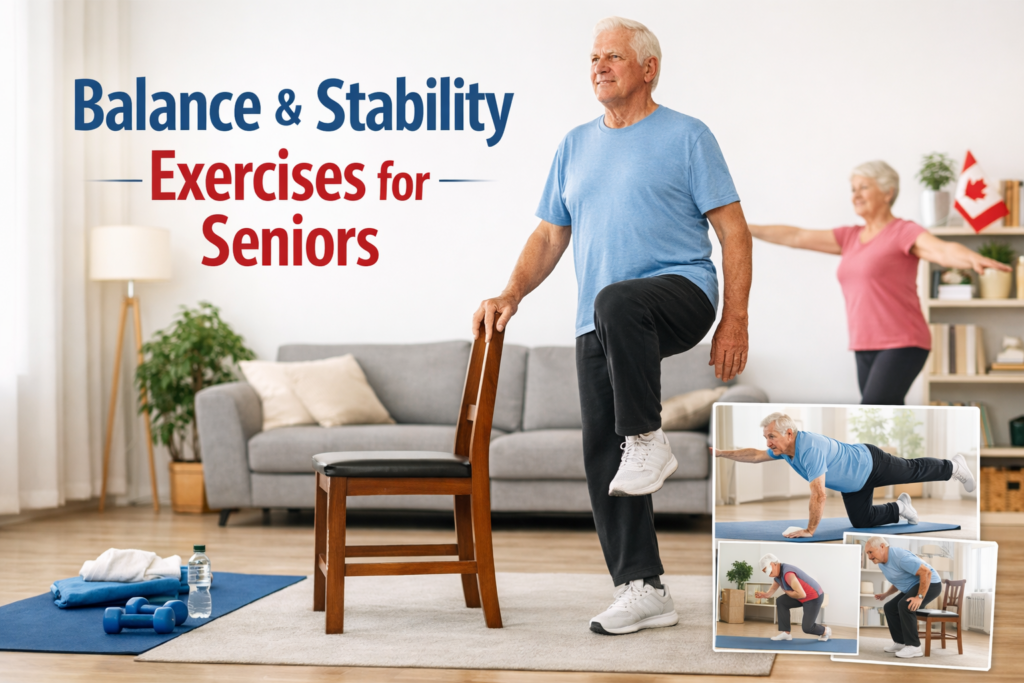
Simple Balance and Stability Exercises For Seniors
Simple Balance and Stability Exercises for seniors unsteady in their walking. Build up strength and mobility with simple no stress exercises to keep you mobile. In Canada, falls hit hard among folks over 65. The Public Health Agency reports that one in three seniors takes a fall each year, leading to hospital stays and lost mobility. These slips don’t just bruise pride; they spike healthcare costs and push many into long-term care. Yet, balance dips with age, but you can rebuild it through smart exercises.
This guide walks you through proven moves tailored for Canadian seniors, focusing on fall prevention and daily strength.
Essential Balance and Stability Exercises for Canadian Seniors
Section 1: Understanding the Mechanics of Balance in Seniors
Your body relies on a team of senses to keep you steady. The inner ear handles the vestibular part, eyes provide visual cues, and muscles send proprioceptive signals about position. As years add up, proprioception often fades first, making you feel wobbly on uneven ground like snowy paths.
The Inner Ear and Proprioception: Your Body’s Balance System
Age weakens these links, especially proprioception, which tells your brain where your limbs sit without looking. Poor signals mean more trips over curbs or rugs. You can test it daily by standing on one leg for a few seconds while brushing your teeth—hold a counter if needed to build that awareness back up.
This simple check sharpens your body’s feedback loop. Do it often, and you’ll notice steadier steps in daily tasks. Think of it as tuning an old radio to cut static.
The Alarming Reality: Fall Statistics and Prevention in Canada
Falls shatter quality of life for Canadian seniors. Beyond breaks and pain, they lead to fear of moving, isolation, and huge bills—over $3 billion yearly for the healthcare system, per government data. Many end up in care homes after one bad slip.
Public Health Agency stats show 235,000 seniors seek emergency care for falls annually. Prevention starts with balance work, cutting risk by up to 25% according to studies. It’s not just numbers; it’s about keeping your routine intact, from grocery runs to family walks.
When to Consult a Professional Before Starting
Talk to your doctor or a physio before diving in. If you have arthritis, brittle bones from osteoporosis, or dizzy spells from vertigo, get cleared first. These conditions can twist exercises into risks without tweaks.
A pro can spot issues and adjust moves for safety. Don’t skip this step—it’s your ticket to gains without setbacks. Start slow, and listen to your body every time.
Section 2: Foundational Exercises for Core Stability
A solid core acts like the roots of a tree, holding you firm against gusts. For seniors, weak abs and back muscles let the trunk sway, inviting falls. Building here boosts posture and control in every step.
Core work supports balance by bracing your spine during turns or lifts. Without it, simple chores turn tricky. You can strengthen this center right from your living room floor.
Engaging the Core: The Center of Your Stability
Focus on the deep muscles around your belly and lower back. They fire up to keep you aligned, much like guy wires on a flagpole. Tighten them during walks to feel the difference immediately.
Daily engagement prevents slouches that throw off equilibrium. Pair this with breaths—in through nose, out through mouth—for better results. You’ll stand taller and move surer.
Pelvic Tilts and Gentle Bridges
Lie on your back with knees bent, feet flat on the floor. Tilt your pelvis up by squeezing your abs, hold for three seconds, then release. Do 10 reps, breathing steady to avoid strain.
This move wakes up your core without pressure on joints. It eases back tension too, a common senior ache. Practice twice a day for quick wins.
For bridges, lift your hips off the ground using your glutes and heels. Keep shoulders down, hold five seconds, lower slowly. Aim for eight lifts, resting between sets.
Bridges build the back chain—glutes, hamstrings—that powers upright posture. Stronger here means less lean forward when walking. It’s gentle yet effective for daily stability.
Bird-Dog Progression for Dynamic Stability
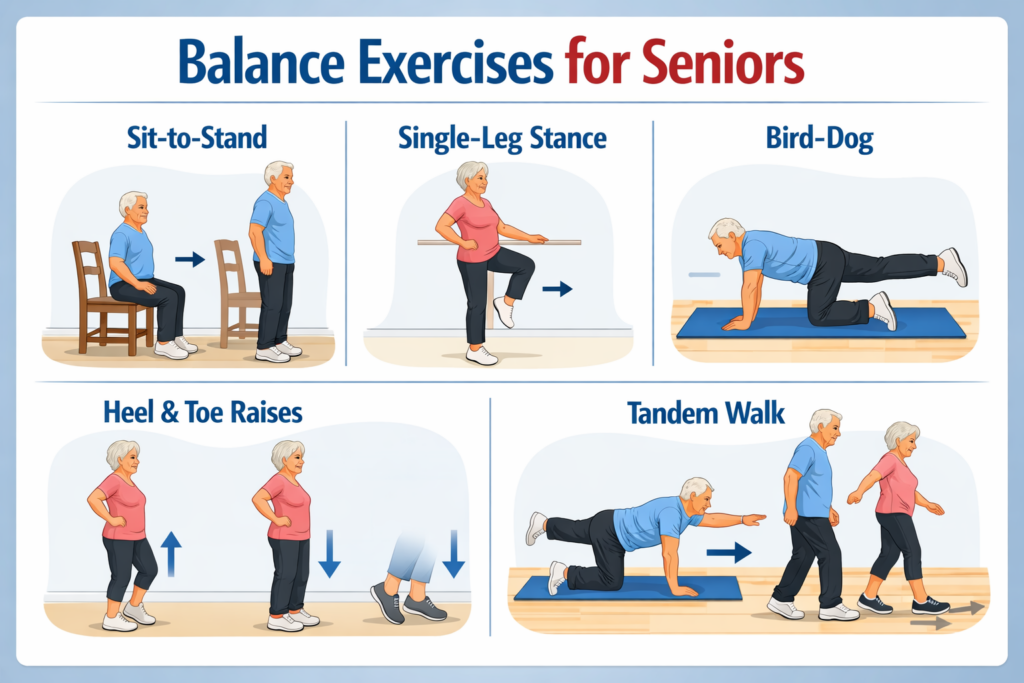
Start on hands and knees, back flat. Extend your right arm forward and left leg back, keeping hips level. Hold for five breaths, then switch sides—do five per side.
This exercise trains coordination across your body, like linking arms and legs in a dance. It braces the core against twists, key for turning in tight spaces. Build up time as you get comfy.
Progress by adding a slight rock or hold longer. You’ll gain control that carries over to real life. No equipment needed, just space and focus.
Section 3: Static Balance Drills to Improve Standing Hold
Static holds build the base for all movement. They teach your body to pause steady, cutting wobbles in lineups or bus stops. Start simple to stack confidence.
These drills sharpen focus on quiet strength. Hold positions to retrain nerves and muscles. Over time, you’ll trust your footing more.
Sit-to-Stand Mastery: Functional Strength Training
From a chair, scoot to the edge, feet hip-width. Lean forward slightly, push through heels to rise without hands. Stand tall, then lower back controlled—repeat 10 times. Use legs, not arms or momentum; keep chest lifted. This mirrors getting up from the toilet or couch, vital for independence. It tones quads and glutes for better support.
Add a pause at the top for extra challenge. You’ll move smoother through your day. Practice near a wall for safety.
Single-Leg Stance Variations (The Progression Method)
Stand by a counter, lift one foot an inch off the ground. Hold 10 seconds, switch legs—build to 30. Eyes open, gaze fixed ahead. This boosts ankle and hip control, fighting side-to-side sways. It’s like training a tightrope walker’s poise. Do it waiting for tea to kettle.
For level two, close your eyes or stand on a soft mat like folded towels. This ramps up proprioception demands. Only try when basic holds feel easy—safety first.
Tandem Stance (Heel-to-Toe Walking Simulation)
Place one foot right in front of the other, heel touching toe. Hold arms out if needed, balance for 20 seconds, then switch lead foot. Repeat three times each way.
It preps you for narrow spots, like apartment halls or snowy trails. Mimics sobriety tests but builds real skill. You’ll navigate sidewalks with ease.
Add a wall touch for newbies. Progress to walking the line slowly. Fun way to steady your stride.
Section 4: Dynamic Balance for Real-World Movement
Dynamic work adds motion to your toolkit. It trains shifts and reaches, like grabbing a high shelf or dodging puddles. This keeps balance alive in action.
Shift from still to moving to mimic life. These exercises flow into walks and chores. You’ll feel more agile outdoors.
Weight Shifting and Clock Reaches
Stand feet apart, shift weight side to side, like swaying to music. Do 10 shifts each way, keeping hips level. This teaches smooth transfers, key for turning corners. Imagine reaching for a clock’s numbers—tap 12, then 3, without losing footing. Use a wall clock or mark the floor.
Reaches build reach without topple. Great for kitchen tasks. Hold steady, breathe calm.
Heel Raises and Toe Lifts for Ankle Strength
Rise onto toes, using both feet, hold two seconds, lower. Do 12 reps, rest, repeat. Then, sit and lift toes toward shins, hold, lower—same count. Ankles often weaken first, causing trips. Strong calves push you forward; dorsiflexors lift toes to clear ground. These fix that.
Do them during TV breaks. You’ll step higher over cracks. Simple, but powerful for prevention.
Walking Techniques to Enhance Stability
Walk with head up, eyes 10 feet ahead—not down. Roll from heel to toe fully each step. Swing arms lightly for counterbalance. Posture matters; slumping throws you off. Practice on even ground first, then add hills. This gait cuts fall odds.
Shorten steps if icy. Focus ahead keeps you alert. Integrate into errands for natural gains.
Section 5: Integrating Balance and Stability Exercises
Weave these into your routine like salt in stew. No big overhauls—just steady habits. Canadian winters demand it; slick ice waits outside.
Make it fit your life, from condo to cottage. Safety and ease keep you going.
Safety First: Setting Up Your Home Exercise Environment
Clear a spot near a counter or chair—no cords or rugs to trip. Wear grippy shoes, skip loose socks. Start with five minutes to warm up. Good footing prevents irony—a fall during balance practice. Light on bare floors if dry. Have water handy; stay hydrated.
Test space by walking it blindfolded briefly. Safe setup builds trust.
The Power of Consistency: Balance and Stability Exercises
Aim for 10 minutes three times daily, not one marathon weekly. Short bursts spark brain changes faster for balance. Mix core one day, static next. Track progress in a notebook—holds longer? Feels easier? This sustains motivation. Rest days matter too; muscles need recovery.
Tie to habits, like post-meal tilts. Consistency turns skills permanent.
Leveraging Local Canadian Resources
Join community centers for senior Tai Chi classes—they blend balance with calm. Look for physio-led fall prevention groups in your province. Apps or online videos from Canadian fitness pros work too.
Frequently Asked Questions
1. Why is balance training important for seniors?
Balance exercises help prevent falls, improve confidence, and maintain independence. They strengthen muscles and retrain your body’s coordination, which naturally declines with age.
2. How often should I do balance exercises?
Aim for short sessions—about 10 minutes, three times a day. Consistency matters more than duration. Even small daily efforts make a big difference over time.
3. Do I need equipment for these exercises?
No special gear is required. A sturdy chair, wall, or countertop for support is enough. Comfortable shoes and clear floor space keep things safe.
4. Can I do these exercises if I have arthritis or osteoporosis?
Yes, but check with your doctor or physiotherapist first. They can suggest gentle modifications to avoid strain while still improving stability.
5. What’s the best time of day to practice balance drills?
Whenever you feel alert and steady—morning or afternoon is ideal. Avoid times when you’re tired or dizzy. Safety first.
6. Are there free programs for seniors in Canada?
Absolutely. Many provinces offer fall‑prevention or balance classes through local health units and community centers. Search “senior balance classes near me” or ask your family doctor for referrals.
Disclosure
This information is for general guidance only and is not a substitute for professional medical advice, diagnosis, or treatment. Always speak with your doctor, physiotherapist, or healthcare provider before starting any new exercise routine, especially if you have existing health conditions such as arthritis, osteoporosis, or balance disorders. SeniorsCanadaInfo.ca does not provide medical services and is not responsible for injuries or issues that may arise from performing these exercises.
Conclusion
Staying steady on your feet isn’t just about exercise—it’s about keeping your freedom. Every small movement you practice today builds confidence for tomorrow. Whether it’s standing on one leg while brushing your teeth or joining a local balance class, each step strengthens your independence.
Start slow, stay consistent, and celebrate progress. With a few minutes a day, you’ll move through every Canadian season with greater ease and assurance. Balance isn’t lost with age—it’s rebuilt through practice, patience, and persistence.